Why Early Detection of Astigmatism Symptoms is Important



Hello,
I'm Dr. Kim Joong-hoon, head director of Gangnam ID Eye Clinic, delving into the most suitable vision correction surgery with meticulous dedication.
I'd like to greet you.
As all age groups are often exposed to various electronic devices for extended periods, the number of people wearing glasses or lenses due to vision problems such as myopia and astigmatism is increasing.
Among these, astigmatism is a refractive error where vision is blurry regardless of distance, and objects appear multiple. This occurs because the cornea of the eye is elongated like a rugby ball, resulting in uneven refractive power, as commonly as myopia or hyperopia.
If astigmatism is left uncorrected, it can easily cause eye fatigue, difficulty in night driving, and headaches. Therefore, if your vision is distorted or blurry, it is advisable to have an eye examination. If you are diagnosed with astigmatism, consider correcting it with a method suitable for your lifestyle.
However, as discomfort often coexists with wearing glasses or lenses, many people are looking into vision correction surgery, desiring a comfortable life without vision correction tools.
Today, we will identify myopia and astigmatism and then take time to learn about ways to correct vision discomfort caused by refraction.
"After identifying myopia and astigmatism"
Myopia and astigmatism have different causes and symptoms, but most people experience both together.
Myopia, or nearsightedness, is a refractive error where distant objects are not seen well, but close objects are. This occurs when the eyeball is too long or the refractive power is too strong, causing light to focus in front of the retina.
Astigmatism occurs when the cornea or lens of the eye is not perfectly spherical, causing incoming light to not focus on a single point but on multiple points. This results in a blurry vision because the focal points do not meet at one point.
As such, myopia and astigmatism have different symptoms and causes, and there are differences in focal position and field of vision, so they can be said to be different refractive error symptoms.
“If you check the causes and symptoms of myopia and astigmatism?”
First, looking at the causes of myopia, there are genetic and nutritional factors, but environmental factors such as excessive near work or stress can also have a combined effect.
In addition, recently, it can be said that myopia can easily occur due to mobile phones, TV viewing, and PC rooms.
The most typical symptom of myopia is decreased vision caused by not accurately focusing on the retina. In severe cases of myopia, you may not be able to recognize objects right in front of you unless corrected with glasses or lenses.
If you often squint when looking at distant objects, turn your head to look, or frequently complain of headaches, you are likely to have myopia.
Secondly, in the case of the cause of astigmatism, it has not yet been accurately identified, but if parents have astigmatism, there is a high possibility that their children will also develop astigmatism, so it can be said that genetic factors are related.
In addition, if you continuously stimulate your eyes, astigmatism may occur as a result, and astigmatism may also occur if you have an eye disease.
The most typical symptom of astigmatism is that objects may appear blurry or appear to be doubled.
And unlike myopia, with astigmatism, both distant and near objects do not appear clearly.
If astigmatism is severe, it may be accompanied by eye fatigue and headaches, so continuous management and attention are required.
Both astigmatism and myopia originate from refraction problems, but since the causes and symptoms of each are different, vision correction surgery can be investigated to solve these two problems.
“If you have astigmatism, what correction methods are available?”
If astigmatism symptoms occur and are left untreated or not corrected in time, various symptoms such as vision distortion, eye fatigue, and double vision may appear, and daily life may be difficult because it can interfere with night driving or work.
If you are considering vision correction due to astigmatism symptoms, you can generally look into laser vision correction surgery, but if you have high myopia exceeding -6 diopters, you are likely to have severe astigmatism, and the amount of cornea to be cut is large, so there may be restrictions on vision correction or it may be difficult to proceed.
In these cases, if it is difficult to proceed with laser vision correction surgery due to a thin cornea or vision beyond high myopia, lens insertion surgery may be an alternative, and since the risk of corneal damage is significantly reduced, highly safe vision correction surgery can be performed.
In addition, the probability of recurrence of myopia and astigmatism is low and satisfactory results can be expected, so preference for lens insertion surgery continues to increase.
"Check the process and characteristics of lens insertion surgery, and even the types of lenses"
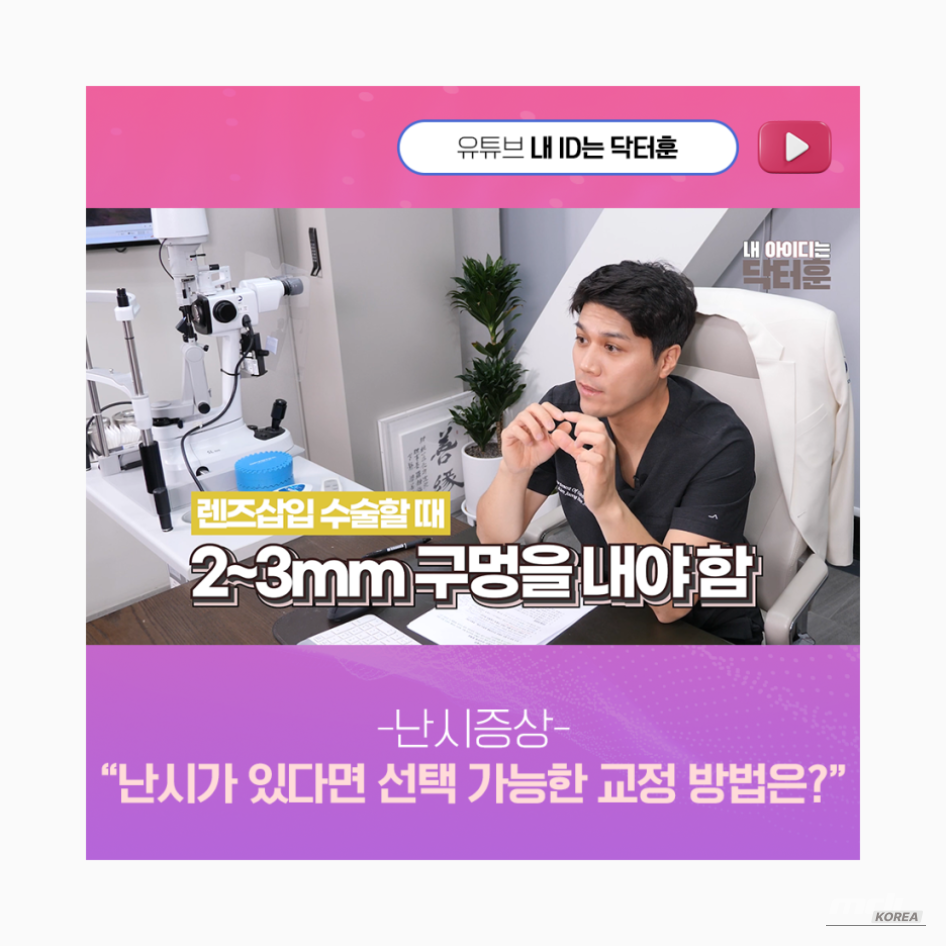
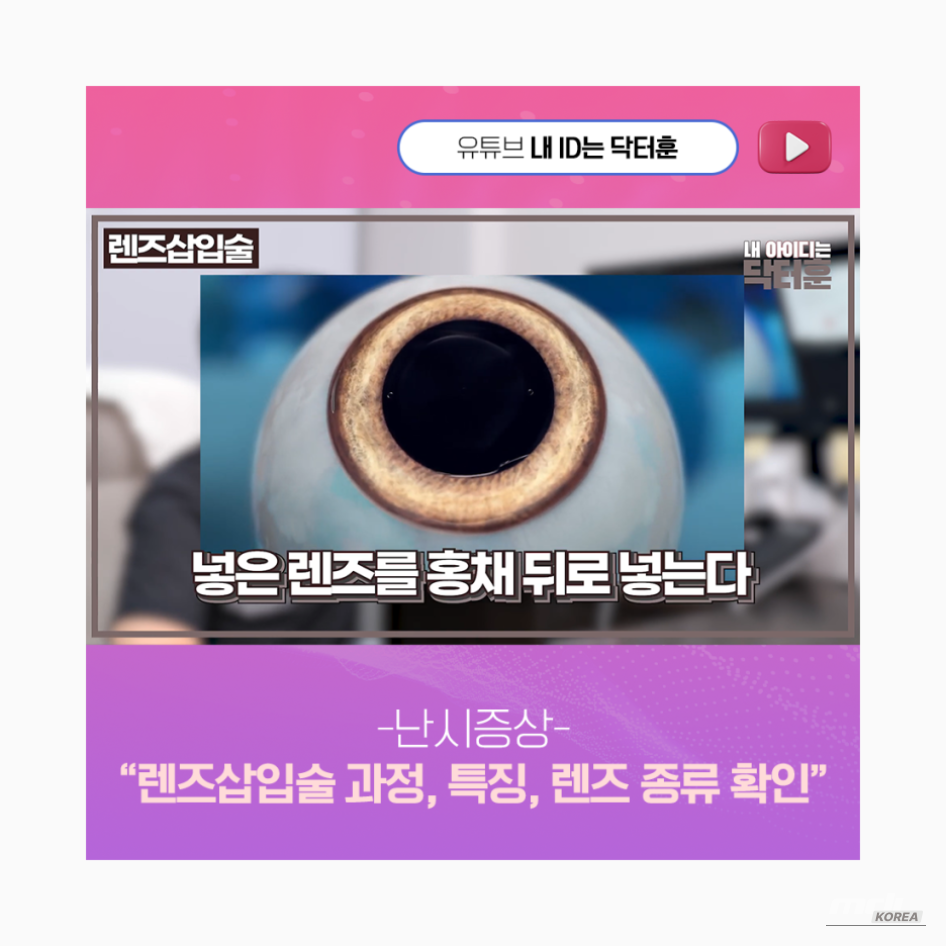
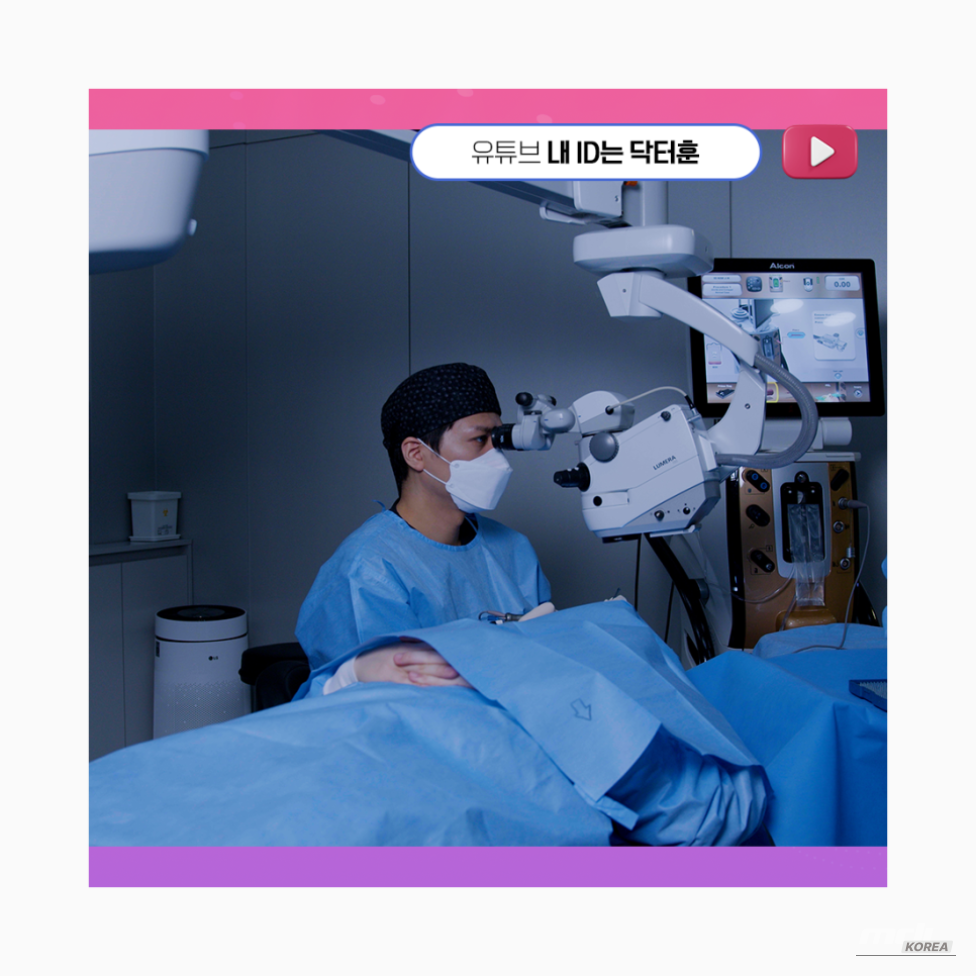
Lens insertion surgery involves selecting a lens according to the presence and degree of astigmatism and myopia, creating a small incision of about 3mm, and then inserting a biocompatible lens through the incision to correct vision.
Side effects such as light scattering, dry eye syndrome, and myopia regression can also be reduced.
If the result is not satisfactory, the lens inserted into the eye can be removed, recovery is quick, and permanent vision maintenance is possible, and it can be performed even if the cornea is thin or there is high astigmatism or myopia.
These lens insertion surgeries are inserted into the anterior or posterior chamber of the iris, and it is important to find a method suitable for the individual.
Anterior chamber lens insertion surgery inserts the lens between the cornea and the iris, so there is less risk of the lens rotating in the eye, but iridotomy is required, and the distance between the lens and the cornea is close, which has the disadvantage of endothelial cell damage due to impact or friction.
In contrast, posterior chamber lens insertion surgery is a commonly performed method recently, and the lens itself has a micro hole, so a separate iridotomy is not required, and the advantages and characteristics are that it has high speed recovery and stability, and reduces the side effects of increased intraocular pressure.
“To improve vision stably”
Lens insertion surgery is a method that can correct high myopia and astigmatism symptoms while preserving the cornea, but it cannot be applied in all cases, so it is good to choose a suitable method through precise examination.
When inserting a lens to improve myopia and astigmatism symptoms, it is possible to prevent side effects such as glaucoma and cataracts by accurately measuring the eye space and inserting a lens of the appropriate size in the correct position.
Considering long-term eye health rather than short-term effects, it is advisable to carefully compare and check the experience of the medical staff, the aftercare system, the equipment used, and the type of lens.
Thank you for reading this long article.
This was Kim Joong-hoon, head director of Gangnam ID Eye Clinic.


























Source :https://blog.naver.com/tkatlrltkatl/224009926767
No comments yet.