Understanding the Cost of Presbyopia and Cataract Surgery



Comparing the costs of presbyopia and cataract surgery.
Q. What are the common eye diseases among the elderly?
Cataracts, glaucoma, macular degeneration, and diabetic retinopathy are some of the most prevalent.
Q. How often should I get an eye exam to prevent cataracts?
It is recommended to have a regular eye exam once a year, even if you don't have any specific symptoms.
Presbyopia and cataracts may seem like separate issues, but they often occur together in real life. Presbyopia is the difficulty of focusing on near objects, while cataracts cause the lens to become cloudy, making objects appear blurry. When these two problems overlap, it becomes uncomfortable to see both far and near objects, so diagnosis and correction methods are often discussed at the same time.
One of the most frequently asked questions in this process is about the cost of presbyopia and cataract surgery, which can vary depending on the surgical method, lens type, and scope of the examination. The main causes are age-related decline in lens elasticity and changes in protein structure. As the lens thickens and becomes less transparent, colors may appear yellowish, or light scattering may worsen.
Presbyopia often begins with the feeling that close-up text suddenly needs to be held far away to be seen clearly. Cataracts are often noticed as a decline in night vision and increased glare. Fatigue may set in quickly with prolonged concentration during work or hobbies, and you may find yourself frequently taking off and putting on your glasses. Knowing the cost of presbyopia and cataract surgery in advance can help you choose the timing and method of treatment.
Symptoms gradually progress. Vision may be fine in bright places but suddenly become blurry in dark environments, and objects may appear blurred in backlight. If headaches increase after close-up work or if the feeling of unclear vision persists even when enlarging the font on your smartphone, an examination is recommended.
In the early stages, changing the prescription may provide temporary relief, but if the clouding exceeds a certain limit, surgical correction is considered. By examining the severity of symptoms and lifestyle patterns together, you can establish more specific criteria for choosing a procedure based on the cost of presbyopia and cataract surgery. The diagnosis process proceeds in stages.
Visual acuity and refraction tests, pupil size, corneal topography, tear condition, and the degree of lens clouding are checked. After pupil dilation, the detailed condition is carefully observed. The condition of the retina and optic nerve is also examined, and how contrast sensitivity changes depending on the light environment is evaluated. This information becomes the basis for determining lens selection, incision location, and whether to correct astigmatism.
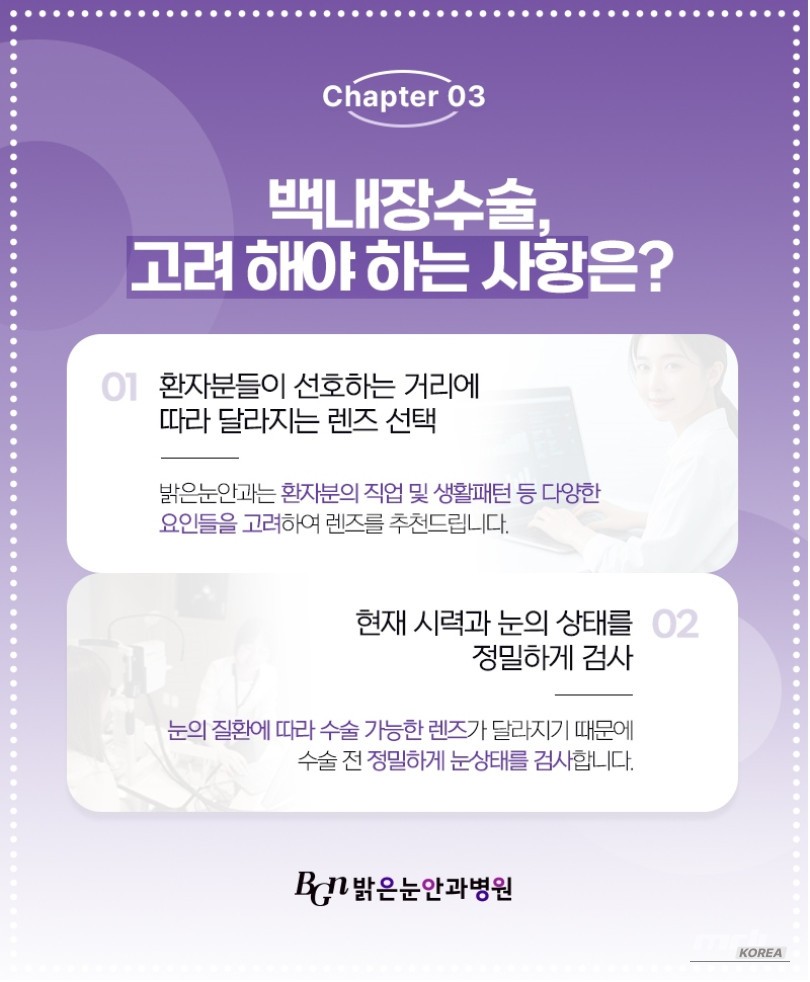
During the consultation stage, sharing lifestyle information such as occupation, driving frequency, and reading habits can be helpful in designing the target focal range. If the design changes, the composition of the surgery cost also changes. The core of the treatment method is to remove the clouded lens and insert an artificial lens to reconstruct the focus.
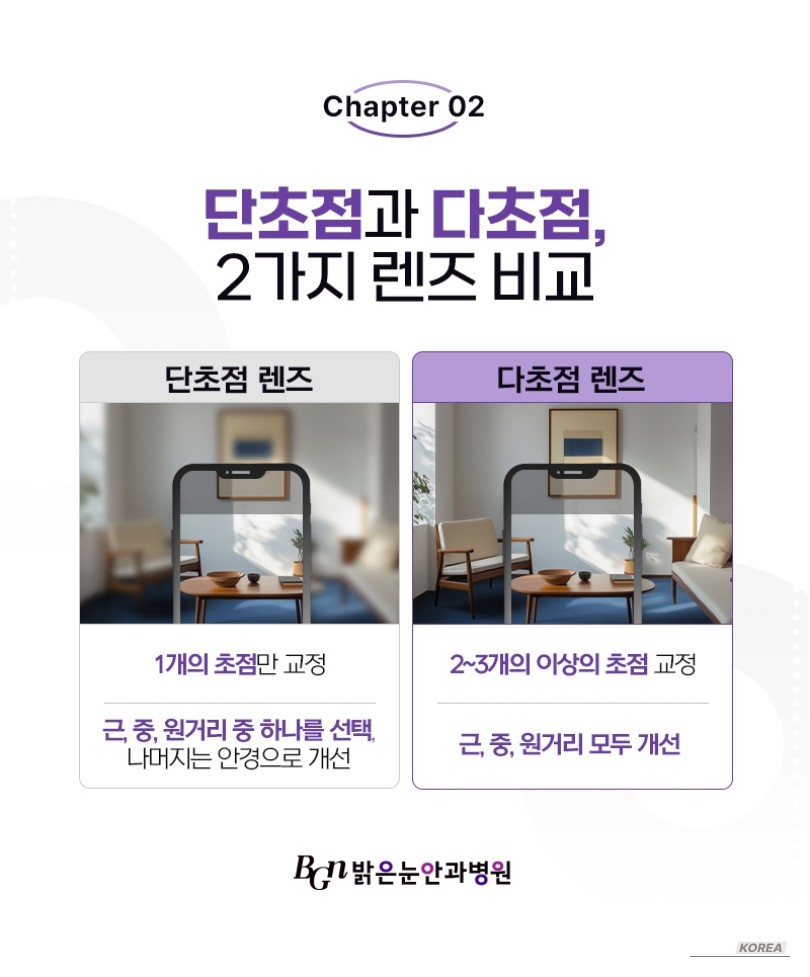
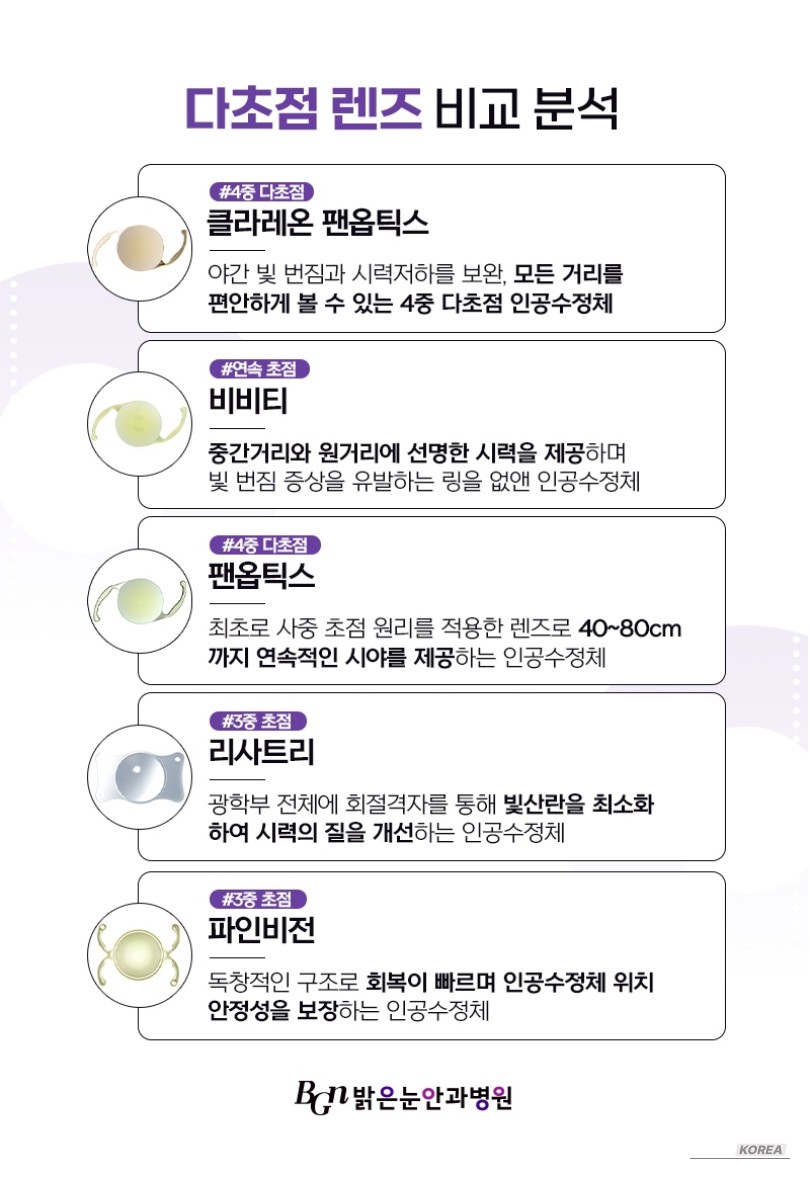
A monofocal lens design, which focuses on one point, has the advantage of providing a clear focal point, while multifocal or extended depth of focus designs aim to increase convenience in transitioning between distances.
The choice may vary depending on whether you frequently drive at night, do a lot of close-up work, or mainly view intermediate-distance screens. If you have astigmatism, sharpness is compensated for by adjusting the incision axis or through additional correction. At this time, cost differences may occur depending on the lens grade, additional examination items, and the scope of post-operative care.
Generally, the cost varies depending on the hospital system, the lens used, and the included aftercare. It may be explained as around 1.2 million won for monofocal lenses and around 2.5 million won for multifocal lenses, but the actual pricing reflects the examination results and selected options. When listening to package explanations, it is best to check the included items in detail and also receive guidance on possible additional costs.
Understanding this composition can clarify the criteria when comparing the costs of presbyopia and cataract surgery. After surgery, initial dryness, light scattering, and unfamiliarity with distance transitions may occur. Most people show a trend of stabilization over time, but the duration and experience vary from person to person.
It is important to follow the eye drop schedule, avoid rubbing your eyes, and follow the recommended follow-up schedule. Those with astigmatism may feel that focus adaptation is slower, so the correction plan is adjusted through additional consultation. If a particular occupation or hobby involves frequent use of a specific distance, the goal may be re-prioritized to focus on that range.
These adjustments are also explained in relation to cost. It is important to note that if you have pre-existing eye conditions, the priorities may change, and if the retinal condition is unstable, the timing may be adjusted. If you have diabetes or high blood pressure, surgery is performed according to the schedule after checking your overall health.
The surgical process and recovery vary from person to person, so it is difficult to say definitively. However, if you specifically define your life goals and vision goals and listen to explanations in understandable language based on the examination results, the choice can be easier. It is good to remember that the cost of surgery is not a single fixed number but the result of a composition.
Presbyopia and cataracts are problems that greatly inconvenience daily life based on the commonality of changes in the lens. Surgery is the process of removing clouding and reconstructing focus with an artificial lens, and there are many variables determined in the examination and consultation. Therefore, when checking the cost of presbyopia and cataract surgery, you should also look at lens selection, astigmatism correction, and the scope of aftercare.
Satisfaction tends to increase when goals are set focusing on the distance most used in one's living space. If you calmly organize information and make decisions step by step based on what you understand, you can get closer to a safe and acceptable choice. One additional thing to check is that the examination schedule may temporarily cause your eyes to feel dazzling due to pupil dilation, so it is convenient to plan your transportation home in advance.
Also, for those who spend a long time looking at screens for work, lowering the screen brightness and adjusting the document contrast in the early stages can help reduce eye fatigue. These preparations can reduce unnecessary discomfort during the recovery process.





Source :https://blog.naver.com/koikoro/224066690705
No comments yet.