Understanding the Cost of Phakic IOL Surgery



To understand the differences in Phakic IOL surgery costs.
Q. Is it advisable to see an ophthalmologist if I experience eye twitching?
While temporary eye twitching can be caused by fatigue or stress, it's recommended to consult an ophthalmologist if the symptoms persist or are accompanied by visual disturbances.
Q. How do I get internal medicine and ophthalmology checkups?
Internal medicine checkups involve assessing your overall health through blood pressure measurements and blood tests, while ophthalmology checkups include vision tests, intraocular pressure measurements, and fundus examinations. If necessary, the results from both departments are reviewed together for a comprehensive assessment.
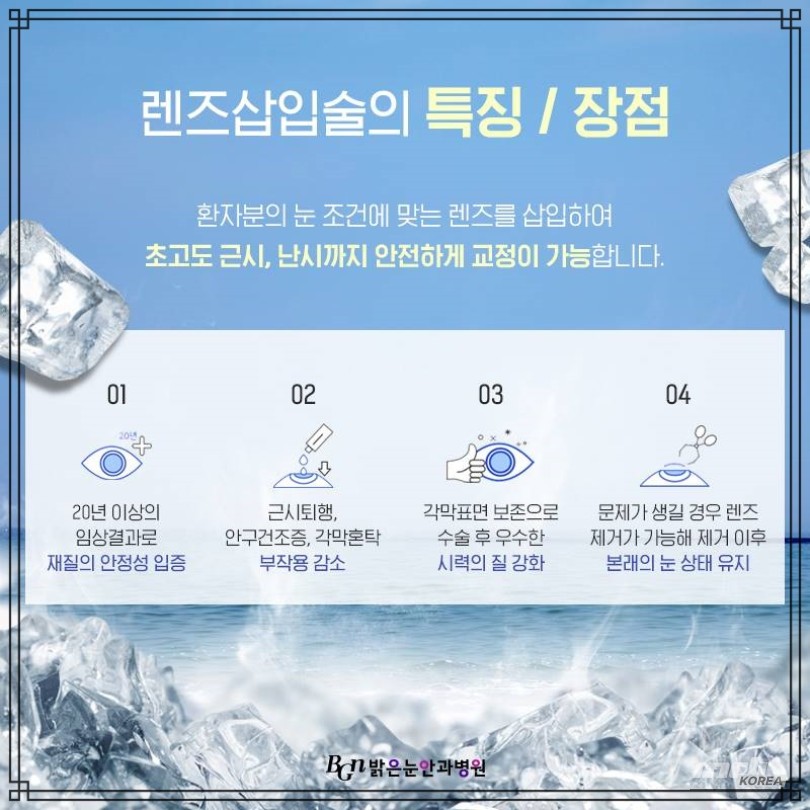
Phakic IOL surgery involves inserting a thin lens into the eye to correct refractive errors while preserving the natural lens. A key feature is that it corrects vision by utilizing space within the eye without extensively reshaping the cornea. It's often considered as an alternative for individuals with high myopia and astigmatism or those with thin corneas unsuitable for excimer laser correction. Myopia and astigmatism arise when the length of the eye and refractive power are not properly aligned, preventing light from focusing accurately on the retina.
Vision may become unstable after the growth period or with prolonged near-work activities. Surgical correction might be considered when contact lens use is uncomfortable or causes severe dryness, making long-term wear difficult. The numerous inquiries about Phakic IOL surgery costs are related to these factors.
Symptoms vary depending on the degree of refractive error. Distant objects may appear blurry, night vision may be impaired by glare, and eyes may tire easily after prolonged screen time. Allergic conjunctivitis or dry eye can cause recurring foreign body sensation and redness. When considering Phakic IOL surgery, factors such as changes in existing prescription, frequency of nighttime activities due to occupation, and whether the job requires detailed visual work are discussed.
It's necessary to consider not only the Phakic IOL surgery cost but also the included items and the scope of aftercare. The diagnosis process focuses on suitability assessment. Target refractive power is determined using autorefraction and cycloplegic refraction, and corneal topography and thickness distribution are examined. Anterior chamber depth and the distance to the crystalline lens are measured using tomography to calculate sufficient space to prevent the lens from being too close.
The corneal endothelial cell count is an important indicator of corneal transparency, and the surgery may be postponed if it doesn't meet the criteria. The retina and optic nerve are examined after pupil dilation to check for retinal breaks or weak areas. Initial costs may vary depending on the scope of the detailed examination, so this item should be distinguished when comparing Phakic IOL surgery costs.
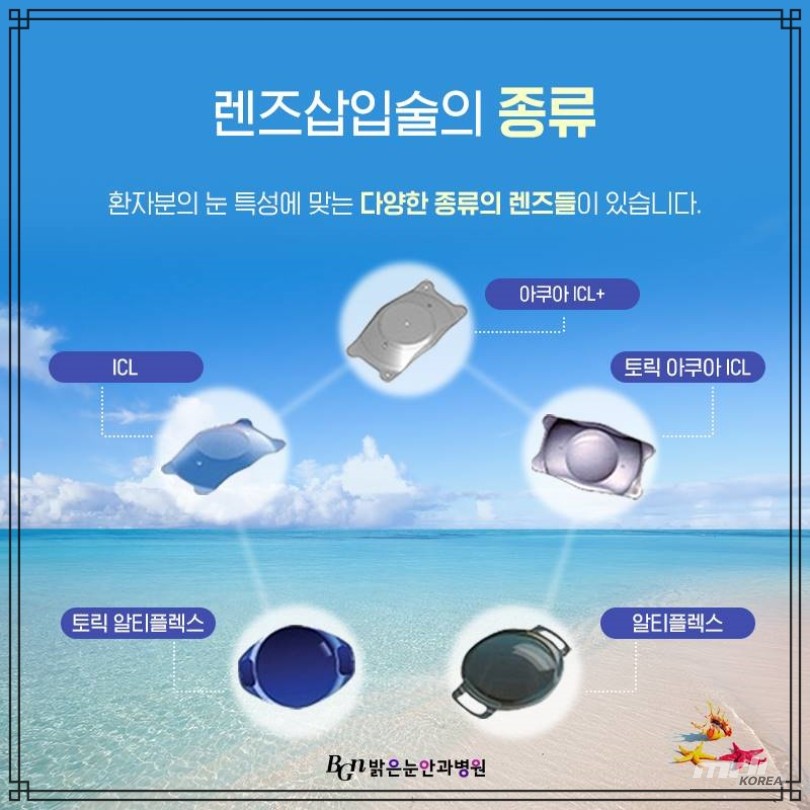
Lens selection involves considering power, size, and height. The model is chosen by comprehensively assessing pupil size, iris shape, and anterior chamber space, and a dedicated model is selected and axis alignment is adjusted if astigmatism is significant.
If you have been wearing soft contact lenses for a long time, it is important to follow the instructions to stop wearing them for a few days to ensure the accuracy of the examination, and hard lens wearers are advised to stop wearing them 2 weeks before the examination. Providing specific information about the required viewing distance, frequency of night driving, and screen time during the initial consultation can help with planning.
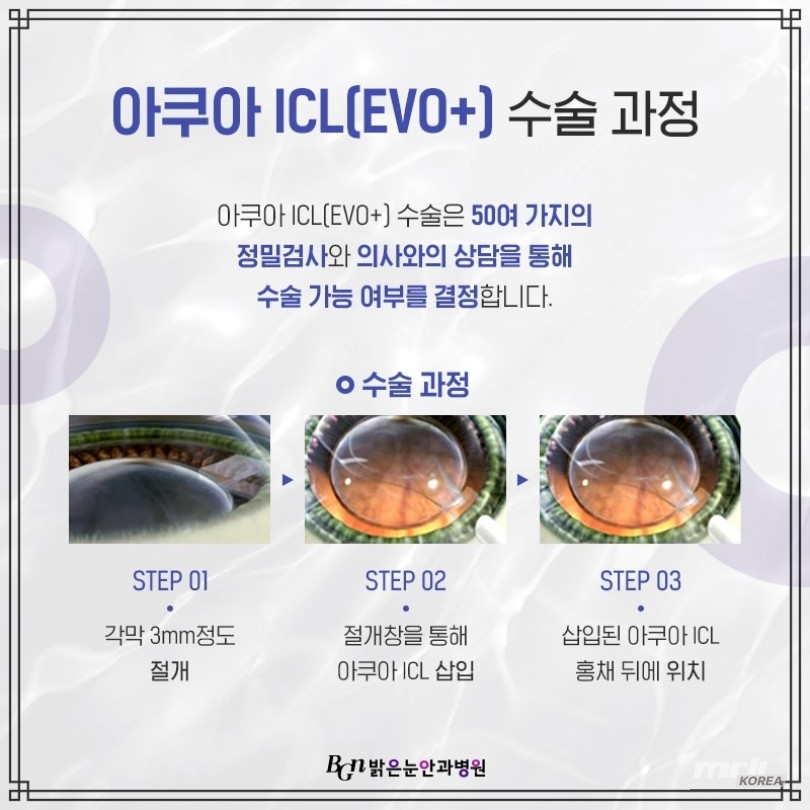
The procedure is performed after applying topical anesthesia. A small opening is created at the edge of the cornea, and the folded lens is inserted, unfolded, and positioned to maintain its center. The lens is designed to be placed in front of or behind the iris.
The procedure can be performed on both eyes on the same day or divided depending on the condition. The procedure takes only a few minutes per eye, but the perceived time may be longer when preparation and inspection are included. After the surgery, intraocular pressure, inflammatory response, and lens height are checked sequentially.
The follow-up schedule and included services vary from hospital to hospital, which can affect the total cost and should be considered when assessing Phakic IOL surgery costs. The approximate price range is also a common question. In many cases, the cost is around 3.5 million won for both eyes, and around 4.5 million won depending on the lens type and warranty coverage.
The actual difference can be seen only when the item standards are compared because some places charge the initial precision inspection fee separately and some include it in the basic package. Quotations may vary depending on the policy for correcting residual diopters, the number of follow-up examinations, and the lens model group used, so the total cost may vary. The post-operative schedule is usually planned in the following order: the next day, 1 week, 1 month, around 3 months, and 6 months.
Initially, intraocular pressure fluctuations and inflammatory responses are closely monitored, and then lens center, height, and anterior chamber space are reconfirmed. If dry eye is severe, the reaction is checked with each eye drop and the interval is adjusted, and if light scattering lasts for a long time, the pupil reaction is also checked.
It was safer to schedule the examination intervals more closely for those with a shallow anterior chamber or a history of suspected uveitis or glaucoma. If a long-distance flight is planned, schedule adjustments may be recommended to prepare for pressure changes.
If you experience severe pain, sudden blurred vision, or rainbow-like rings, you need to check immediately without waiting for your appointment date. In the early stages, it was safer to avoid rubbing your eyes vigorously and to use protective equipment during activities where strong impact was expected. If signs of increased intraocular pressure are seen, it was controlled with medication, and if it persisted for a long time, the lens height or position was reassessed.
If nighttime glare persists for a long time, the pupil size and lens center alignment were rechecked. It was necessary to visit the hospital according to the schedule provided and periodically check the corneal endothelial cell count and anterior chamber space. Phakic IOL surgery was a method of minimizing corneal resection and using the space inside the eye to compensate for refractive power. The suitability assessment was performed after examining the anterior chamber depth, corneal endothelial cells, and retinal condition together.
After surgery, intraocular pressure, inflammatory response, and lens height were systematically checked to secure a stable range. Since the amount varied depending on the included items, lens model, and scope of aftercare, it was more realistic to compare Phakic IOL surgery costs using the same standard table. Establishing a schedule and goals in consideration of lifestyle patterns and visual work characteristics can help reduce unnecessary repeated treatments.
It was safer to adjust the schedule during periods of large diopter changes and to discuss costs and plans with your doctor after consulting with your existing ophthalmologist. It was best to judge reoperation or lens replacement discussions step by step based on progress data. Adjusting the visit cycle in consideration of the timing of surgery and the work environment can reduce the burden.





Source :https://blog.naver.com/koikoro/224039678866
No comments yet.