Understanding Dry Eye Syndrome: The Key Lies in the Three-Layer Tear Structure


Dry eye syndrome, a common ailment among modern individuals, has the potential to develop into a serious ophthalmological condition, rather than being a simple, temporary occurrence. Reduced tear production can lead to a dry ocular surface, continuously inflicting minor damage to the cornea. This accumulated damage increases the risk of inflammatory diseases such as keratitis. Many people often dismiss dry eye as a minor, everyday symptom, missing the appropriate window for treatment.
However, if left untreated, it can lead to vision loss or severe corneal damage, making early diagnosis and treatment essential. Insufficient tear production weakens the eye's natural defense system, increasing the risk of bacterial infections and potentially causing irreversible eye damage in the long term. Therefore, if you experience symptoms of dry eye, it is crucial to seek immediate ophthalmological examination and begin appropriate treatment.
The Three-Layer Structure of Tears and the Functional Role of Each Layer
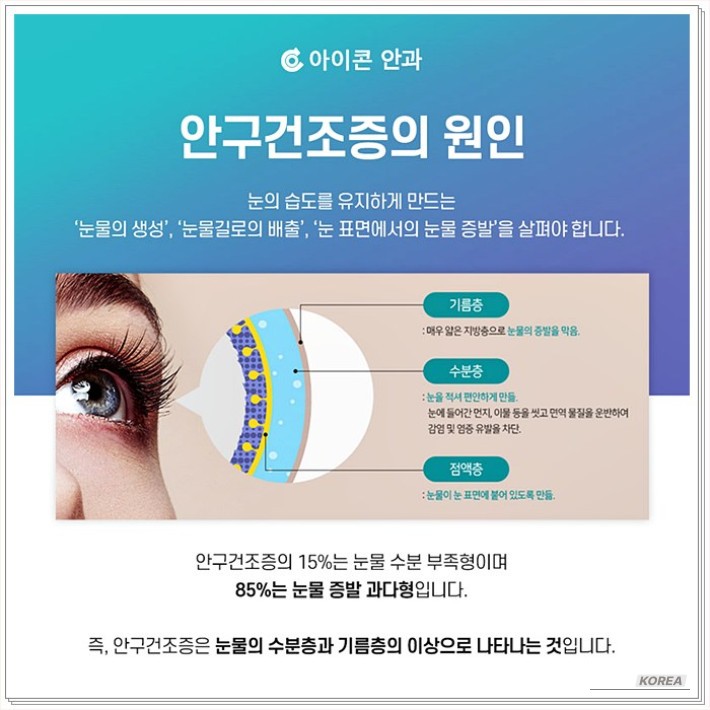
Normal tears are not just simple moisture; they consist of a complex three-layer structure: the mucin layer, the aqueous layer, and the lipid layer.
Mucin Layer
Closest to the cornea, it acts as an adhesive, helping tears spread evenly.
Aqueous Layer
Comprises the majority of tears (over 90%), responsible for removing foreign substances and supplying nutrients.
Lipid Layer
The outermost layer, it prevents tear evaporation and maintains moisture on the ocular surface.
These three layers must maintain an appropriate ratio and quality for tears to function correctly. The function of each gland gradually declines with aging, and in particular, the deterioration of the lipid layer due to meibomian gland dysfunction is a major cause of accelerated tear evaporation, leading to dry eye syndrome.
Increased Use of Digital Devices and Indoor Heating/Cooling Worsen Eye Dryness
The incidence of dry eye syndrome varies by gender, with women showing a higher prevalence than men. The use of cosmetics, eye makeup, and sunscreen can have a continuous impact on the environment around the eyes, increasing the risk of dry eye. A history of eye surgery or long-term contact lens wear are also significant risk factors.
The widespread adoption of digital devices and increased near-work time in modern society are major factors rapidly increasing the number of dry eye patients. The combination of reduced indoor humidity due to the extensive use of air conditioning and heating systems, and decreased blinking frequency due to prolonged monitor viewing, accelerates the drying of the ocular surface. Increased usage of various electronic devices such as smartphones, tablets, and computers is analyzed as an environmental factor significantly increasing the incidence of dry eye in modern individuals.
Various Symptom Manifestations and Impact on Daily Life
Symptoms of dry eye syndrome manifest in various forms and significantly impact a patient's daily life.
Immediately after waking up: Stiff eyes and severe redness.
External stimuli: Stinging and discomfort when exposed to wind or air conditioning.
After prolonged digital device use: Blurred vision, dimness.
Persistent symptoms: Stinging, burning sensation, hypersensitivity to light (glare).
Foreign body sensation: Feeling like sand or dust is in the eye.
Impact on life: Decreased concentration, reduced work efficiency.
These symptoms significantly reduce an individual's quality of life and, if left untreated, can gradually worsen and develop into more serious ophthalmic conditions.
Personalized Treatment Plans Essential for Treating the Root Cause
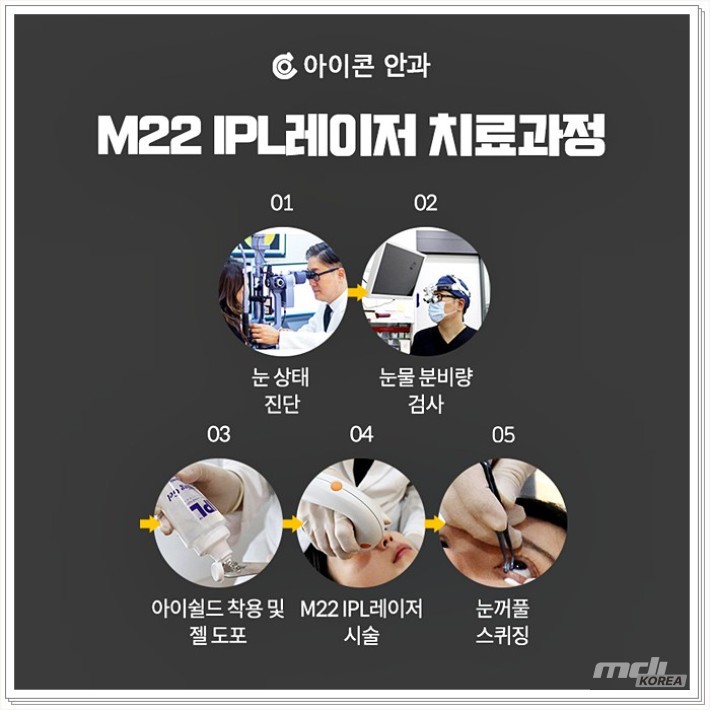
When inflammation or waste accumulates in the meibomian glands, oil secretion is not smooth, and dry eye syndrome worsens. In these cases, IPL treatment can be an effective improvement method.
IPL treatment uses 590nm short-wavelength light to convert light energy of a specific wavelength into heat energy, melting hardened oil and promoting new oil secretion. This treatment method has the effect of clearing blocked areas of the meibomian glands and reducing inflammation.
IPL treatment is an effective treatment method approved by the US FDA and verified for its effectiveness through the Mayo Clinic. It is being evaluated as a way to treat the essential cause, not just relieve the symptoms of dry eye syndrome. Before treatment, it is important to identify the clear cause of dry eye syndrome through precise examination and to establish a personalized treatment plan tailored to each individual's condition.
Comprehensive Approach Including Regular Eye Exams and Lifestyle Improvements is Effective
Dry eye syndrome treatment requires continuous management as a chronic disease. Just as basic cosmetics are used for skin care, regularly applying artificial tears is a basic management method. However, prescriptions may vary depending on the patient's symptoms and cause, so it is advisable to choose appropriate artificial tears after diagnosis by an ophthalmologist. In the case of tear glands and oil glands whose function has deteriorated due to aging, simple artificial tear instillation may have limitations.
Therefore, more effective results can be obtained if detailed treatment according to the cause is performed in conjunction with the use of artificial tears. Dry eye syndrome can be effectively managed through a comprehensive approach with regular eye examinations to monitor treatment progress and lifestyle improvements. It is important to establish a personalized treatment plan that suits your individual condition and symptoms and to practice it continuously.























Source :https://blog.naver.com/iconiconeye/224010314378
No comments yet.