Understanding and Preventing Pterygium Recurrence: A Detailed Look



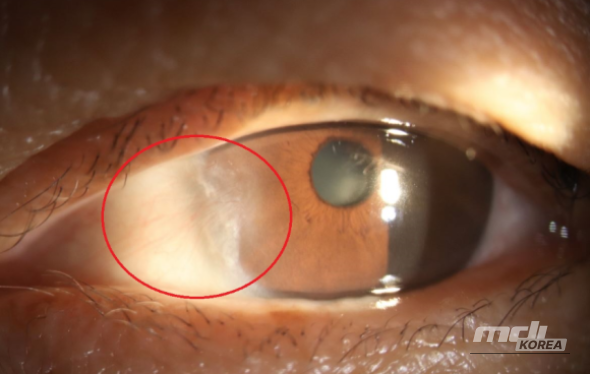
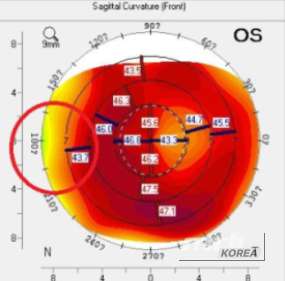
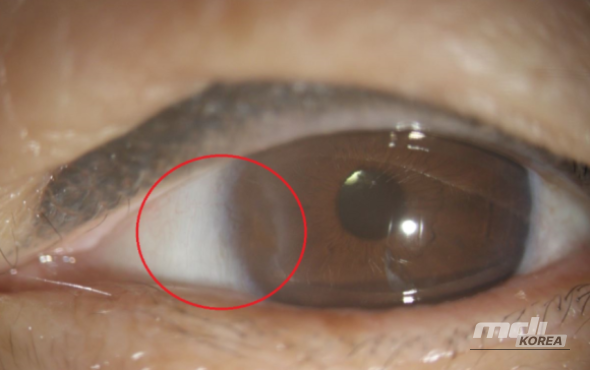
<Pterygium Surgery Review - Before>
December 10, 2018
Female patient born in 1957
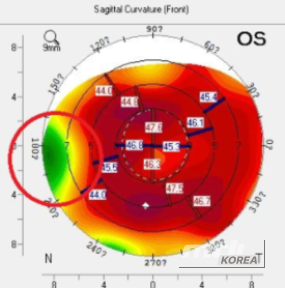
This is the patient's left eye.
The pterygium tissue had invaded the cornea.
<Pterygium Surgery Review - After>
January 17, 2019
One month after surgery.
The recovery is very clean.
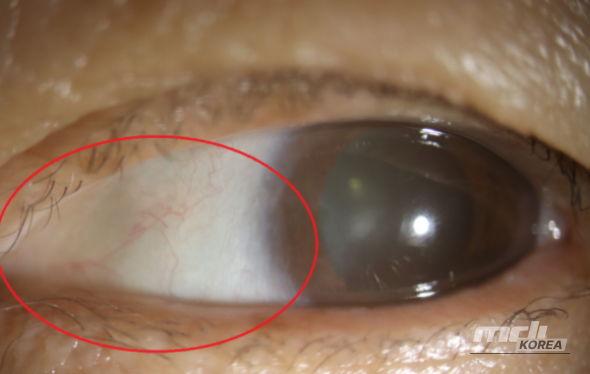
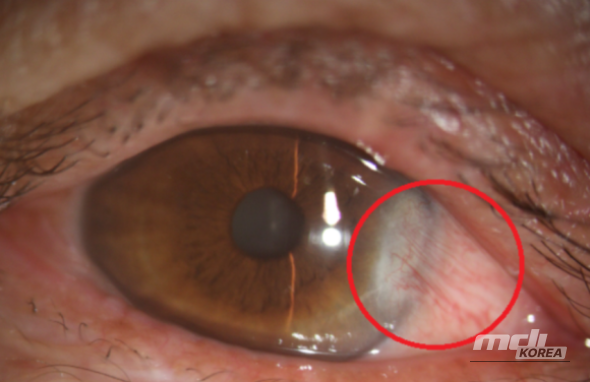
<5 Years Later>
It's truly unfortunate...
Pterygium is a common condition affecting about 1-2 in 10 people.
Unfortunately, recurrence occurs in 1 out of 4 patients who undergo surgery.
It's really upsetting...
According to a study,
the recurrence rate after pterygium surgery
is about 25%.
What's more concerning is that
once it recurs,
the adhesion is much worse than before surgery,
making reoperation that much more difficult.
Eventually,
the fibrovascular tissue continues to grow,
completely covering the pupil,
In severe cases,
you may almost lose the use of one eye.
In the worst-case scenario,
it can even lead to strabismus.
The reason why recurrence happens so easily
may be due to a problem with the surgical method itself.
Looking at the surgical method used in most hospitals,
after removing the pterygium,
the most similar area of your own body tissue is
taken and attached, then sewn.
Generally, the upper eyelid is turned over
to use the strongest conjunctiva.
However, with this method, as the stitches dissolve,
the fixation strength weakens,
making recurrence easy.
In addition to the high risk of recurrence,
the stitched sutures continue to
irritate the eye even after surgery,
causing a bothersome feeling even when still,
and throbbing pain may occur.
If the patient does not manage it properly,
inflammation can occur quickly,
causing the eye to swell red.
When I was a professor at a university hospital,
I also used this autologous conjunctival transplantation method,
But now...
the possibility of recurrence is high,
and patients are uncomfortable,
so I no longer use it.
The method I currently use
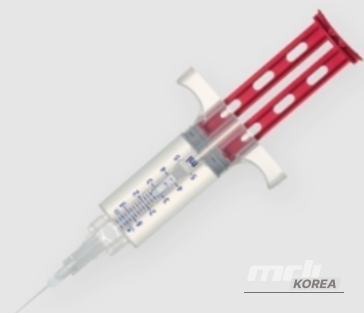
is to adhere the autologous conjunctiva using glue,
a biocompatible substance,
instead of suturing it with thread.
It is harmless to the human body,
so there are almost no side effects.
Moreover, among the patients who have undergone
pterygium surgery at our hospital so far,
no one has returned
due to recurrence.
In addition,
this method does not use sutures,
so there is almost no possibility of inflammation,
and there is less bleeding and pain,
allowing you to return to daily life
without discomfort even after surgery.
Then, what you might be wondering here is,
'Then why don't all hospitals
use this method?'
I think it will be.
One of the reasons is
because it is difficult.
Not every doctor can immediately follow
after learning it once or twice.
You have to go through at least dozens of clinical trials
yourself
to neatly attach
the suture area.
If you attach it incorrectly,
the eye becomes more and more uncomfortable,
and recurrence progresses faster.
The second reason is
because they are not well aware of this method.
Pterygium is generally
not classified as a serious eye disease,
so there are few hospitals
that specialize in treating it.
Also, the surgery cost is
not as high as LASIK or LASEK,
so most doctors
don't bother learning specialized skills.
Therefore,
unless you find and study this method,
there is no way to know it...
So most hospitals
continue to use
the existing classical method.
Sigh...ㅠㅠ
When I see cases of recurrence among patients,
it breaks my heart.
I don't mind if it takes time.
If only patients can
regain healthy and clear eyes,
I will take enough time to perform the surgery,
even if it takes several hours.
More detailed information on pterygium surgery
can be found in the two videos I have uploaded to YouTube.
If you are curious, please search for them ^_^
If you would like to receive a surgical consultation from me,
please make a reservation at the place below.
I will eliminate your worries about recurrence.
Until now, this has been Kim Seon-young, an ophthalmology specialist.^^
<Why is KBS looking for Kim Seon-young?>
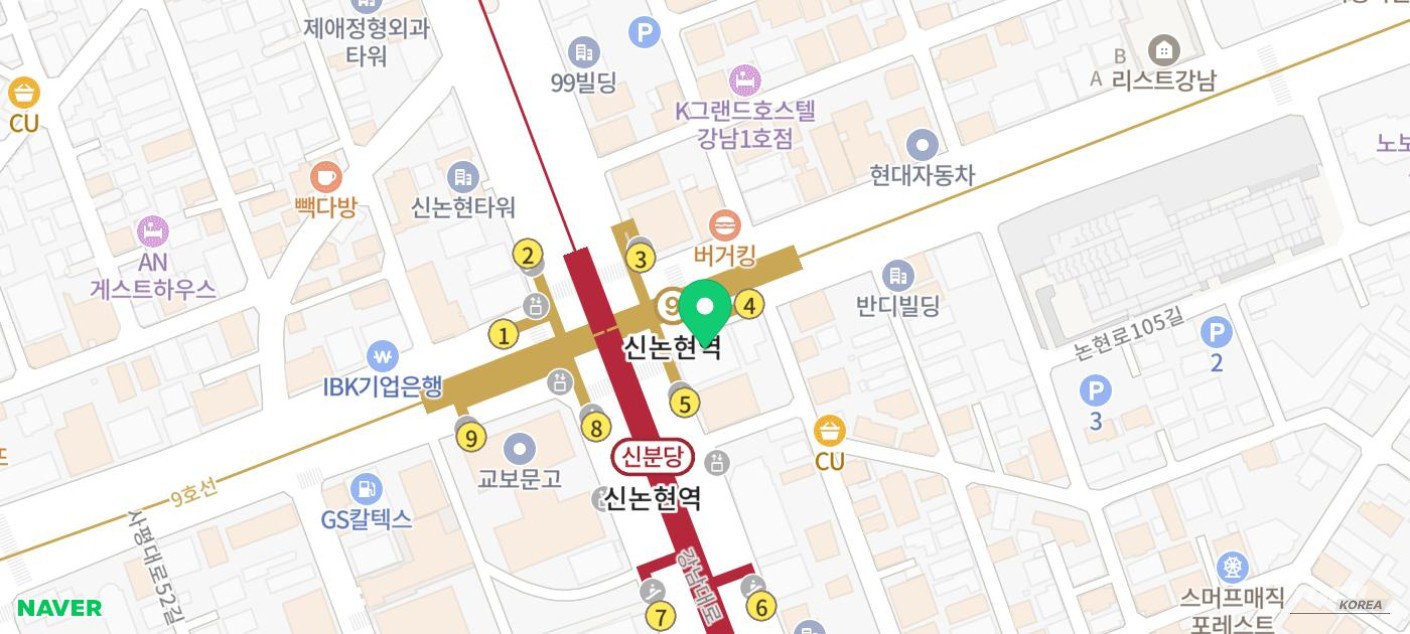
<Reservation & Directions>
This post is written directly in compliance with Article 56, Paragraph 1 of the Medical Law for the purpose of providing medical information.


Source :https://blog.naver.com/wpsjtltmals7/223999863294
No comments yet.