Understanding and Managing Dry Eyes: A Comprehensive Guide



When dealing with dry eyes, consider each patient's lifestyle and underlying causes.
Dry eye syndrome is a common eye health issue among modern individuals. It's crucial to pay attention, as it can progress beyond simple discomfort to a serious eye condition. Dry eyes can cause corneal damage, leading to more severe problems like keratitis. While many people consider dry eye a mere symptom, insufficient tear production can significantly impact eye health.
If not properly addressed, it can lead to vision impairment or chronic discomfort, so it's important to recognize the symptoms early and respond quickly. Don't neglect the symptoms of dry eyes; it's advisable to start appropriate treatment. As eye health is directly related to quality of life, it's necessary to receive appropriate care with the help of medical professionals.
Tears are not just simple moisture but a crucial element with a complex structure. Composed of a mucin layer, an aqueous layer, and an oil layer, each performs a unique function. The mucin layer helps tears spread evenly over the eye's surface, the aqueous layer washes away foreign substances and prevents infection, and the oil layer prevents rapid tear evaporation. An imbalance in these three layers can cause dry eye syndrome.
In particular, decreased gland function due to aging, especially issues with the meibomian glands that secrete the oil layer, is a major cause. Environmental factors also play an important role. Prolonged use of digital devices, increased use of air conditioning and heating, and the use of sunscreen or makeup are factors that increase the incidence. Considering these various causes is essential for effective results when dealing with dry eyes.
Common Symptoms of Dry Eye:
- Severe eye stiffness and redness upon waking
- Eyes becoming sensitive to wind
- Blurred vision and eye fatigue after prolonged computer use
- Hypersensitivity to light
- Persistent foreign body sensation
For accurate diagnosis, various tests are needed, including tear secretion tests, tear film breakup time tests, and corneal staining tests. Evaluating the function of the meibomian glands is particularly important, as it is one of the main causes of dry eye syndrome. Detailed diagnosis is the basis for selecting effective treatment methods. Therefore, if you experience persistent discomfort from dry eyes, it's important to identify the cause through an eye exam and establish an appropriate treatment plan.
The first step in managing dry eye syndrome is using artificial tears and improving lifestyle habits. Artificial tears are an effective way to temporarily relieve eye dryness. However, not all artificial tears have the same effect, so it's important to choose the right product for your individual condition. It's best to get a prescription for artificial tears that are right for you through consultation with a healthcare professional.
Lifestyle improvements are also an important part. It helps to practice the 20-20-20 rule (every 20 minutes, look at something 20 feet away for 20 seconds) when using digital devices, maintain adequate indoor humidity, and drink plenty of water. Regular eye exercises and eye massages are also effective. If these basic management strategies are not sufficient when dealing with dry eyes, more aggressive treatment may need to be considered.
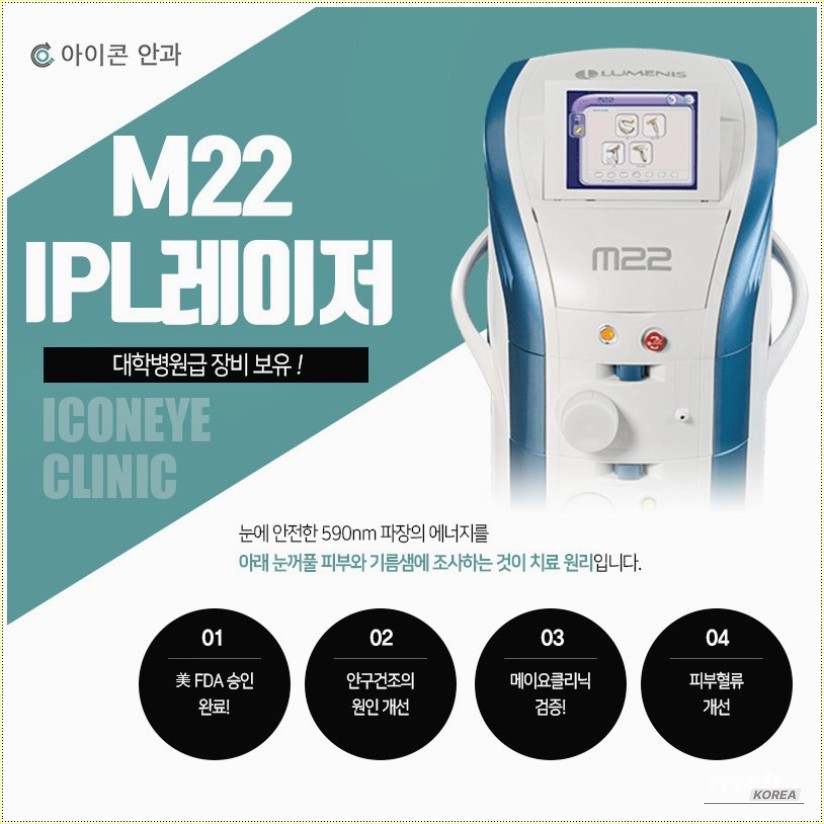
"If dry eye syndrome is caused by meibomian gland dysfunction, IPL treatment can be an effective method."
IPL (Intense Pulsed Light) treatment is a method of improving the function of the meibomian glands using light energy of a specific wavelength. It melts hardened oil and reduces inflammation, improving the quality of tears. IPL treatment is usually performed about 3-4 times at 2-3 week intervals, with each session lasting about 10-15 minutes. There is no special pain during the treatment process, and you can return to your daily life immediately after the procedure.
However, IPL treatment is not suitable for all dry eye patients, so suitability should be determined through diagnosis. It can be particularly effective for patients with moderate to severe symptoms who do not respond to conventional conservative treatments.
Comprehensive management is necessary for effective control of dry eye syndrome. It is important to appropriately combine the use of artificial tears, lifestyle improvements, and, if necessary, advanced treatments such as IPL therapy. It is also advisable to monitor changes in symptoms through regular eye exams and adjust the treatment plan accordingly. Dry eye syndrome has the characteristics of a chronic disease that requires continuous management, so it should be approached from a long-term perspective. It is effective to establish a customized management plan that considers each patient's lifestyle, occupation, and environment.
If the discomfort caused by dry eye syndrome interferes with your daily life, it is best to consult with a healthcare professional to find the most appropriate treatment for you. Eye health is an important issue directly related to the quality of life, so it is important to maintain healthy eyes through active management and treatment.

























Source :https://blog.naver.com/iconiconeye/224066725256
No comments yet.