Three Essential Questions to Ask When Choosing a Cataract Lens



Choosing a cataract lens is a once-in-a-lifetime decision.
Here are three questions you absolutely must ask
during your consultation.
I am an ophthalmologist with 18 years of experience
and have performed over 20,000 cataract surgeries.
I once performed surgery on up to 51 people in a single day.
Although I have performed countless surgeries myself,
I always consult deeply with my patients when choosing a cataract lens.
Because that cataract lens determines the window
through which the patient will view the world for the rest of their life, influencing crucial moments.
That's why I always start by asking three key questions.
However, other hospitals may not bring up these questions proactively,
so it's important that you ask them yourself.
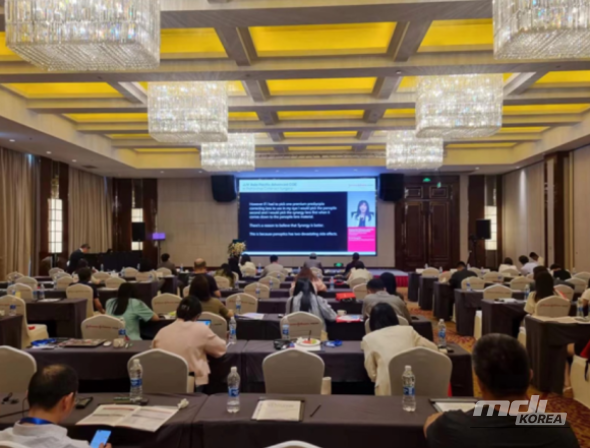
I have even lectured on lens selection before a gathering of 100 of China's leading ophthalmologists.^^
First, consider your occupation.
Office work,
Sales,
Business Development,
Farming,
Driving
...etc.
Various occupations can be divided by type.
The key point here is that you should thoroughly discuss
'working distance' with your doctor.
I was recently contacted by KBS and appeared on their show^^
(KBS 'A Good Morning to Try')
For example,
doctors often visit our hospital.
Depending on their specialty,
the required 'working distance' varies.
For plastic surgeons, obstetricians, and dermatologists,
short near vision is particularly important.
General practitioners, neurologists, and pediatricians also
need appropriate near vision.
For radiologists, gastroenterologists, and cardiologists,
in addition to adequate near vision,
the intermediate distance must also be covered.
Fields that require microscope use, such as neurosurgery, pathology, and diagnostic laboratory medicine,
can be classified using different criteria.
Rather than simply dividing by occupation,
you must clearly communicate the 'working distance needed for my job'
to your doctor.
If you skip this process and choose a cataract lens
simply because it is cheap,
or choose it because it is expensive, assuming it is good,
you may live with discomfort for the next 40 to 50 years.
Recently, a top instructor from Daechi-dong visited our Healing Eye Clinic.
That teacher needed clear vision at close range, like when reading a book (40-50 cm),
clear vision of the writing on the chalkboard (70-80 cm),
and clear vision of the faces of students sitting far away (1.5 m or more).
That teacher visited three hospitals in order.
The first hospital recommended a monofocal myopic lens.
The second hospital recommended an Eyhance lens.
The third hospital recommended a PureSee lens.
If both eyes had been fitted with Eyhance or PureSee lenses,
it would have been quite uncomfortable to teach students while reading a book.
They need to freely move between the chalkboard and their book, shifting their gaze to the children.
Because of a lens with poor near vision clarity,
the words in the book may have appeared blurry.
In that case, even after the surgery,
they would have had to continue taking their glasses on and off
while teaching.
There are so many different types of lenses~
For this person,
the combination of 'PureSee + Diffractive Lens
(e.g., Synergy, PanOptix, Ziemetric, etc.)'
was optimal.
The PureSee lens firmly captures the intermediate focus,
and the diffractive lens clearly secures near vision.
(This is because if a diffractive lens is placed in both eyes,
intermediate vision may be impaired.)
Now, they are very satisfied, saying that it does not interfere with their classes at all.
I hope you all
discuss what you do
thoroughly with your doctor and choose your lenses accordingly.^^
Johnson & Johnson, a US cataract lens company,
came to our Healing Eye Clinic in person.^^
Secondly,
you must tell them 'what activities you enjoy'.
(This is somewhat similar to occupation.)
For everyone who comes to us for cataract surgery,
I always ask first,
'Do you have any hobbies?'
Then, most elderly patients in their 70s or older
often answer like this.
'I don't really have any hobbies -
my vision is blurry,
so I just stay home...'
But in fact, a hobby is...
an activity you enjoyed when your eyes were good
or something you want to try
once your vision is restored.
Golf,
Fishing,
Billiards,
Reading,
These hobbies
are each a joy in life...
In fact, many people start again
once their vision returns.
But if you don't think about this in advance
when choosing a cataract lens,
'Ah... that ball flying far away
looks a little blurry...'
(Golf)
'I had surgery, but I have to take out my reading glasses again to read a book...'
In this way,
you may have regrets.
Religion can also be an important factor here.
Churches are dark,
and the letters in the Bible are too small.
In temples, you need good vision to read Chinese characters
to easily read the Heart Sutra.
As you can see,
there are surprisingly many things to check.
So, if you
think in advance,
'What activities will I spend my time on
once my vision is restored?'
and visit the ophthalmologist, it will be much more helpful.
Cataract Lens Types
Thirdly,
you must check 'whether astigmatism correction is possible'.
Based on my surgical experience,
approximately eight out of ten people
have astigmatism.
If astigmatism remains,
objects may appear doubled or tripled even after surgery,
so it is essential to correct astigmatism as well.
To accurately correct astigmatism like this,
a high-priced piece of equipment costing around 250 million won is essential in the operating room:
'Callisto Eye'.
This is the Callisto Eye equipment we have in our eye clinic.
When I asked the astigmatism equipment manager,
he said that only about 85 units have been sold in Korea.
Even though there are thousands of eye clinics nationwide,
there are only 85 of these machines,
and in reality,
there are quite a few hospitals that do not correct astigmatism at all.
Because even doctors don't often cover it on blogs or YouTube,
patients also often do not consider astigmatism to be important.
However, even if cataracts are removed
and vision is restored,
if things appear doubled or tripled for the rest of your life...
it will be really frustrating and uncomfortable in your daily life.
So, when you go to an eye clinic,
it's a good idea to ask, 'Is astigmatism correction possible?'
Today, I have summarized the three questions
you must ask in the consultation room
for the once-in-a-lifetime choice of cataract lens type.
1. Occupation
(You must specifically communicate your working distance
in the consultation room.)
2. Hobbies
(Even if you don't do them now,
what activities do you want to do in the future?)
3. Presence of Astigmatism
(About eight out of ten people have astigmatism~)
Even on a weekday morning, many people are visiting.^^
If you are reading this article
and would like to receive a light consultation from me...
rather than contacting me right away,
I would appreciate it if you could read at least two or three more blog posts.
Just as applause does not come from one hand alone
but rings out when two hands meet,
if you trust me more
and come to me,
I will also do my best
to provide thorough consultation.^^
The following article was written by me,
so I hope you will read it before making a reservation.^_^
<Must Read Before Visiting Healing Eye Clinic>
<Reservations & Directions>
This post is for the purpose of providing medical information
and was written directly in compliance with Article 56, Paragraph 1 of the Medical Law.







Source :https://blog.naver.com/wpsjtltmals7/224073581274
No comments yet.