SMILE vs. LASIK vs. LASEK at Gangnam Station Eye Clinic: A Customized Approach



With rapid advancements in medical technology, more and more people are seeking vision correction surgery to reduce the inconvenience of glasses and contact lenses. Among the options, many are comparing the costs of SMILE surgery at Gangnam Station eye clinics with those of traditional procedures. However, it's crucial to consider factors beyond just the cost of surgery.
Vision correction surgery requires careful consideration as it involves procedures performed on the eyes. Incorrect surgical methods can lead to side effects, aftereffects, or even complications. While the price of surgery is important, it's essential to evaluate various aspects, such as the surgeon's experience, their understanding of the equipment used, the systematic approach to aftercare, and their commitment to patient-centered care. In particular, vision correction surgery should not be based on the patient's desired procedure but rather on a comprehensive eye examination to determine the most suitable surgical method based on the individual's condition.
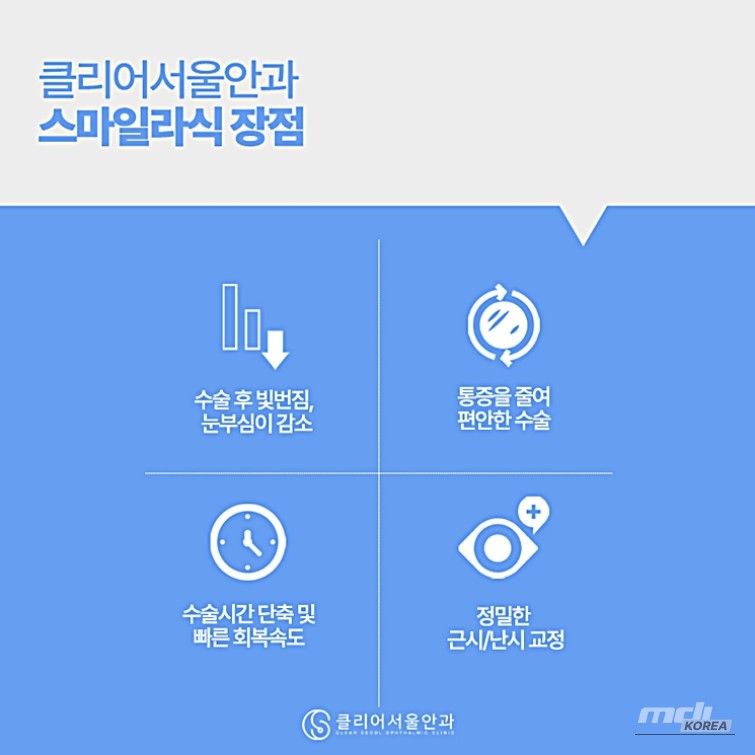
SMILE surgery, which has gained significant attention, is characterized by minimal pain and rapid visual recovery, often the day after surgery. While it offers a wide correction range, it is not suitable for everyone. In some cases, older surgical methods may be more appropriate. Therefore, choosing the right vision correction surgery requires careful consideration of the internal condition of the eyes and the patient's lifestyle.
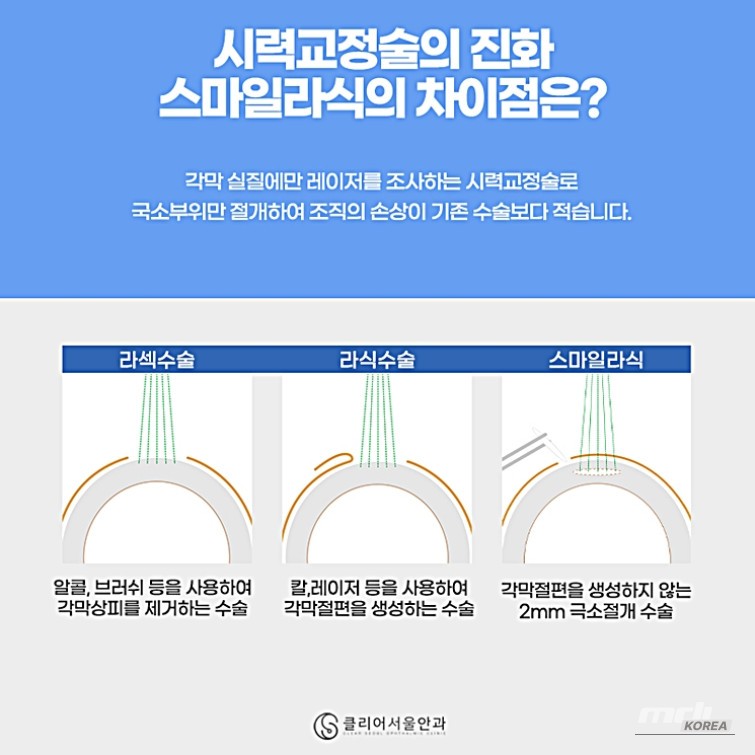
SMILE surgery performed at Gangnam Station eye clinics differs from LASIK, which involves creating a flap, and LASEK, which involves removing the epithelium. SMILE surgery uses a femtosecond laser to correct vision through a small 2-3mm incision in the cornea. Because it doesn't create a flap like LASIK, the size of the corneal incision can be reduced, minimizing concerns about dry eye and other side effects. It is particularly suitable for individuals with thin corneas who are not candidates for flap creation and for patients with high myopia requiring significant correction. Additionally, because it doesn't remove the epithelium like LASEK, the risk of inflammation is reduced, pain is minimal due to the small incision, and the stability of the surgery is high because the internal corneal structure is largely preserved. Comparing SMILE, LASIK, and LASEK allows for a determination of the most suitable surgery and enhances the safety of the decision.
The cost of surgery varies from clinic to clinic and can depend on factors such as corneal shape, thickness, form, degree of vision correction needed, and the presence of myopia or astigmatism. Post-operative examinations and prescribed eye drops can also affect the total cost. On average, the price ranges from approximately 2,000,000 to 3,000,000 KRW. For detailed information, it is recommended to visit a Gangnam Station eye clinic for a thorough examination and consultation with a medical professional to discuss the results.
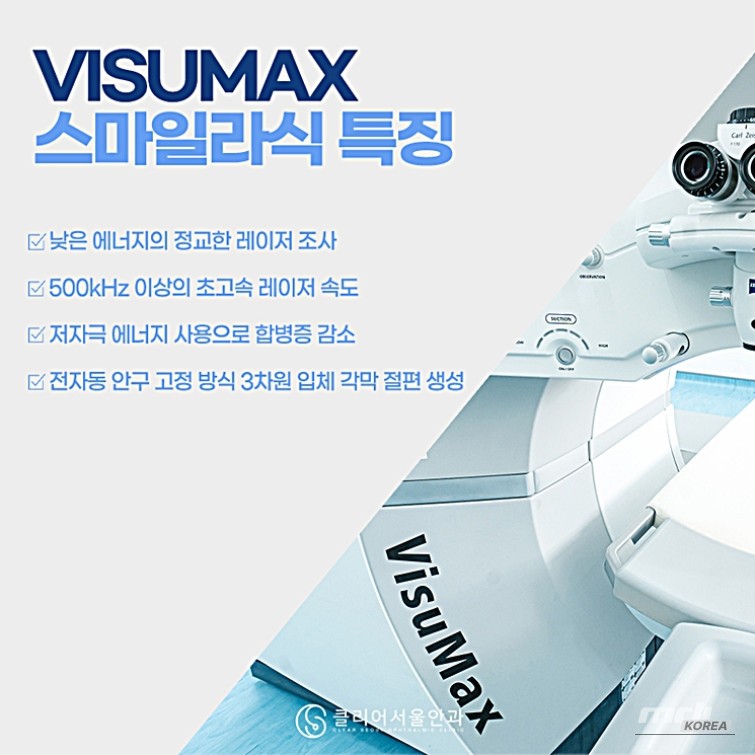
With SMILE, LASIK and LASEK surgery, vision is typically restored to a functional level the day after the procedure, allowing for a return to normal daily activities. Because the eye is more resistant to impact, it is suitable for a variety of professions, and those with limited time can quickly return to their routines. This is largely due to the surgical equipment used. Gangnam Station eye clinics utilize the VisuMax laser, which is characterized by its low energy usage. While traditional surgeries often required higher energy levels due to difficulties in laser settings, SMILE surgery allows for precise laser control, providing customized laser treatment based on each patient's unique eye condition. This minimizes potential damage and irritation to the eye, shortening the recovery period.
The laser's rapid scanning speed of approximately 500 kHz allows for the creation of a smoother and denser lenticule during the lenticule creation process. This improves the quality of vision. The fully automated eye-tracking system stabilizes the eye, preventing shaking and minute tremors, thereby reducing the chance of error. This system also prevents increased intraocular pressure, reducing the risk of complications such as glaucoma and minimizing concerns about conjunctival hemorrhage, leading to a faster recovery.
However, the SMILE procedure requires the surgeon to manually remove the lenticule, rather than using a laser. This step requires a high level of skill and experience. If errors occur during this process, and the lenticule is not properly separated, prolonged treatment may be necessary. Therefore, it is essential to consider the surgeon's experience when choosing an eye clinic.
Post-operative care is just as important as the SMILE, LASIK and LASEK surgical procedure itself. Neglecting aftercare, even after a quick recovery, can slow down healing or cause vision to deteriorate again. On the day of surgery, it is best to minimize the use of electronic devices and get plenty of rest. Even though the procedure involves a micro-incision and may not be painful, the eye is likely to be very sensitive after surgery. It is recommended to wear a protective eye shield while sleeping to prevent unconscious rubbing or touching of the eyes. The day after surgery, washing your face and taking short walks are possible, but strenuous exercise should be avoided for about three weeks, as it can increase intraocular pressure. While exposure to ultraviolet (UV) light is not a major concern, UV rays can contribute to vision loss, so it is advisable to wear sunglasses or a hat until the eyes have stabilized. Prescribed eye drops should be used to reduce inflammation, and even after vision has returned to normal, continued eye care is important. Places with a high risk of infection, such as public baths, should also be avoided for the time being.
Regular check-ups are essential to maintain good vision over the long term. Even with the same surgical method, the results can vary depending on the surgeon's skill. As the surgery requires a high level of technical expertise, it is important to carefully consider all aspects before making a decision.

















Source :https://blog.naver.com/whgus4231/224014034547
No comments yet.