SMILE vs. LASIK: Understanding Vision Correction Surgery at a Gangnam Eye Clinic



SMILE LASIK Eye Clinic in Gangnam, Seoul
Understanding the Differences Between LASIK and SMILE
Important Considerations Before Vision Correction Surgery
With various vision correction surgeries available, many are curious about the differences between SMILE and LASIK, especially at clinics in Gangnam, Seoul. This is understandable, given the similarity in their names. However, it's crucial to recognize that even with similar names, each vision correction surgery differs in its procedure, equipment, and suitability based on individual eye conditions. Therefore, a thorough examination is essential to determine the most appropriate surgical method with your doctor. Just as everyone's physical appearance is unique, internal eye characteristics like corneal thickness, shape, and refractive error also vary.
To prepare for the examination, those who wear contact lenses should discontinue their use for a specific period. Lenses can temporarily alter the shape of the cornea, and the required discontinuation time varies depending on the type of lens. Soft lenses should be stopped about one week prior, toric soft lenses or hard lenses for 2-3 weeks, and orthokeratology lenses (though less common) for about a month to ensure an accurate assessment of your natural eye condition. At our Gangnam SMILE LASIK Eye Clinic, we conduct various tests to thoroughly assess your eye's condition, which may take a considerable amount of time. Therefore, it's advisable to allocate ample time for your visit. Additionally, if you have systemic conditions like diabetes or hypertension, a comprehensive consultation is necessary. Please keep these factors in mind.
LASIK, LASEK, and SMILE: Key Differences
LASEK and LASIK are among the most well-known vision correction methods. LASEK involves removing a thin layer of the corneal epithelium using alcohol or a brush to improve vision. Because the corneal epithelium contains pain receptors, some discomfort and a slower recovery may be experienced post-surgery. However, once healed, the epithelium regenerates, leading to stable vision recovery and increased resistance to external impacts, making it suitable for athletes or those in professions with a high risk of eye trauma. LASIK involves creating a corneal flap by making a 20mm or larger incision in the cornea. Due to the significant amount of corneal tissue cut, LASIK requires specific corneal thickness criteria. If the cornea is too thin, the surgery may not be feasible, as insufficient residual corneal thickness can lead to complications like corneal ectasia. Therefore, LASIK is best suited for individuals with sufficient corneal thickness. The flap also poses a risk of displacement or tearing upon impact, making it less suitable for those prone to eye injuries. However, LASIK offers the advantage of faster visual recovery and minimal pain, making it a good option for office workers or those with low risk of eye trauma.
At our Gangnam SMILE LASIK Eye Clinic, the SMILE procedure differs from both LASEK and LASIK. Instead of removing the epithelium or creating a flap, a femtosecond laser is used to create a lenticule (a small, lens-shaped piece of tissue) within the cornea. A small (2-3mm) incision is then made on the periphery of the cornea through which the lenticule is extracted. The removal of the lenticule reshapes the cornea, correcting the refractive error.
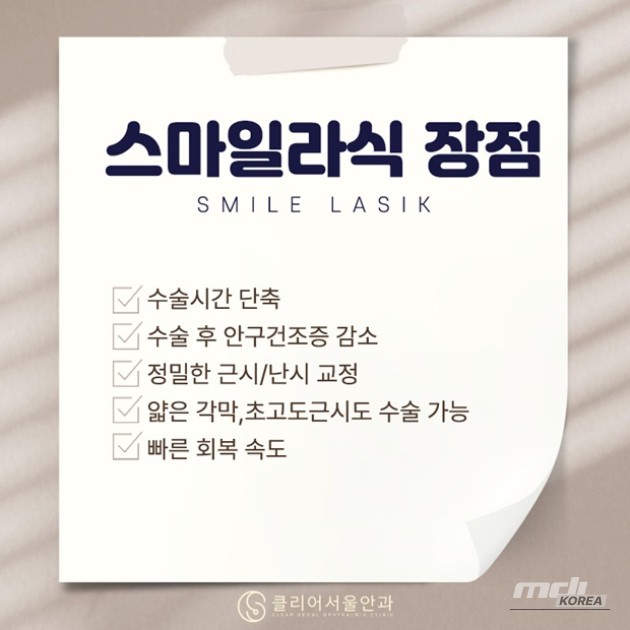
The SMILE procedure differs significantly from LASIK and LASEK. Notably, SMILE reduces corneal incision size by more than 90% compared to LASIK, making it suitable for individuals with thinner corneas. The minimally invasive nature of SMILE also allows for faster natural healing and visual recovery, with many patients experiencing improved vision the day after surgery.
The Unique Advantages of SMILE
SMILE tends to have fewer side effects like dry eye and corneal haze. The reduced surgical time minimizes the eye's exposure to the external environment, further reducing the risk of complications. While discomfort is minimal, some light sensitivity or foreign body sensation may occur on the day of surgery, so rest is recommended. Even with the rapid recovery of SMILE, it's crucial to avoid excessive eye strain for about a week. Reduce screen time and avoid using electronic devices in dimly lit environments or while in motion (e.g., on the subway or bus). Use artificial tears to keep your eyes lubricated and stay well-hydrated. Refrain from alcohol and smoking for about 3 weeks to a month to prevent inflammation. Avoid places with a high risk of infection, such as bathhouses, saunas, and swimming pools, for a while. Even after vision has stabilized, regular eye exams are essential to monitor your recovery and maintain optimal eye health.
While the differences between SMILE and LASIK are significant, LASIK may be more suitable in certain cases. Therefore, it's crucial to undergo a thorough eye examination and consult with a qualified surgeon to determine the best surgical plan for your individual needs.
You may be curious about the cost of SMILE surgery at our clinic. The price typically ranges from ₩2,000,000 to ₩3,000,000, but this can vary depending on the clinic, the patient's eye condition, the equipment used, and the surgeon's experience. For detailed pricing information, please schedule a consultation.
The Importance of Advanced Surgical Equipment
Our Gangnam SMILE LASIK Eye Clinic uses the VisuMax laser for SMILE procedures. A key feature of this equipment is its use of low energy. By adjusting the laser, we can provide the optimal low energy for each patient's unique eye condition, minimizing corneal damage and irritation, which promotes faster recovery. Additionally, the 500kHz high-speed laser creates smooth and precise lenticules, enhancing the quality of vision. The fully automated eye-tracking system creates three-dimensional corneal flaps, stabilizing the eye and preventing conjunctival hemorrhage or blackout phenomena, while minimizing internal structural changes, further increasing the safety of the surgery.
However, the lenticule dissection process is performed manually by the surgeon, not by the laser. Therefore, it's essential to verify the surgeon's experience and skill. If the lenticule is not properly dissected or if errors occur, the correction effect may be reduced, or the risk of side effects may increase. We highly recommend choosing a surgeon with extensive experience.
The demand for vision correction surgery is increasing as people seek to reduce their reliance on glasses and contact lenses and enjoy clearer vision. As mentioned earlier, the newest surgery is not necessarily the best; the most suitable surgery is the one that best fits your individual eye condition. While you can research surgical options online or through friends, you cannot assess your own eye condition. Therefore, a thorough consultation with a qualified surgeon is essential. When choosing an eye clinic, consider these factors and prioritize patient-centered care and extensive clinical experience to ensure a safe and successful surgical outcome.




















Source :https://blog.naver.com/whgus4231/224021169184
No comments yet.