SMILE LASIK Recovery: Consistent Aftercare is Key



These days, we see many vision correction procedures that aim to minimize strain on the eyes. Among the various options, SMILE LASIK has garnered significant attention. While it's considered a less burdensome method, proper care during the SMILE LASIK recovery period is crucial for a stable recovery.
Above all, one important point to remember is to choose a method tailored to your individual eye condition, rather than simply opting for the newest procedure. The most suitable approach varies depending on factors like your eye's condition, lifestyle, and budget. SMILE LASIK stands out because it doesn't involve creating a flap or removing the corneal epithelium.
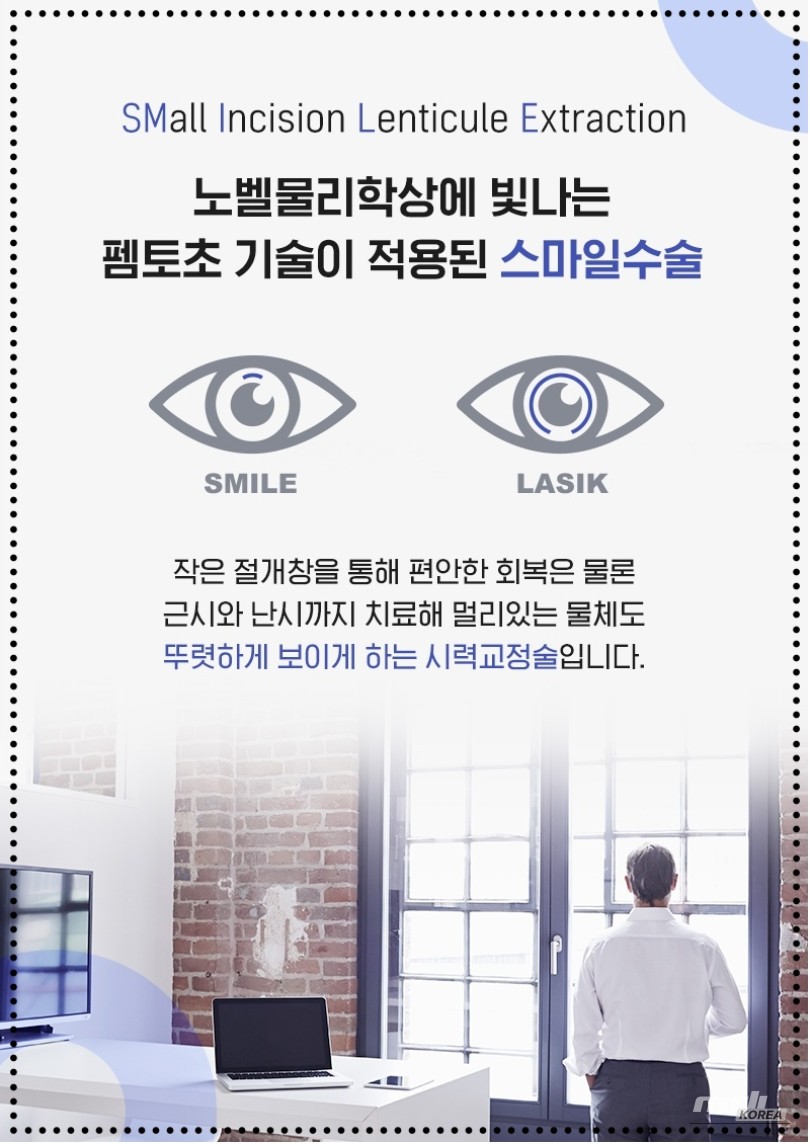
The procedure involves making a small incision, refining the internal tissue, and then removing the refined tissue through a small external incision. This minimal incision approach is advantageous for preserving eye health, minimizing discomfort, enabling a quicker recovery, and providing considerable durability.
Of course, ensuring a stable recovery during the SMILE LASIK recovery period is essential for achieving stable vision. It's also crucial to thoroughly assess whether the procedure is suitable for you. Excessive damage or insufficient residual corneal thickness can lead to various side effects. Therefore, understanding the detailed principles and precautions is necessary to make an informed decision.
To determine suitability, factors such as pupil size, corneal thickness and shape, pre-existing conditions, curvature, and vision should be checked. If these values don't meet the criteria, alternative methods should be considered. These elements must be carefully reviewed before selecting the appropriate procedure.
Proper pre-operative preparation is also vital. To ensure accurate examination and surgery based on your original corneal condition, avoid wearing contact lenses before the examination and surgery dates. Discontinuing lens wear about a week in advance allows for an assessment based on your natural eye state.
During the SMILE LASIK recovery period, it's advisable to avoid alcohol and caffeine, as they can cause dryness and hinder recovery. Additionally, adjust the brightness of monitors and mobile phones and check the font size. Since vision isn't immediately restored after surgery, consider transportation arrangements and having a companion.
The surgery itself doesn't take long. After applying anesthetic eye drops, the lenticule is formed and the tissue is removed. The process usually takes about 10 minutes, but maintaining a steady gaze without moving your eyes is crucial due to the precision required. Immediately after the procedure, you may experience blurry vision or glare, but these issues typically resolve during the SMILE LASIK recovery period.
There are several precautions to take during the SMILE LASIK recovery period. Especially in the early stages, avoid prolonged screen time due to the increased vulnerability of your eyes. Also, attend scheduled check-ups to monitor your progress and ensure stable healing. Efforts such as using artificial tears and eye drops for the first week are necessary to manage your eye condition.
Around the second week, you can gradually increase your workload. However, prolonged focus on a single screen is not recommended; take regular breaks to look at distant objects or close your eyes. After one month, you can gradually resume more intense exercise, but avoid direct impact or pressure on the eyes.
Maintain humidity to prevent indoor dryness and stay hydrated before bed. In seasons with strong UV rays, protect your eyes by wearing sunglasses and a hat.
Minimizing incisions generally facilitates recovery and enhances resilience to impact, allowing for a more comfortable treatment and recovery experience. However, there are limitations to the correction range, and it may not be suitable depending on corneal shape or co-existing conditions. For complex astigmatism axes or severe nearsightedness, alternative methods may be more practical.
Setting overly ambitious goals is not advisable. Therefore, it's important to consider your usual living environment, lifestyle, and eye condition to find a suitable treatment method and set realistic goals.
By carefully examining and comparing various factors, you can minimize the burden and receive the necessary treatment for recovery. Consider factors such as the frequency of nighttime driving and the level of physical activity to determine the best approach for you.
If you have severe conjunctivitis, dry eyes, or poor corneal condition, avoid overly aggressive procedures. It's particularly important to adopt and maintain positive habits after surgery. Adhere to the check-up schedule and avoid overexertion.
Adequate pre-operative examination and diligent aftercare can lead to positive outcomes. By considering your desired vision and applying a suitable method, you can anticipate favorable results.
To ensure a stable recovery, it's essential to adjust your lifestyle before and after the procedure. Even with successful correction, maintaining inappropriate habits can eventually lead to issues such as the recurrence of nearsightedness, so please be mindful.





Source :https://blog.naver.com/koikoro/224002687193
No comments yet.