SMILE Lasik Hospital Recommendations: Maintaining Stable Vision



Q. What types of eye exams are there?
Before undergoing any treatment, a thorough examination is conducted. This involves assessing not only visual acuity but also the condition of the intraocular pressure, retina, optic nerve, and cornea to comprehensively understand the overall state of the eyes and determine the appropriate treatment.
Q. What factors should be considered when choosing an ophthalmologist?
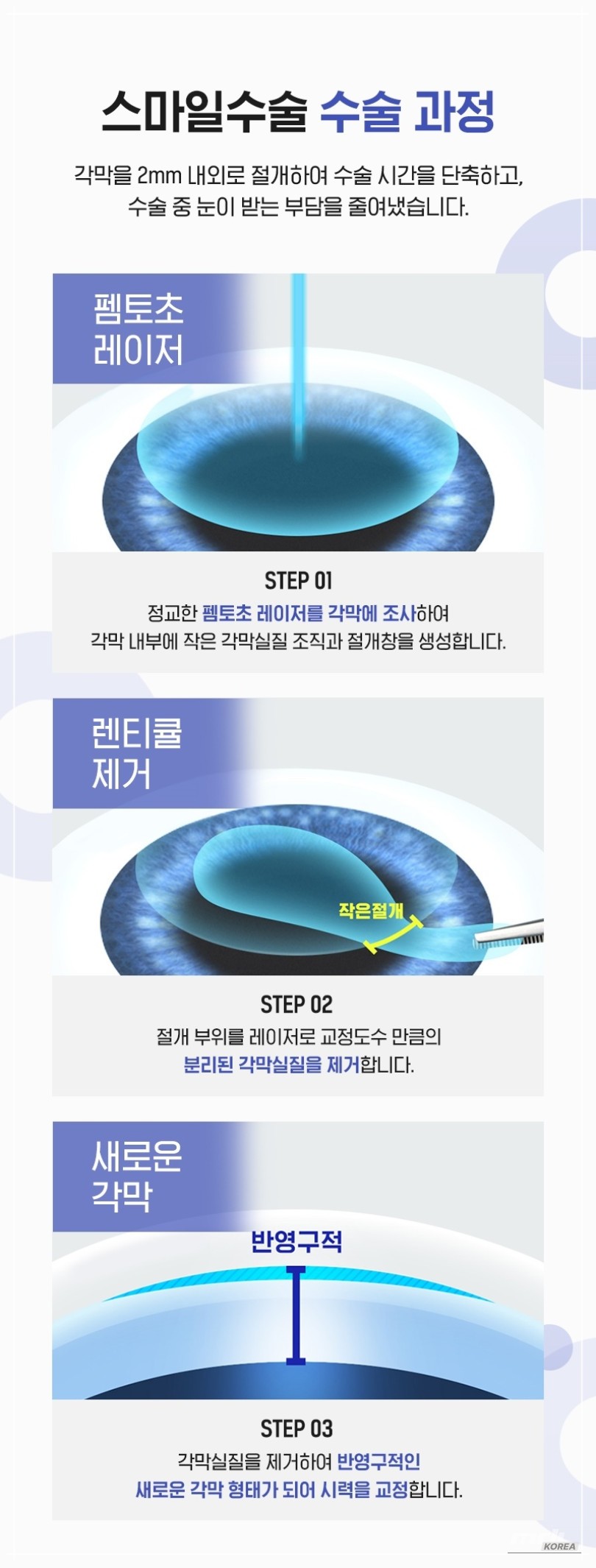
It's crucial to have a detailed examination to identify any underlying eye issues. This includes visual acuity tests, fundus photography, visual field tests, and intraocular pressure measurements to comprehensively evaluate the structure and function of the eyes. The SMILE (Small Incision Lenticule Extraction) procedure involves creating a thin lenticule inside the cornea without significantly removing the corneal surface, and then extracting it through a small incision to correct vision.
While similar in principle to LASIK or LASEK, SMILE has a smaller incision range and allows for a quicker return to daily life. Understanding the procedure thoroughly before choosing it is essential for making an informed decision.
Blurred vision occurs when the refractive power of the cornea doesn't match the length of the eye, causing images to focus in front of the retina. SMILE precisely cuts the deep part of the cornea to create a lenticule, which is then removed through a 2-4mm incision to adjust the refractive power.
Since SMILE doesn't involve removing a large area of the corneal epithelium, dryness or foreign body sensation is minimized. However, individual differences exist, so it's important to find a SMILE Lasik hospital that assesses suitability through pre-operative examinations.
In terms of symptoms, some people may experience light scattering at night, blurry vision like looking through fog, or eye fatigue when focusing on near objects. Many also report increasing dryness with prolonged contact lens wear. If these discomforts occur frequently, consider exploring vision correction options.
The diagnostic process includes a preliminary interview, followed by automated refraction tests, and examination of pupil size, intraocular pressure, corneal thickness, and shape. Corneal thickness and topography are key factors in determining safety margins and potential for distortion. If you wear contact lenses for a long time, it's advisable to take a break from them for a certain period before undergoing the examination.
The surgery typically takes about 10 minutes. A laser is used to create the lenticule, which is then separated using microsurgical instruments and extracted through a small incision.
Vision gradually stabilizes after the procedure. Initially, some dryness or glare may occur for a few days. Avoid excessive screen time and follow the instructions provided by the SMILE Lasik hospital, such as using eye drops.
Clear criteria for treatment eligibility are necessary. Patients should be at least 18 years old and have stable vision for at least one year. Adequate corneal thickness and the absence of keratoconus on corneal topography are also required.
For high myopia or complex astigmatism, other methods may be more suitable. It's ideal to leave ample residual corneal thickness regardless of the method used.
Realistic expectations are crucial. Individual differences exist in terms of dryness, pupil size, and sensitivity to glare. Therefore, initial experiences may vary even with the same procedure. Monitor the recovery process and address any discomfort by adjusting the frequency of artificial tear use or considering punctal plugs.
Even with increased inquiries about SMILE Lasik, the final decision depends on examination results and lifestyle factors. Consider whether you frequently drive long distances or spend extended periods looking at a monitor. Choose a hospital that takes your current situation and preferences into account when recommending a suitable approach.
Treatment should be based on examination results. Choosing a SMILE Lasik hospital carefully is important, as is post-operative care. In the early stages, corneal surface instability may cause fluctuating focus, so proper care and avoiding irritation are essential for stable recovery.
Excessive alcohol consumption or prolonged exposure to dusty environments can increase irritation. Avoid rubbing your eyes vigorously, as this can put strain on them. It's best to postpone heavy weightlifting for a few days, as excessive increases in intraocular pressure are not desirable.
When wiping sweat, use a clean gauze to minimize potential infection or irritation. If you have progressive corneal disease, uncontrolled dry eye, severe conjunctivitis, blood clotting issues, or inflammation, postpone the procedure or consider alternative options.
Following these guidelines and consistently managing your eyes will promote a more positive outcome. Refer to this information and proceed with treatment accordingly.




Source :https://blog.naver.com/koikoro/224086080223
No comments yet.