SMILE LASIK Eye Center: For a Quick Recovery



SMILE LASIK Eye Center: For a Quick Recovery
Q. I think my dry eye has gotten worse. Can I get a prescription if I go to an ophthalmologist?
A. At the ophthalmologist, you can receive appropriate medication depending on your condition, such as artificial tears, anti-inflammatory agents, or ophthalmic steroids.
Q. How is corneal thickness measured at the ophthalmologist?
A. Corneal thickness was measured quickly using non-contact ultrasound or optical devices. It was a simple test that didn't directly touch the eye and was completed within a few seconds.
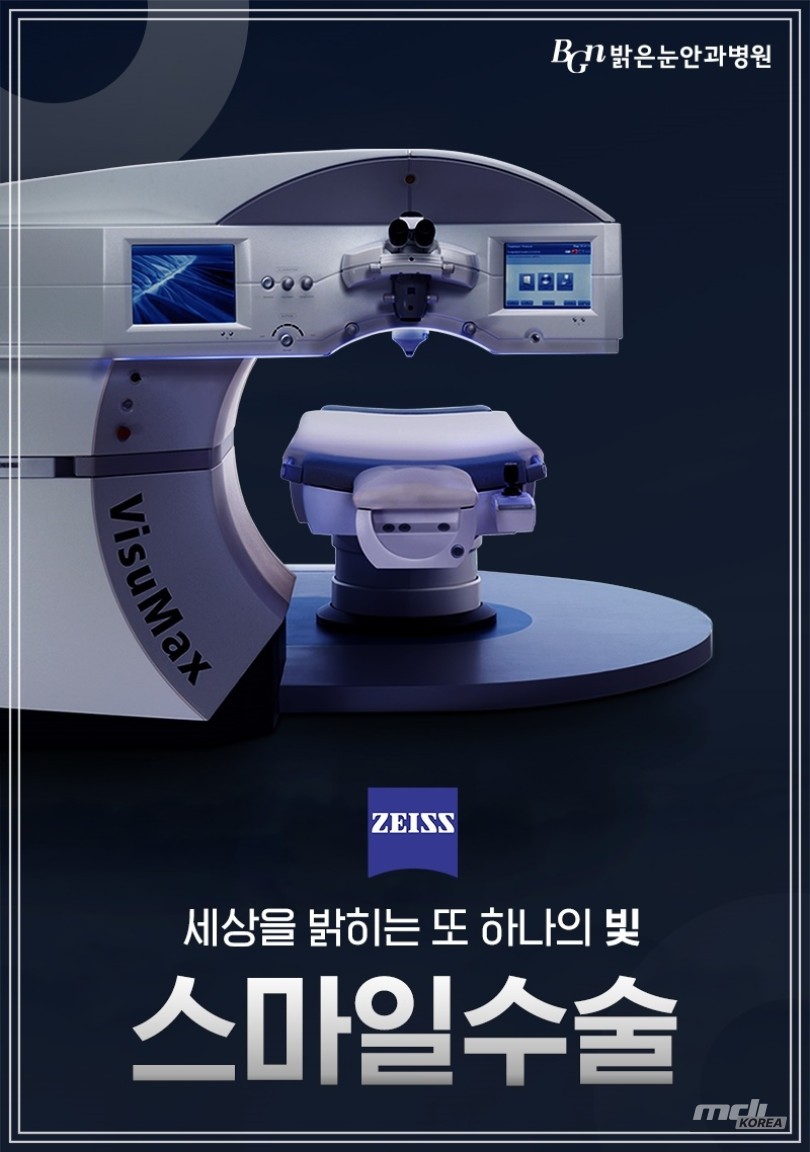
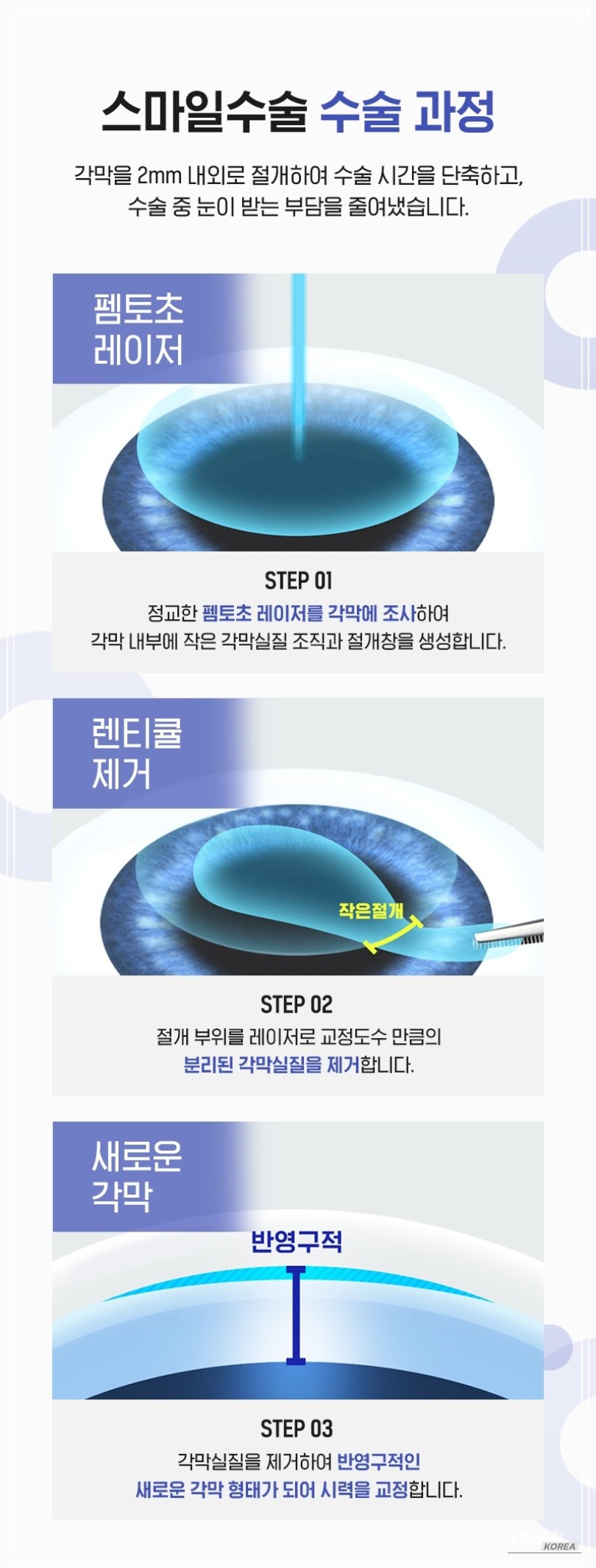
SMILE surgery is a refractive correction procedure that precisely reshapes the inside of the cornea without widely removing the surface to correct the focus. Because it involves separating and extracting a thin piece through a small incision, there is relatively little surface damage, and returning to daily life is easier. The key to correction was to adjust the corneal thickness and curvature within a safe range to help the light focus clearly on the retina.
Because the eye structure differs even for the same level of myopia, the pre-operative examination and planning determined the satisfaction of the results. This is why many people interested in SMILE LASIK compare SMILE LASIK eye center information when seeking consultation. Factors such as accumulated near-work, dryness, lack of sleep, and corneal shape imbalance contribute to blurred vision.
Glasses and lenses are auxiliary means of changing the path of light, and surgery is a method of adjusting the refractive power of the cornea itself. People who frequently rub their eyes or have large pupils may be sensitive to nighttime glare, so this was checked during the examination. In the planning stage, the difference between the pupil center and the visual axis, corneal thickness distribution, and astigmatism axis and size were collected to calculate the safety margin. The more precise these procedures, the smoother the post-operative adaptation.
This is why people prefer SMILE LASIK eye centers that provide detailed pre-operative guidance. The diagnostic process proceeds in stages. The basic values are checked with an autorefractor, and thickness maps are created with corneal topography and tomography.
The tear film condition and corneal nerve distribution are examined to estimate the risk of dryness, and the pupil response in a dark room is also checked. If the test values are stable, the incision location, the thickness of the tissue to be removed, and the centering alignment values are determined. A common question at this time is whether to perform the procedure on both eyes on the same day. In general, same-day bilateral surgery is possible, but the order may be adjusted depending on the occupation or recovery plan.
Choosing a SMILE LASIK eye center that transparently explains the surgical flow and recovery process can make the decision much easier. Surgery was usually performed on one eye at a time. After the laser creates a thin piece inside the cornea, it was separated and extracted through a small 2-3mm incision. In many cases, protective lenses are not needed, and the patient immediately returns home to rest.
Initially, there may be a foreign body sensation and blurring, but these usually subside quickly. It was essential to use artificial tears regularly and not rub the eyes vigorously. Showering and washing the face were started carefully from the indicated time. Some places provided photos on the day of surgery to establish a baseline for change. The indications and contraindications to be aware of were clear.
It was necessary to postpone the procedure if there was suspected keratoconus, excessively thin corneas, progressive myopia, severe dry eye, or inflammatory diseases. If the nighttime pupil was large, the possibility of light scattering was fully explained, and if the schedule involved frequent nighttime driving, the design itself had to be conservative. If the occupation involved frequent exposure to dust and wind, initial protective glasses could be helpful.
After surgery, strenuous exercise and swimming should be postponed for a certain period, and sleeping face down or pressing hard on the side should be avoided. It was safe to establish a management plan with a SMILE LASIK eye center that carefully checked these lifestyle guidelines. Compared to LASIK and LASEK, the difference was clear. LASIK involves creating a thin flap, processing the inside, and then covering it again, while LASEK involves removing the surface epithelium and waiting for recovery.
SMILE surgery differed in that it selectively processed only the inside without creating a flap. It caused less initial discomfort because it did not widely affect the surface, and the burden of dryness was reported to be relatively low. However, the feeling may vary depending on the individual's tear film condition and pupil size, so it was most important to accurately understand one's own conditions in the pre-operative examination.
Follow-up observations were made according to schedule. In the early stages, the sharpness may feel different in bright and dark places, so contrast sensitivity, light scattering, and glare were checked together. If residual astigmatism was uncomfortable, thin glasses were temporarily worn, and the need was reassessed once the values stabilized. Re-correction was considered only when the remaining corneal thickness and test indicators allowed.
If the pain suddenly became severe or the eyes became excessively red, medical attention should be sought immediately. By following the prescribed eye drop plan and visiting on schedule, the recovery process could be followed stably. Coordination was easier if the schedule and aftercare were well organized.
SMILE surgery was a method of precisely changing the refractive power of the cornea using a small incision. The keys to success were a design that reflected individual conditions, a realistic explanation that included tear film and pupil size, and lifestyle guidelines needed in the early stages of recovery. Not all eyes are corrected in the same way, and other methods were considered if a safety margin was not secured.
Satisfaction was high when people honestly shared their occupation and lifestyle patterns and realistically adjusted their expectations. It was good to remember that the examination has meaning beyond numbers and to find the right choice for oneself at a SMILE LASIK eye center that provides sufficient explanation.
The numbers frequently heard in the examination may feel difficult. The corneal thickness map could be thought of as a map showing road thickness in color. If a thin area was excessively large, construction could not be forced, so safety margins were considered first in surgery. Pupil size was similar to the lane width widening at night.
If the pupil enlarges in a dark environment, the area through which light passes also widens, which can make blurring more prominent, so the incision location and centering alignment were matched more carefully. Astigmatism could be compared to glass being pressed more to one side. At this time, a clear image was formed only when the direction of the axis was accurately read. By receiving explanations that unravel these factors one by one, one could understand the design and predict the changes they would feel during the recovery process.





Source :https://blog.naver.com/koikoro/224075615861
No comments yet.