Seocho Eye Clinic: Understanding Early Cataract Symptoms and Lens Options



Many people often confuse presbyopia (age-related farsightedness) with cataracts. This is because both conditions involve damage to the lens of the eye and result in decreased vision. The early symptoms of presbyopia and cataracts can be quite similar, making it difficult to distinguish between them on your own. Therefore, it's advisable to seek help from a medical institution like a Seocho eye clinic.
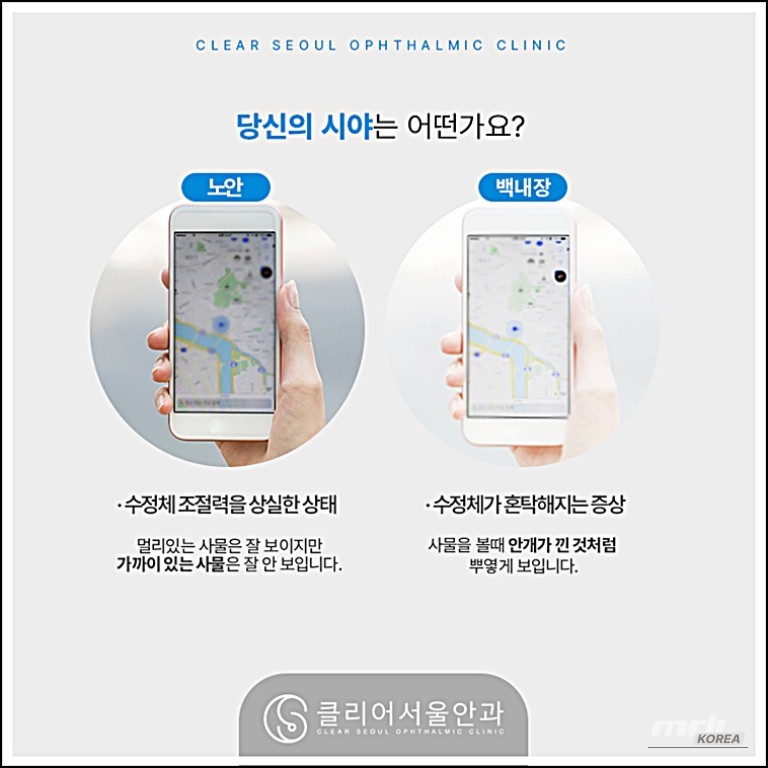
The lens maintains transparency, allowing light to pass through and adjusting focus by controlling distance. However, as elasticity weakens with age, the ability to adjust focus diminishes, leading to blurred near vision. This is known as presbyopia. People with presbyopia cannot clearly see objects closer than 30cm. If not corrected promptly, it can cause significant inconvenience in daily life, accompanied by headaches or delayed focus transitions. Solutions include wearing reading glasses. Those who enjoy sports or find glasses inconvenient may consider presbyopia correction surgery. This involves using a laser to reshape the cornea, similar to LASIK or LASEK, reducing psychological burden. The procedure is relatively painless and offers quick recovery, making it a good option for working individuals. However, if glasses are not bothersome, surgery is unnecessary.
Some may consider vision correction surgery instead of presbyopia surgery, assuming they are similar. While vision correction surgery can improve presbyopia symptoms, age-related changes continue, potentially leading to a recurrence of near vision decline. Therefore, customized surgery based on individual eye condition is recommended.
Cataracts, on the other hand, involve the gradual clouding of the eye's natural lens. This clouding progresses slowly, often unnoticed in its early stages as it blends into everyday life. However, if left untreated, cataracts can lead to complications and even blindness in rare cases, necessitating surgery by at least the intermediate stage.
Cataracts commonly begin in the late 60s, but increased use of electronic devices has accelerated eye aging, leading to more frequent occurrences in the 30s and 40s. Many dismiss early cataract symptoms as mere fatigue. Therefore, individuals over 40 should undergo regular eye exams at a Seocho eye clinic, even without noticeable symptoms.
The causes of cataracts are diverse, including aging and genetics. Those with a family history should undergo more frequent check-ups. Cataracts can also result from significant eye trauma that ruptures the lens capsule. In such cases, even prompt surgery may not guarantee a favorable outcome, so it's crucial to avoid eye injuries. Other causes include diabetes, long-term steroid use, prolonged exposure to ultraviolet (UV) radiation, and nutritional deficiencies.
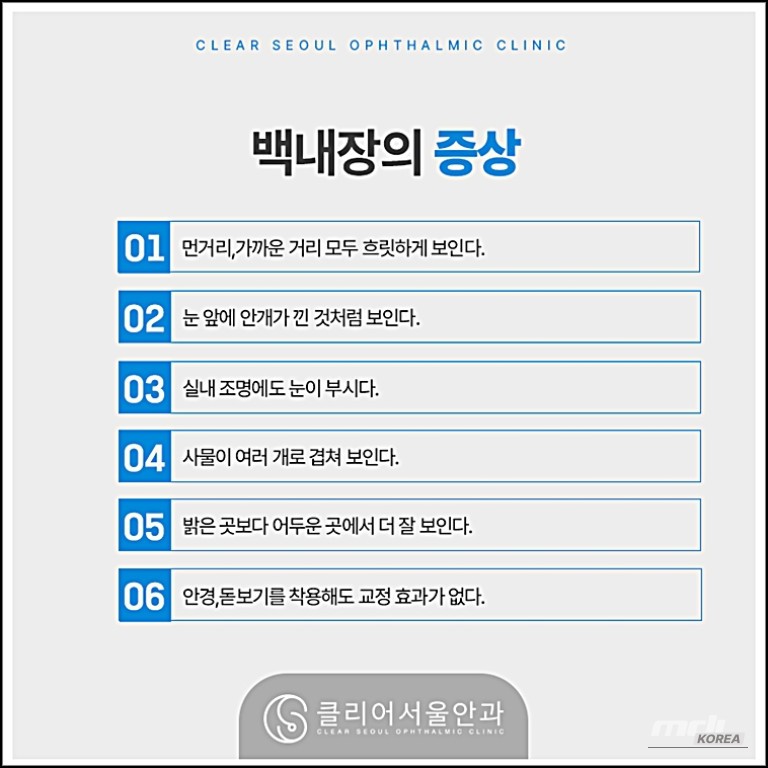
Besides initial symptoms, cataracts can manifest in various ways as the clouding worsens. Common symptoms include double vision (diplopia), blurry vision during the day but improved vision at night (hemeralopia), distorted vision, and sudden nearsightedness due to increased refractive power caused by lens clouding and swelling.
If cataracts are detected early at a Seocho eye clinic, immediate surgery isn't always necessary. Medication can be used to slow the progression while monitoring the condition, allowing most people to maintain a reasonable quality of life. However, if cataract symptoms interfere with daily life, surgery should be considered. The procedure involves removing the clouded lens and correcting vision with an artificial lens chosen from various cataract lens types (intraocular lens).
The surgical procedure involves creating a small 2-3mm incision in the cornea, performing a circular capsulotomy, and removing the clouded lens using phacoemulsification. An artificial lens is then inserted into the clean lens capsule. The small incision allows for rapid wound healing and eliminates the need for hospitalization, allowing patients to return home on the same day. However, since the natural lens is replaced with an artificial one, careful post-operative care is essential for about a week to allow the eye to stabilize.
There are various types of cataract lenses available, each with unique characteristics, advantages, and disadvantages, requiring careful consideration during selection. Intraocular lenses are divided into monofocal and multifocal options. Monofocal lenses correct focus at either near or far distances, with most opting for distance correction, potentially requiring reading glasses for near vision. Multifocal lenses correct vision at near, intermediate, and far distances, reducing the need for glasses. However, they may require an initial adjustment period and can sometimes cause slightly blurred vision compared to monofocal lenses. Multifocal intraocular lenses can also correct astigmatism and presbyopia, offering a more comfortable daily life.
Cataracts are a natural part of aging. Rather than accepting them as such, prompt detection, treatment, and surgery are essential to improve the condition. As a potentially blinding eye disease if left untreated, regular check-ups for early detection and thorough consultation with a Seocho eye clinic's medical team are crucial for developing an appropriate surgical plan.





















Source :https://blog.naver.com/whgus4231/224049726680
No comments yet.