Seeking Clearer Vision? Understanding Cataracts in Seomyeon



If you're looking to correct blurry vision caused by cataracts in Seomyeon...
Q. What are the symptoms of cataracts that are commonly found during eye exams?
The vision becomes blurry, lights appear to spread or have halos, or everything looks foggy. Colors become dull, and often, even changing glasses doesn't improve clarity.
Q. What is the difference between an ophthalmology clinic and an ophthalmology hospital?
Ophthalmology clinics primarily focus on basic outpatient care and simple procedures. Ophthalmology hospitals, on the other hand, are equipped with multiple specialists and surgical equipment, allowing them to perform surgeries like cataract and LASIK.
Presbyopia is a change where near vision becomes unclear, and it's more comfortable to hold things at arm's length. This occurs as the lens loses elasticity with age, narrowing the focusing range. Cataracts refer to a condition where the lens gradually becomes cloudy, blurring vision and increasing glare.
Since both conditions occur in the same space, though at different times, they are often experienced together. If you are considering a consultation for cataracts in Seomyeon, it's helpful to carefully identify where your discomfort began.
The key factor in presbyopia is the decline in elasticity of the lens and ciliary muscles, while cataracts primarily involve a cumulative change in protein structure, reducing transparency. Exposure to UV rays, smoking, systemic diseases like diabetes, and long-term use of steroid eye drops can accelerate the process. Trauma or a history of eye surgery can also be contributing factors. Even though it's an age-related change, the onset and progression rate vary from person to person.
This is why these factors are explored during the consultation. Symptoms manifest differently depending on the activity. When focusing on close objects for extended periods, letters may appear blurred, or contrast may decrease in bright environments, creating a glaring white sensation.
While driving at night, reflected light may scatter significantly, and letters may not be clear, leading to frequent eye rubbing. Covering one eye may reveal differences between the left and right eyes, and new glasses may not provide lasting comfort. If you experience frequent focus issues when viewing digital screens or if changing the lighting doesn't alleviate discomfort, it could be a sign of progression.
If you're considering a cataract consultation in Seomyeon, it can be helpful to specifically describe these activity-based discomforts. The diagnostic process focuses on objectively assessing current vision, lens transparency, and the range of focus change. Basic visual acuity tests and near-vision accommodation tests are used to determine the focusing range, and a slit-lamp microscope is used to observe the location and density of lens clouding.
Examining the retina after dilation is essential to secure a safe pathway for light during surgery planning. Accurate measurement of corneal curvature and length allows for precise prediction of the target refractive power, enabling a detailed discussion about the need for glasses after surgery. In Seomyeon cataract consultations, transparency regarding these steps can simplify the decision-making process. Treatment options are chosen based on the desired comfort in daily life.
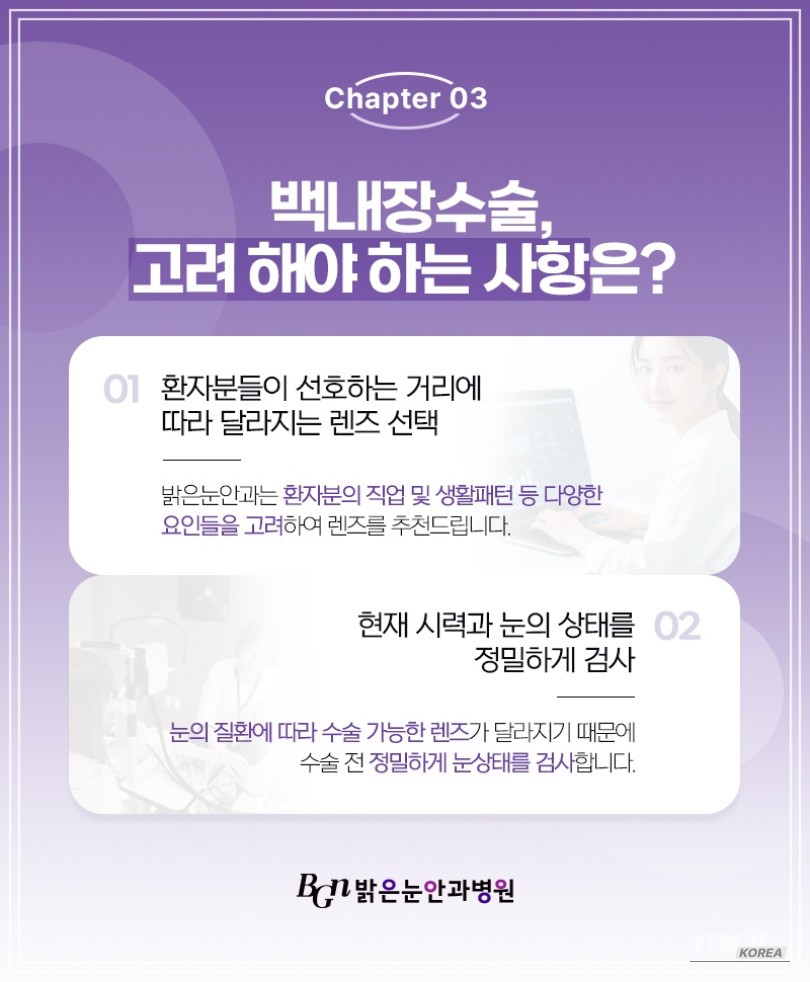
In the early stages of presbyopia, reading glasses or progressive lenses can alleviate discomfort. If cataracts have progressed to the point of impacting daily efficiency, surgical removal of the clouded lens and replacement with an artificial lens (IOL) may be considered. Since one approach doesn't suit everyone, factors such as distance vision clarity, near vision convenience, and the frequency of intermediate-distance tasks are considered when selecting the type of IOL.
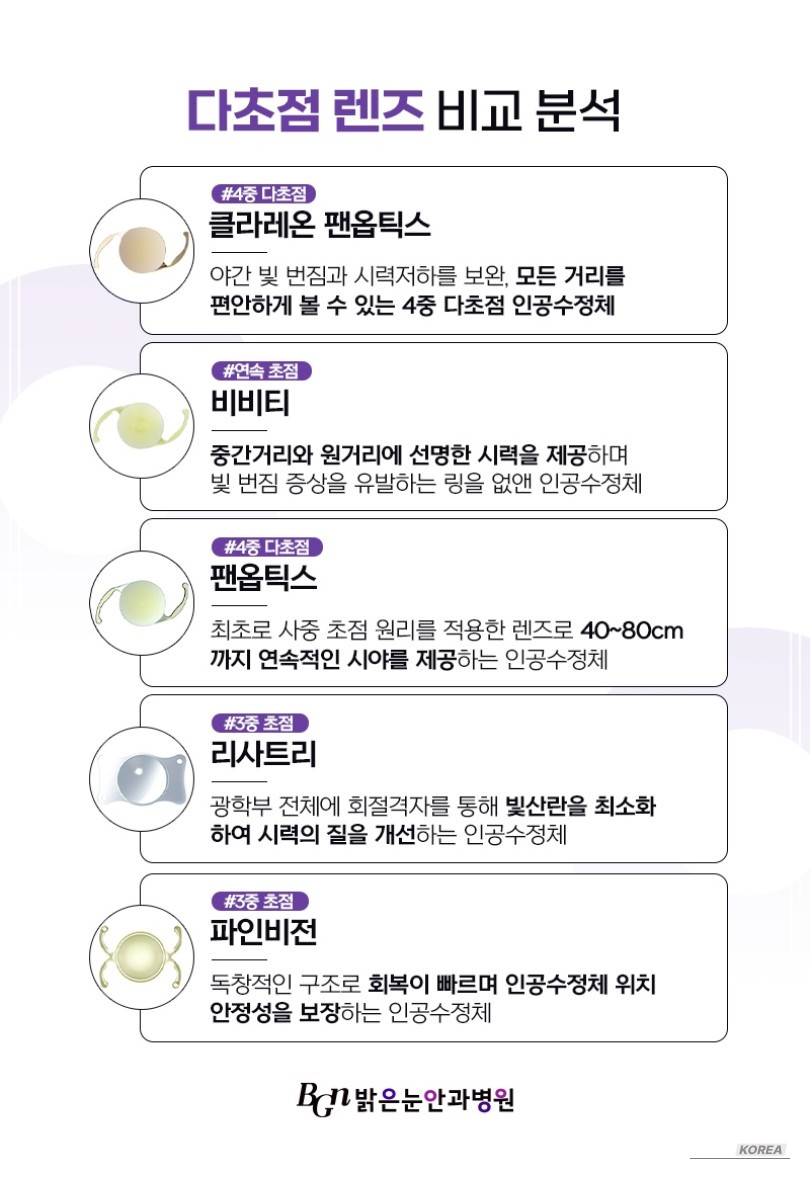
If astigmatism is significant, correction considering the corneal axis is included in the plan. During cataract consultations in Seomyeon, it's important that the surgeon clearly communicates the timing of the surgery, target refractive power, and anticipated glasses usage pattern. There are basic principles for IOL selection. Monofocal IOLs provide high clarity at one distance and are stable. If set for distance vision, they are ideal for driving and outdoor activities.
Multifocal IOLs offer convenience at multiple distances but may cause glare at night, requiring adjustments based on occupation and hobbies. Designs that enhance intermediate vision can be useful for those who work extensively with computers. A strategy of setting one eye for distance and the other for intermediate vision is also possible, but adaptation must be carefully assessed.
Even if the lens types appear the same, the surface structure and light distribution can differ, leading to variations in experience. Therefore, a realistic approach involves adjusting expectations through trial lens simulations or demo videos. The course and precautions can also be organized. In the initial period after surgery, temporary glare or dryness may be experienced, and management according to eye drop instructions is necessary.
For a certain period, avoid vigorously rubbing your eyes or exposing them directly to contaminated water. Although rare, complications such as inflammation, intraocular pressure changes, or refractive errors can occur, so adhering to the scheduled check-ups enhances safety. If there are pre-existing retinal diseases, severe astigmatism, or corneal opacity, the perceived outcome may differ, so prior explanation is essential.
Sharing sufficient information about your actual lifestyle, such as work environment, hobbies, and night driving habits, can clarify the direction of the treatment plan. Surgery is generally performed under topical or local anesthesia. The clouded lens is broken into small pieces and removed, and then an IOL of the calculated power is inserted.
The incision is kept small, often eliminating the need for sutures, and the recovery rate depends on the individual's eye condition and overall health. If blood sugar control is needed or if you are taking anticoagulants, prior consultation is essential. Those whose professions require fine contrast and night vision should be especially careful in lens selection and target refractive power.
The selection criteria are simple. The key is to describe current discomfort in specific scenarios and examine whether the flow of connecting the examination results to the decision of whether to operate is natural. Rather than simply listing photos or numbers, it is important to provide explanations that help you understand why this discomfort occurred and how it can be reduced.
If surgery is not yet necessary, it is better to find ways to prioritize your life than to push the timing forward unnecessarily. Ultimately, the decision regarding cataracts in Seomyeon should be a process aimed at the realistic goal of a more comfortable vision. Also, if surgery is needed in both eyes, agreement on how to space the procedures and when to return to daily life can reduce anxiety.






Source :https://blog.naver.com/koikoro/224072080922
No comments yet.