Reducing Astigmatism LASIK Side Effects: A Comprehensive Guide



If you're looking to minimize the side effects of astigmatism LASIK, here’s what you need to know.
Q. What is considered a normal intraocular pressure (IOP) reading at an eye clinic?
A. Typically, a normal IOP range is between 10 and 21 mmHg.
Q. Is ophthalmological care covered by national health insurance?
A. General eye examinations and treatments are usually covered by health insurance. However, refractive surgeries like LASIK are often not covered.
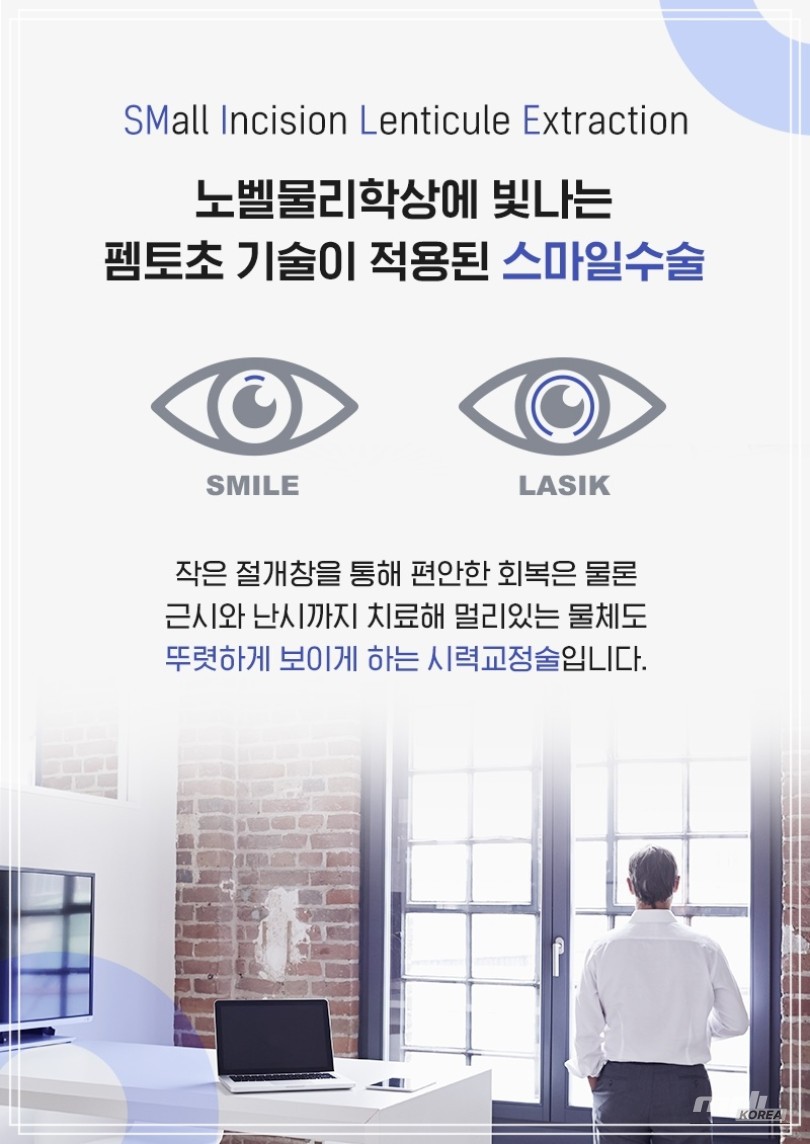
Many people who have worn glasses or contact lenses for a long time experience dry and bloodshot eyes, leading them to consider alternative vision correction methods. Among these, SMILE (Small Incision Lenticule Extraction) surgery is a laser procedure that involves making a small incision in the cornea and extracting a thin layer of tissue from inside the eye.
Since SMILE doesn't require a large corneal flap, it aims to reduce discomfort during the recovery process. It is often compared with astigmatism LASIK for those looking to correct both nearsightedness and astigmatism. A key feature of SMILE is the small incision, where a laser creates a thin, lens-shaped layer inside the cornea, which is then removed through a tiny opening to adjust the refractive power.
Unlike traditional LASIK, which involves a large flap, SMILE results in relatively minor changes to the corneal surface. However, it's not suitable for everyone, so factors like corneal thickness, shape, dryness, and occupation need to be considered. People considering SMILE can usually manage daily life with glasses or lenses but experience significant discomfort during activities like sports, travel, or prolonged computer use.
Even a short period without lenses can cause blurred vision, leading to stress, and prolonged wear can result in recurring redness and headaches. If astigmatism is present, focus may seem correct at times, but letters may appear blurred, and night driving can cause light scattering. In such cases, the decision between astigmatism LASIK and SMILE is often made after a consultation.
Pre-surgery examinations typically involve several steps. Basic vision and refraction tests determine the current prescription, and corneal topography assesses the regularity of the cornea and identifies any abnormal protrusions. Corneal thickness measurement is essential to calculate the amount of tissue that can be safely removed, and tear production and eyelid condition are also evaluated.
During this process, astigmatism levels and corneal shape are analyzed to determine suitability for both astigmatism LASIK and SMILE. The surgery is performed after applying anesthetic eye drops. While lying on the operating table, the patient focuses on a light while the laser creates a layer inside the cornea. Maintaining steady eye fixation during this process is crucial, although the laser procedure itself is brief.
After the inner tissue is separated and removed through a small incision, surgery on one eye is complete. The same process is then performed on the other eye. Patients then rest in the recovery room with their eyes closed to reduce initial pain and foreign body sensation. Immediately after surgery, vision may be blurry, as if looking through a fog. Light scattering or a gritty sensation may persist for a few days.
These changes are common during corneal healing and are managed over time. After returning home, it's important to administer eye drops as prescribed and avoid rubbing or squeezing the eyes. Light indoor activities can be resumed quickly, but strenuous exercise, swimming, and saunas should be postponed until advised by the doctor.
Vision usually improves gradually, but the recovery rate varies. Describing the clarity of text on books or smartphone screens, the degree of night-time light scattering, and the level of dryness during follow-up visits can help guide subsequent management.
Individuals with high astigmatism may experience fluctuating focus initially. Therefore, it's necessary to undergo examinations to assess the current condition and understand the different recovery patterns compared to astigmatism LASIK. SMILE is not always the best option. Other methods may be recommended if the cornea is too thin or irregular, or if there is a history of keratitis or severe dry eye.
Comparing well-known procedures like LASIK and LASEK with SMILE, based on lifestyle, occupation, and eye condition, is important for making a practical choice. Some individuals considering astigmatism correction may find that other methods are more suitable based on the examination results, while others may be good candidates for SMILE.
Ultimately, SMILE is one of several options for people with nearsightedness and astigmatism who want to reduce their dependence on glasses and contact lenses. Rather than making a decision based solely on the name, it's safer to carefully assess your vision, corneal condition, tear production, and night-time activity levels before deciding on a course of action.
Whether you choose astigmatism LASIK or SMILE, understanding your eye condition through pre-operative examinations can provide peace of mind during the recovery process.
Before surgery, it's necessary to discontinue contact lens wear for a certain period to ensure accurate corneal measurements. Generally, soft lenses should be removed for a few days, while toric lenses or hard lenses may require a longer period. It's best to coordinate the schedule during the booking stage.
After surgery, regular check-ups are scheduled to monitor corneal condition and vision, and the duration and frequency of eye drop use are adjusted accordingly. It's important to consistently monitor eye condition and follow the recovery process. When considering surgery, focus on your own eye condition rather than relying solely on the experiences of others.
Even with the same nearsightedness and astigmatism, the optimal choice can vary depending on corneal structure and lifestyle. By receiving thorough explanations and addressing any questions, comparing the advantages and disadvantages can help you make a well-informed decision.




Source :https://blog.naver.com/koikoro/224083399165
No comments yet.