Presbyopia Correction: Achieving Stable Vision


The passage of time affects everyone equally. While good self-care and genetics can influence the aging process, various age-related conditions typically emerge as we get older. Since aging can negatively impact health, careful attention and management are necessary.
Those who maintain good health habits can delay the onset and severity of age-related issues. However, consistent self-care isn't always easy. Early detection can prevent serious deterioration, reduce the risk of side effects, and promote recovery. The eyes, in particular, require extra care due to their rapid aging.
Vision is crucial for most people, and we rely on it heavily. As we reach middle age, the likelihood of vision problems increases, making proper care even more important. When the muscles that control the thickness of the eye's lens weaken, various risks can arise.
Maintaining lens thickness requires muscle control. As we age, these muscles can weaken, potentially leading to farsightedness (hyperopia). This condition is known as presbyopia, and many people seek presbyopia correction surgery.
Q. Should I see an eye doctor immediately if my vision suddenly worsens?
It's normal for vision to decline with age, potentially leading to presbyopia correction. However, vision loss isn't solely due to aging. Other eye conditions can also cause vision deterioration.
Therefore, if you notice a decline in your vision, it's best to get an examination and start treatment promptly. If you experience problems with your field of vision or notice distortions, it could indicate a serious issue that requires immediate attention.
Q. What eye diseases are common in old age?
The risk of eye diseases increases with age. In addition to needing presbyopia correction, cataracts are also a common age-related condition that requires attention.
The risk of retinal diseases also increases with age. It's recommended to have an eye exam once a year starting in your 40s. Early detection and treatment can prevent significant deterioration.
Failure to address these issues promptly can lead to blindness, depending on the specific condition. Therefore, it's essential to pay attention to your eye health and monitor for any related symptoms. If your vision becomes blurry or you experience double vision, you should suspect cataracts. Also, be wary if you see better in dim light.
Neglecting these symptoms, assuming it's just presbyopia, can lead to the need for surgery. Presbyopia and cataracts can occur around the same time, leading to confusion and delayed diagnosis. Therefore, if you experience vision problems, get an eye exam first.
If you experience visual disturbances or blurry vision, it's best to get an examination. Nowadays, all-in-one lasers can be used during presbyopia correction to treat cataracts simultaneously. This approach can correct farsightedness, astigmatism, and nearsightedness, allowing for comprehensive treatment.
Surgery can correct and treat these issues. However, it's generally better to delay cataract surgery if possible. Replacing artificial lenses multiple times isn't feasible. Once a lens is implanted, it's difficult to replace, even if the condition worsens. Therefore, delaying the surgery is preferable.
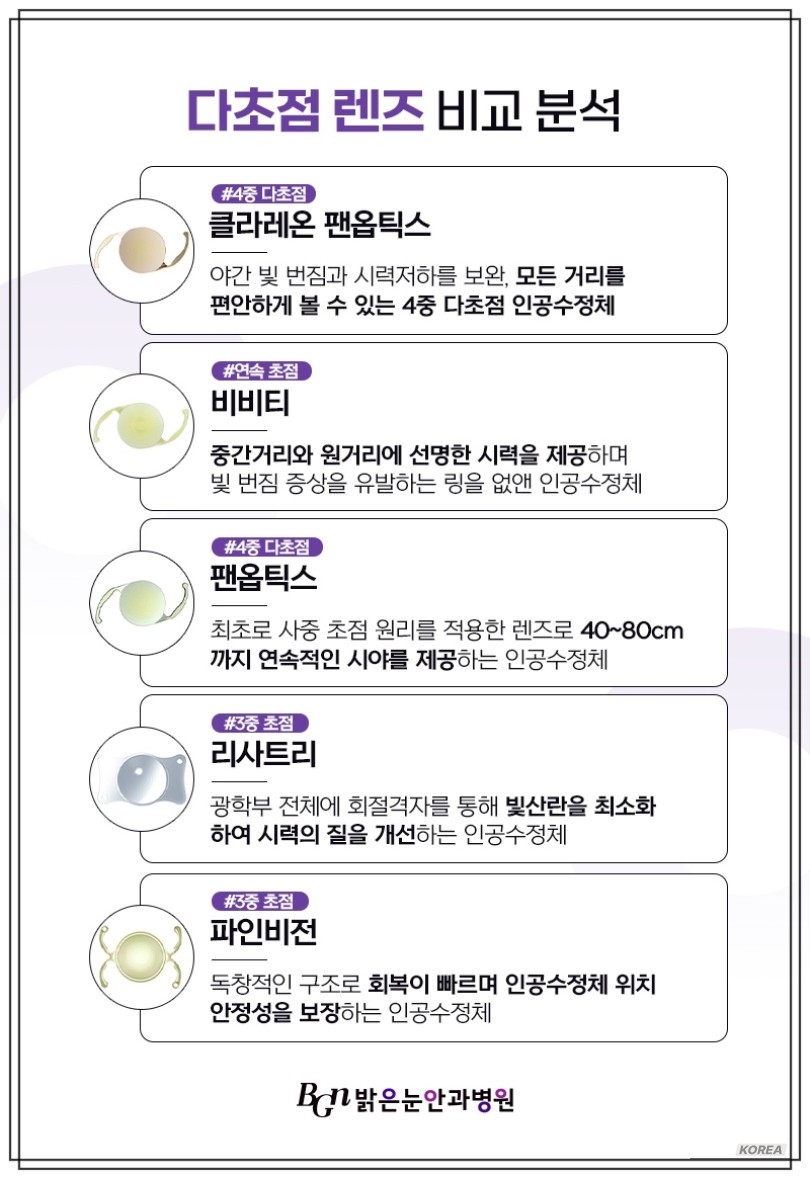
Early detection and medication can help delay the need for surgery. Since it's difficult to reverse the procedure, it's crucial to choose the right lens for your needs. The choice between multifocal and monofocal lenses can significantly impact the outcome, so be careful.
Your lifestyle should also be considered. Are you active? Do you spend more time focusing on near or far objects? These factors can influence the choice. The cost of different lenses can also vary significantly, so be mindful of this.
Everyone's eyes are unique, and there are significant differences in lifestyles and preferences. Accounting for these factors during presbyopia correction can increase satisfaction. Multifocal lenses are generally suitable for active individuals who use their bodies frequently.
If you're not very active or primarily focus on a specific distance, multifocal lenses may not be necessary. Monofocal lenses can only focus on one distance but are easier to adjust to and less expensive. Careful consideration and treatment can lead to positive outcomes.
Treatment can improve vision quality and correct problems. By understanding and addressing your eye condition, you can achieve positive results. Please keep this in mind as you seek treatment.







Source :https://blog.naver.com/koikoro/223992505291
No comments yet.