Presbyopia and Cataract Surgery: Methods, Timing, and Costs



Let's explore the methods, treatment timing, and costs associated with presbyopia and cataract surgery.
While you may currently have good vision and clear eyesight, as time passes and you age, your eye function can gradually decline, leading to vision impairment. This is a natural aging process that everyone experiences. However, reduced vision can cause inconvenience in daily life, and even with corrective tools like glasses or lenses, you may feel unaccustomed to your appearance.
Age-related changes in the eyes can lead to various eye conditions, not just vision decline. Presbyopia and cataracts are two common examples. Although distinct, they can occur together. Both involve issues with the lens, resulting in similar early symptoms that make self-diagnosis difficult. Consequently, cataracts are often mistaken for presbyopia. However, if cataract surgery is not performed at the appropriate time, it can lead to more serious complications or even blindness. Therefore, early detection and appropriate action are crucial.
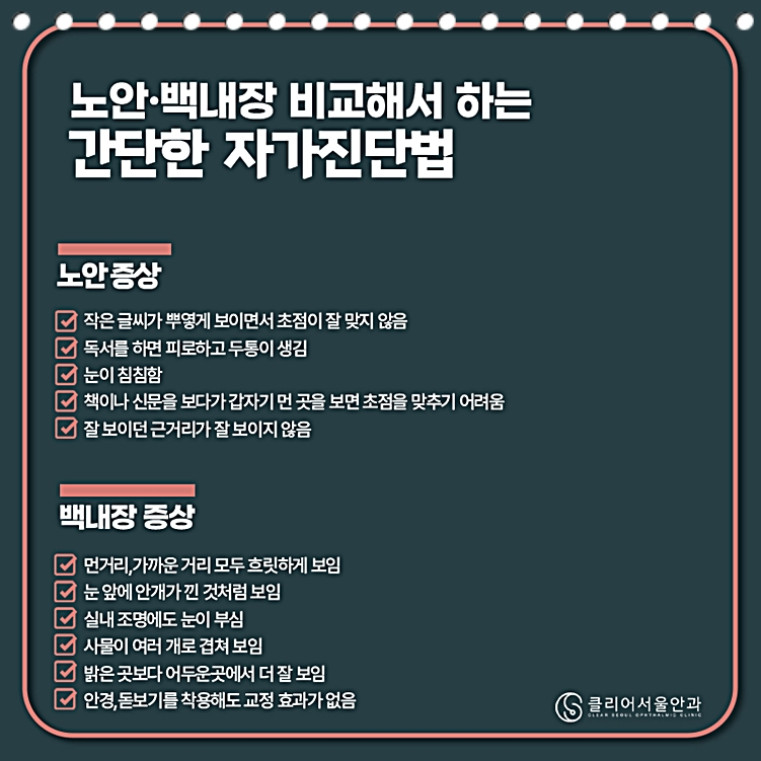
The difference between presbyopia and cataracts lies in their causes. Presbyopia is caused by a decrease in the elasticity of the lens, resulting in blurry vision at close range. It becomes difficult to see clearly when objects are less than 30cm away, making reading books or newspapers challenging. Additionally, the transition of focus becomes slower, sometimes causing dizziness when alternating between distant and near objects. Vision may seem worse in dim lighting or when fatigued, and headaches can occur. Timely correction is advisable.
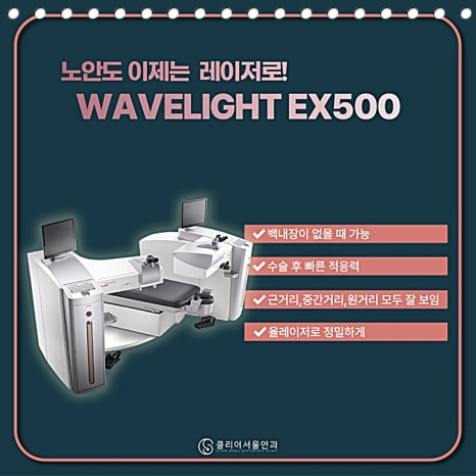
For presbyopia treatment, you can initially try using reading glasses. If you are comfortable with them, surgery may not be necessary. However, if you find glasses inconvenient or bothersome, you can consider presbyopia surgery. This surgery involves using an excimer laser to reshape the cornea, similar to LASIK or LASEK, making it relatively less burdensome. The surgery is quick, with minimal pain and a fast recovery, making it a viable option for working individuals.
Since the surgery is performed with an all-laser system, the risk of side effects or complications is minimal. All-laser surgery allows for more precise procedures. Vision is restored not only for close distances but also for intermediate and far distances, with rapid adaptation. However, if cataracts are also present, it's essential to undergo a thorough examination to determine the appropriate surgical method for both conditions.
Cataracts occur when the normally transparent lens becomes cloudy. The lens should allow light to pass through, but as it becomes opaque, light is scattered, causing blurred vision. However, cataracts progress slowly, so the initial symptoms blend into daily life, making them difficult to notice. Therefore, regular eye exams are essential for individuals over 40, even without noticeable symptoms.
Cataracts often develop due to aging in the late 60s, but they can also be caused by genetics, trauma, diabetes, medication, eye diseases, nutritional deficiencies, and ultraviolet (UV) exposure. Consequently, presbyopia and cataracts frequently occur together. Early detection allows for medication to slow the progression of clouding, delaying the need for surgery. While medication won't improve vision, it can postpone the cataract surgery timeline.
Depending on the location, extent, and range of clouding, various symptoms can occur. If clouding starts at the edge of the lens, you may experience glare in indoor lighting, see multiple images of objects, or have improved vision in dim conditions. Objects may appear distorted, or colors may appear yellowish. If clouding occurs in the center of the lens, you may suddenly become nearsighted. If near vision suddenly improves after presbyopia has set in, it's important to recognize that this is likely due to cataracts, not vision recovery.
If these symptoms cause daily discomfort, it may be time to consider presbyopia and cataract surgery. Cataract treatment involves removing the clouded lens and replacing it with an artificial lens to correct vision. A small incision of about 2-3mm is made in the cornea, allowing access for the procedure. Due to the small incision size, recovery is generally quick, and hospitalization is not required. However, absolute rest is necessary upon returning home, and sufficient rest is recommended to allow the eyes to stabilize.
Artificial lenses are divided into monofocal and multifocal options. Monofocal lenses correct focus at either near or far distances, typically far. Therefore, reading glasses may still be needed after surgery. However, monofocal lens surgery is generally less expensive. Multifocal lenses correct vision at near, far, and intermediate distances, eliminating the need for reading glasses. They are effective for correcting presbyopia, cataracts, and astigmatism, providing excellent vision quality. However, multifocal lens surgery tends to be more expensive than monofocal options. Ultimately, the most important factor is not the cost but rather choosing the lens that best suits the patient's eye condition and lifestyle. Artificial lenses are typically not replaced unless there is a specific reason to do so.
While age-related conditions are a natural part of life, if presbyopia and cataracts are not treated at the right time, they can lead to glaucoma or uveitis, and in rare cases, blindness. Early detection is key. Since impaired vision can significantly reduce quality of life, prioritize eye health management to delay the onset of these conditions. Even if they do occur, regular check-ups can lead to early detection and appropriate treatment, ultimately improving your eye health.





Source :https://blog.naver.com/whgus4231/224056329122
No comments yet.