Myopia vs. Astigmatism: Correction with Lens Implantation



Hello.
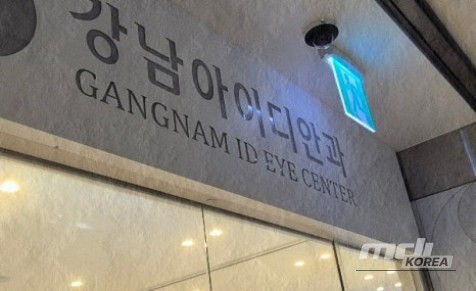
I'm Dr. Kim Joong-hoon, head director of Gangnam ID Eye Clinic.
I'm here to greet you.
The eye is a sensory organ that detects light and transmits visual information to the brain.
It plays an essential role in how we see and perceive the world,
making it incredibly important. Recently, many people commonly experience
vision deterioration, such as myopia or astigmatism.
If you are experiencing vision deterioration, you can try to correct it with glasses or
contact lenses, but many people are looking into vision correction surgery due to various inconveniences.
Vision correction surgery has become a popular method for those experiencing vision deterioration.
Before proceeding, it's important to comprehensively consider the individual's eye condition and approach it carefully.
If you have high myopia and astigmatism,
laser vision correction surgery may not be possible.
After confirming this, many people consider lens implantation as an alternative.
Today, we will take a closer look at lens implantation, which can correct both myopia and astigmatism.
What are the differences between myopia and astigmatism?
Myopia and astigmatism both cause vision deterioration, but there are clear differences
in their causes, symptoms, and correction methods.
Myopia is a refractive error where distant objects appear blurry, while near objects are
relatively clear. The image does not focus on the retina, causing blurred vision.
The more severe it is, the higher the risk of headaches, eye fatigue, and retinal diseases.
Myopia can progress during growth spurts or with increased near work. It can be caused by various factors such as genetics, environment, and nutrition.
Astigmatism is characterized by blurry or distorted vision at all distances due to problems such as an asymmetrical cornea.
Light focuses on multiple points.
Both near and distant objects appear blurry, and lines or boundaries may appear overlapping or doubled.
It can occur after surgery on the outer eye, such as the cornea, conjunctiva, or lens, or due to corneal scarring.
Is laser vision correction surgery impossible with myopia and astigmatism?
LASIK and LASEK are common vision correction methods
that many people undergo.
LASIK involves creating a corneal flap, correcting the corneal stroma underneath with a laser, and then
replacing the flap.
It has the advantage of fast recovery and minimal pain, but the creation of the flap makes it vulnerable to external impact.
Damage to the corneal nerves can cause side effects such as dry eye.
It may not be possible for those with thin corneas or high myopia and astigmatism.
Conversely, LASEK involves removing the corneal epithelium and then correcting it with a laser. Because it does not create a flap,
it is more stable than LASIK, but the recovery takes longer as the epithelium regenerates, and the initial pain is more severe.
Also, it takes a long time for the vision to stabilize,
which can be burdensome for those who need to return to daily life quickly, such as office workers or students, but it is resistant to external impact.
As LASIK and LASEK both require a certain thickness of corneal ablation, safety may be a concern if the cornea is
too thin or the degree of myopia and astigmatism to be corrected is high. The risk of side effects such as corneal opacity or dry eye may also increase after vision correction.
For these reasons, many people have to give up on vision correction, but lens implantation is considered as an alternative.
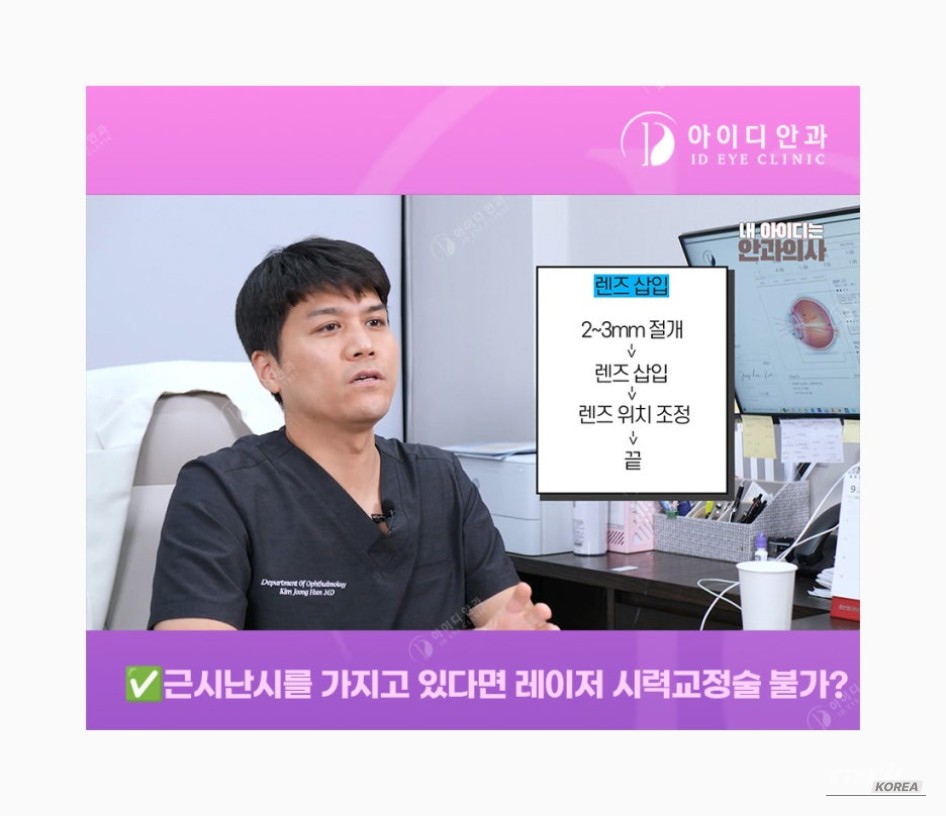
Based on the process and characteristics of lens implantation,
lens implantation is a method of improving vision by inserting a specially made lens into the eye without cutting the cornea.
It can be a suitable method for those with myopia and astigmatism who were previously unable to undergo laser vision correction.
Lens implantation can be an alternative because it preserves the cornea and the structure of the eye during the procedure.
Because it preserves the cornea, the incidence of related side effects such as corneal opacity, keratoconus, and dry eye is relatively low, and the improved vision can be maintained semi-permanently.
Even if side effects occur, the advantage is that you can return to the previous state by removing the implanted lens.
The lenses used in lens implantation are also made of biocompatible materials that are harmless to the human body, making them safe.
It is also less painful and the recovery period can be shortened,
making it a safe option for office workers and students who want to return to daily life quickly.
Importance of choosing the right lens implantation location for the individual
Lens implantation can be broadly divided into anterior lens implantation and posterior lens implantation.
Anterior lens implantation involves fixing the lens on the front side based on the iris, and posterior lens implantation involves fixing the lens on the back side.
Anterior lens implantation has no risk of the lens rotating after the procedure, and the risk of cataracts is also low because the lens does not directly touch the crystalline lens.
However, it is necessary to prevent the possibility of glaucoma in advance by facilitating the flow of aqueous humor through iridectomy before the procedure.
Posterior lens implantation does not require iris incision, which reduces the burden, and it does not directly touch the cornea, reducing the risk of corneal endothelial cell damage.
Lenses with holes in the center are used to allow the aqueous humor in the eye to flow smoothly, which can significantly reduce the risk of increased intraocular pressure.
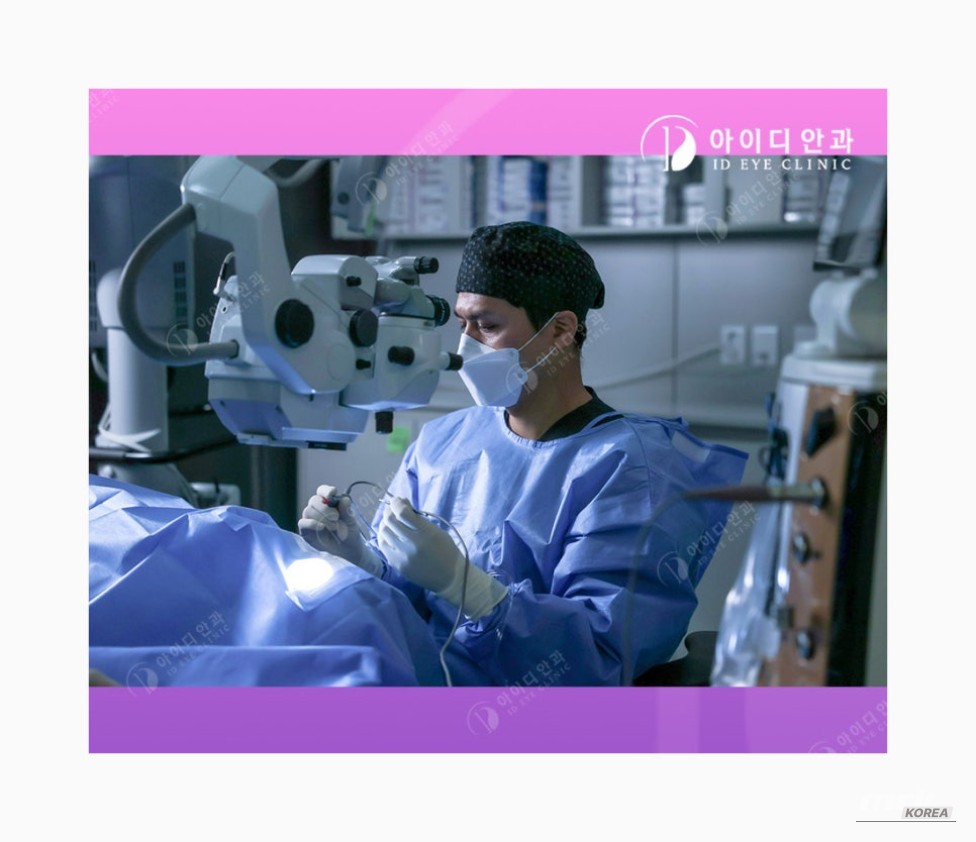
Because lens implantation involves directly inserting a lens inside the eye, it requires a high level of skill.
Even a slight error can affect the outcome, so it is necessary to check whether there is enough space for the lens to enter
and accurately determine suitability through comprehensive precision testing.
Based on the results of the pre-operative precision examination, it is wise for the medical staff to carefully determine the type, power, and size of the lens that is right for the individual.
If you want to receive satisfactory vision correction
As medical technology gradually develops, vision correction surgery that can correct refractive errors is also becoming more popular.
The number of people considering lens implantation is increasing to improve their quality of life and freedom of life.
Lens implantation requires very precise techniques in the incision and insertion process, so the results may vary depending on the doctor's skill.
In particular, before the procedure, it is necessary to perform various tests to check the shape and size of the individual's eye space and the depth of the anterior chamber.
Therefore, it is best to choose a place with medical staff with extensive clinical experience, a systematic examination system, and the latest equipment,
various lenses, and thorough aftercare.
Thank you for reading this long article.
This was Kim Joong-hoon, head director of Gangnam ID Eye Clinic.






































Source :https://blog.naver.com/tkatlrltkatl/224013918235
No comments yet.