Managing Cataracts and Presbyopia in Busan: A Guide to Clearer Vision



If you need vision management for cataracts in Busan,
Q. What are the symptoms of cataracts found during an eye exam?
Symptoms can include blurred vision, increased glare or halos around lights, colors appearing yellowish, and decreased contrast sensitivity.
Q. When should I get an eye exam after developing floaters?
If floaters suddenly worsen or are accompanied by flashes of light, an immediate examination is necessary. Even if symptoms are mild, it's safest to get an eye exam early on.
As you age, you may find it difficult to focus on close-up objects, leading you to worry about presbyopia (age-related farsightedness). If you find yourself holding books farther away or increasing the font size on your smartphone, it could be a sign that your eyes' focusing power isn't what it used to be. Presbyopia is a natural change, and you can reduce discomfort by making small changes to your lifestyle and using appropriate tools.
However, cataracts can develop at the same time, so it's important to differentiate between the two and get a proper diagnosis. Many people searching for information about cataracts in Busan are often curious whether these changes are occurring simultaneously.
Presbyopia refers to the hardening of the eye's lens, making it difficult to focus on nearby objects. You might experience eye fatigue and blurred vision, especially in the evening. Reading or looking at screens for extended periods can cause stiffness, and you may need to close your eyes briefly to regain focus.
Corrective glasses or progressive lenses are commonly used to compensate for focusing at different distances. Lifestyle adjustments such as avoiding dimly lit environments and maintaining a consistent distance from screens can also be helpful. Cataracts, on the other hand, involve the gradual clouding of the eye's lens, preventing light from passing through evenly.
Common symptoms include glare, reduced contrast sensitivity, a yellowish tint to colors, and difficulty driving at night due to light scattering. Because the symptoms develop gradually, they may initially be mistaken for fatigue. However, if you repeatedly experience a lingering, blurry sensation during your daily activities, it's important to get checked. The increasing number of searches for "Busan cataracts" reflects people's desire to find clues explaining these changes in their daily lives.
While presbyopia and cataracts can occur together, they require different management approaches. Presbyopia focuses on correcting near vision, while cataracts are caused by the clouding of the lens itself, potentially requiring surgical correction depending on the severity.
In daily life, using sunglasses to reduce glare, adjusting screen brightness, and taking breaks to look at distant objects can be helpful. Adequate sleep and a balanced diet are also beneficial for maintaining optimal eye health. Diagnosis involves more than just a visual acuity test.
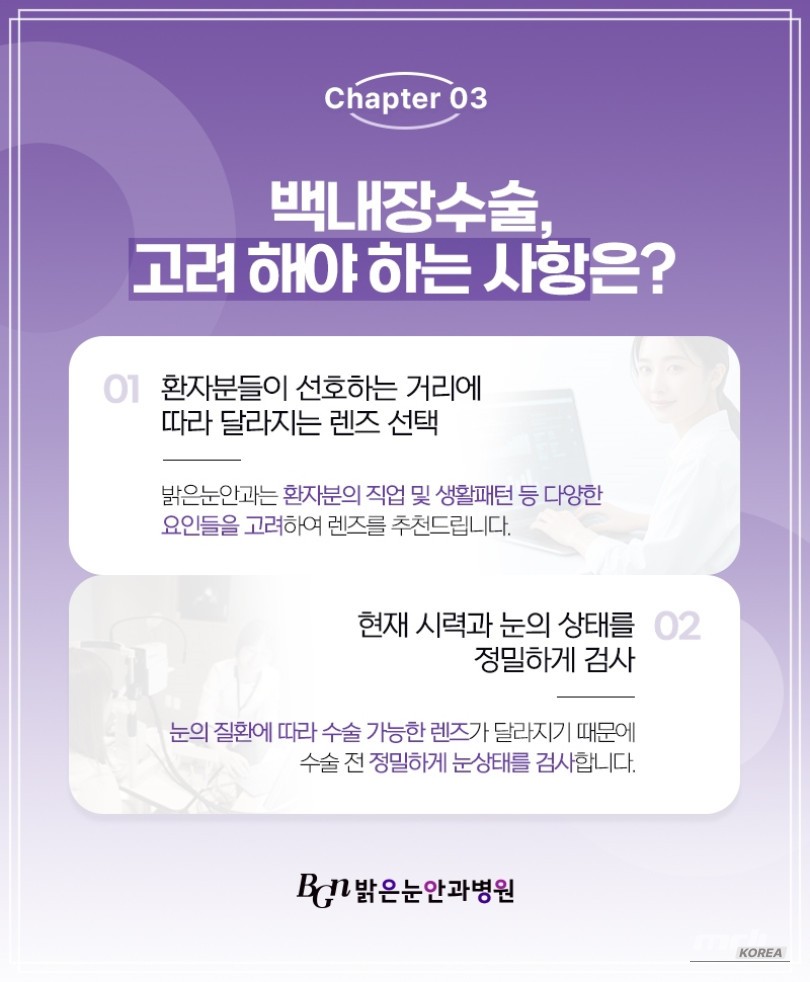
A slit-lamp examination assesses the transparency of the lens, and if necessary, the condition of the retina is checked to comprehensively evaluate the path of light entering the eye. The approach varies depending on whether presbyopia is the primary concern, whether cataracts are causing poor vision, or whether both conditions are contributing to the problem. When seeking cataract-related consultation in Busan, it's helpful to first clearly describe your current symptoms.
Describing whether the blurring worsens at night, whether text appears smudged, or whether you experience more discomfort in bright light can aid in the assessment. If cataracts progress to the point of affecting daily life, corrective surgery may be recommended.
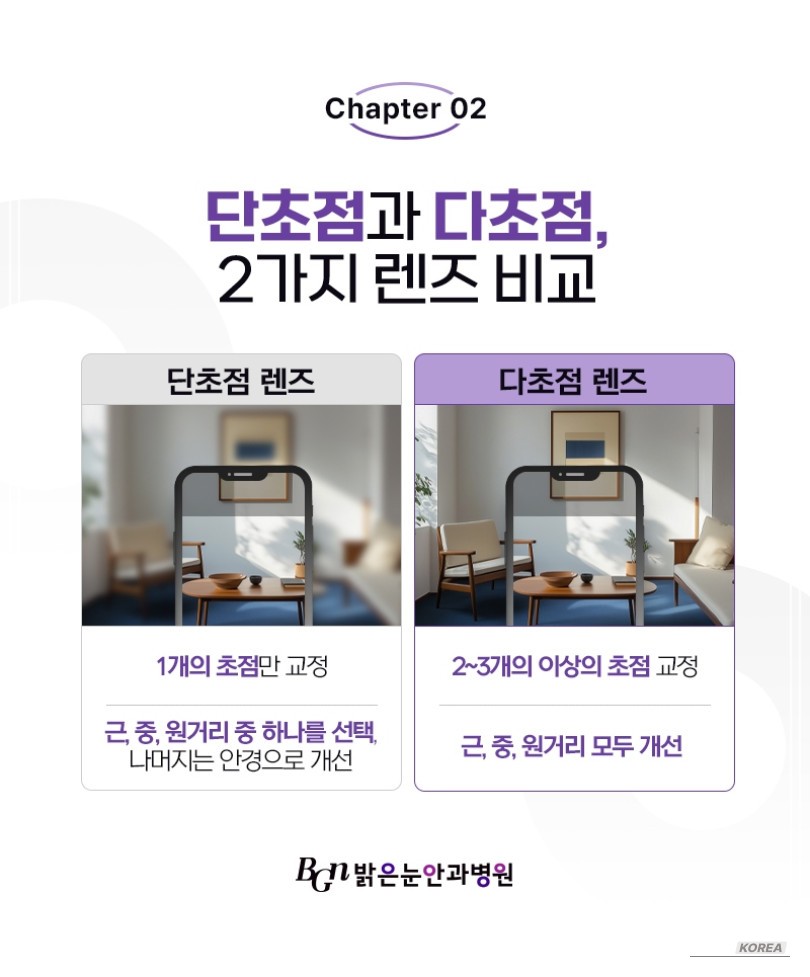
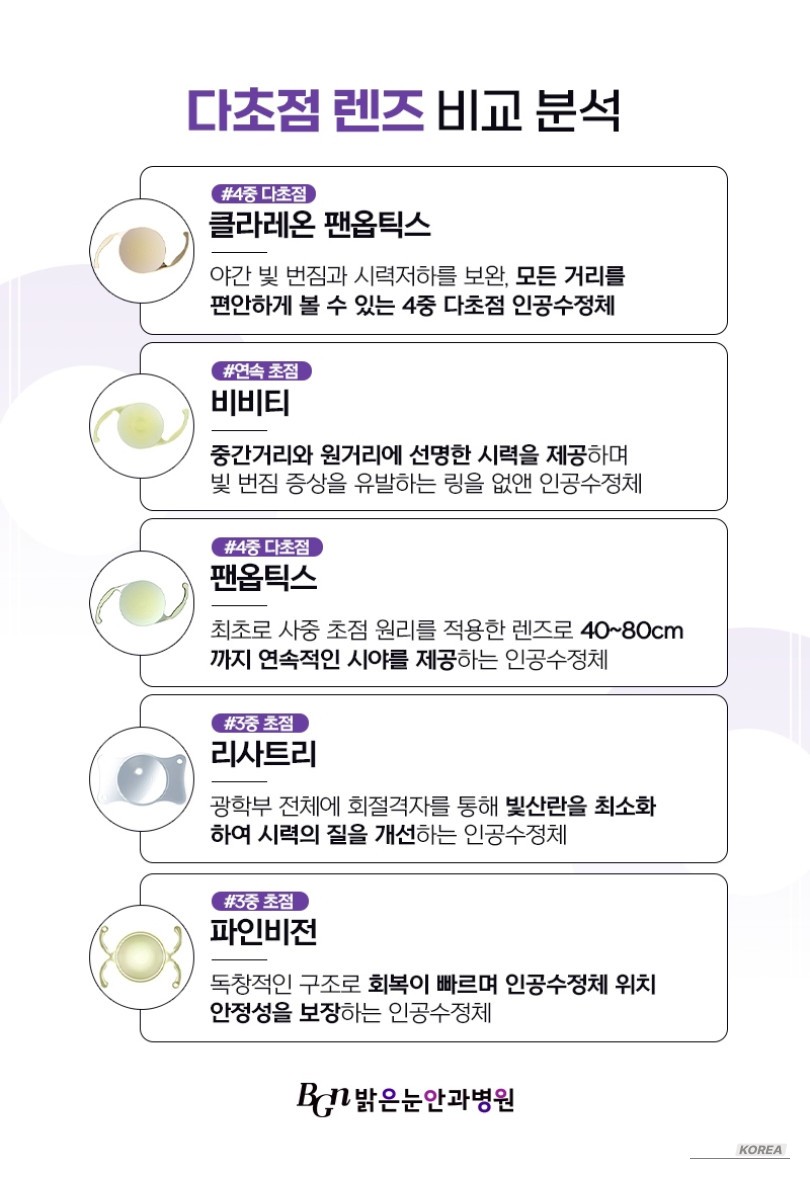
This procedure involves removing the clouded lens and replacing it with an artificial lens to restore the path of light. Artificial lenses come in various types with different focal ranges, allowing you to choose one that suits your lifestyle. If you do a lot of close-up work, prioritizing near vision may be more comfortable. If you drive frequently or spend a lot of time outdoors, you might consider a lens that provides comfortable intermediate and distance vision.
It's important to thoroughly discuss the difference between your expectations and your actual experience during this process. It's also possible to plan for both presbyopia management and cataract correction simultaneously.
The combination is determined based on the distance you use most frequently – near for reading, intermediate for viewing screens, or far for distance vision. While one eye can be corrected for distance and the other for near vision, this approach may feel awkward at first. Therefore, your daily activities and occupation are carefully considered.
Even when searching for information primarily about Busan cataracts, the answer to the question of what is most bothersome in your daily life ultimately becomes the deciding factor. If lifestyle management is sufficient, we recommend starting with small changes. These habits can be helpful: avoid spending long periods in dimly lit spaces, maintain good posture and a consistent distance from screens, and take breaks to look at distant objects to relax your eyes before they become strained.
If you experience dryness, use artificial tears to reduce friction. Wearing protective glasses in windy environments can also increase comfort. If you're interested in this topic, simply reflecting on your current discomforts throughout the day can clarify your next steps.
We hope you won't overlook small habits that protect your eye health. Maintaining a slightly brighter ambient light level indoors and using anti-glare filters on screens with high reflection can be helpful.
When reading, adjust the font size and line spacing generously to reduce eye strain. On days with high levels of airborne dust, gently washing your eyes with lukewarm water after going out can provide a refreshing feeling. Drinking multiple caffeinated beverages in a row can temporarily worsen dryness, so it's best to drink water frequently to maintain balance.
If you're facing a decision, we encourage you to honestly compare your expectations for your vision with your actual lifestyle. The most comfortable solution may vary depending on whether you read for long periods, spend a lot of time working on a computer, or spend a lot of time outdoors. Because adaptation takes time, the first few days may feel unfamiliar, and you may experience a slower transition when shifting focus between near and far distances.
In these cases, you should combine rest and distance adjustments, and if discomfort persists, you should seek consultation to attempt fine-tuning. Because the eyes are organs that work tirelessly all day long, even small differences can be felt significantly, which can be helpful to remember. Above all, accurate confirmation should come before rushing into anything.
Presbyopia is a change that affects everyone, but the nature of the discomfort varies. Cataracts differ from person to person in terms of their rate of progression and the specific points of discomfort, making them difficult to describe with the same words. Therefore, a process of calmly finding the right method for you is necessary. After reading about Busan cataracts, you may come to realize that what ultimately matters is the harmony between your current eye condition and your lifestyle.















Source :https://blog.naver.com/koikoro/224005378488
No comments yet.