LASIK vs. SMILE: Comparing Vision Correction Surgery Options and Costs When You Have Blurry Vision



1. Deciding on Vision Correction Surgery
Blurry vision can significantly limit your daily life. Simple tasks like finding your glasses in the morning, dealing with foggy lenses on humid days, or feeling uncomfortable during sports or travel can impact your quality of life. Vision correction surgery can help address these issues and provide clearer vision. It offers the advantage of regaining sharp eyesight without glasses or lenses, marking a significant life change. However, various types of vision correction surgeries exist, each with unique characteristics, advantages, and disadvantages. Choosing a procedure tailored to your specific eye condition is crucial for maximizing vision quality.
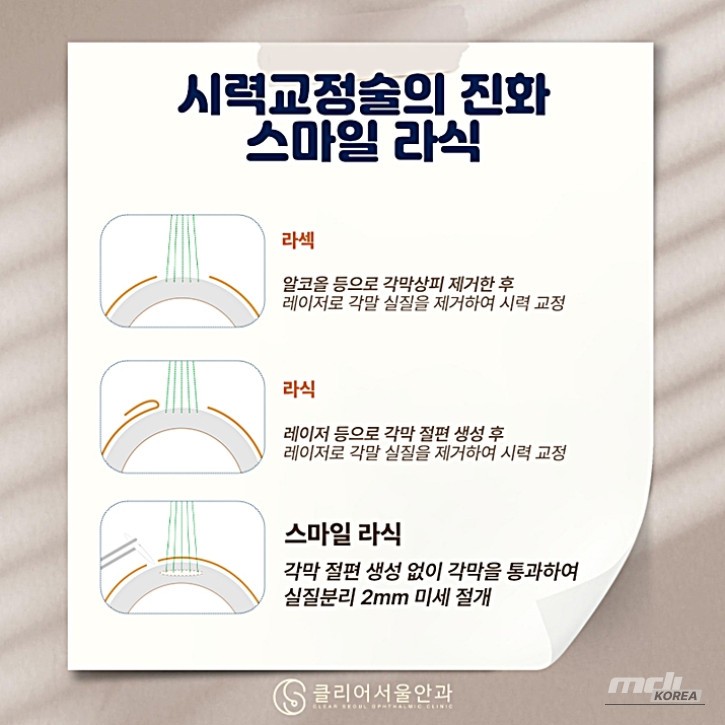
SMILE (Small Incision Lenticule Extraction) surgery has gained considerable attention recently. It improves upon previous LASIK and LASEK procedures. While LASIK and SMILE share similarities, a key difference lies in the corneal incision process, addressing some of the drawbacks of earlier techniques. Let's examine the differences between LASEK, LASIK, and SMILE, along with their procedures, features, benefits, and drawbacks.
2. SMILE Surgery: Process and Features
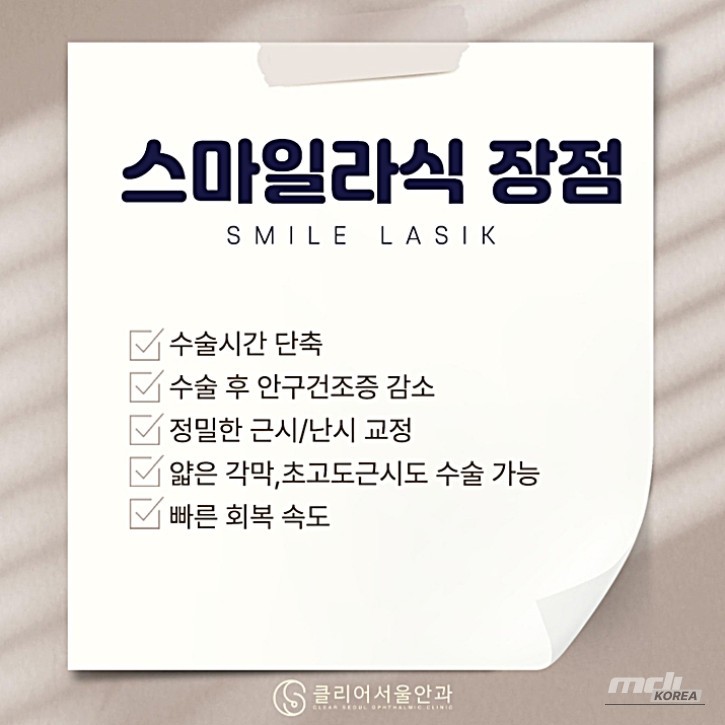
SMILE surgery differs from LASEK, which removes the corneal epithelium, and LASIK, which creates a corneal flap. In SMILE, a femtosecond laser creates a lenticule (a small disc-shaped piece of tissue) within the cornea, corresponding to the refractive correction needed. This lenticule is then removed through a small 2mm incision. Compared to LASIK, the incision is significantly smaller (more than 1/10th the size), reducing concerns about dry eye. This minimally invasive approach allows for sufficient residual corneal thickness, even in cases of thin corneas or high myopia (nearsightedness), minimizing the risk of complications like corneal ectasia (protrusion).
The procedure takes approximately 15 minutes, reducing patient anxiety. Vision recovery is also rapid, with many patients able to resume daily activities the day after surgery. While SMILE LASIK cost is a factor, it's important to remember that the lenticule extraction requires the surgeon's direct involvement, highlighting the importance of the surgeon's skill and experience in addition to the technology used.
3. Excellent Correction for Myopia and Astigmatism
SMILE can also correct myopia and astigmatism. Myopia occurs when the eye is too long or the cornea is too curved, causing light to focus in front of the retina. SMILE corrects this by reducing the cornea's refractive power. Astigmatism results from an irregular corneal shape, causing light to focus at multiple points. SMILE corrects astigmatism by reshaping the cornea to create a more uniform refractive surface. Although SMILE offers a broad range of correction, it's not suitable for everyone. A thorough eye exam and consultation, comparing LASEK and LASIK, are essential to determine the most appropriate procedure.
4. The Importance of Surgical Equipment
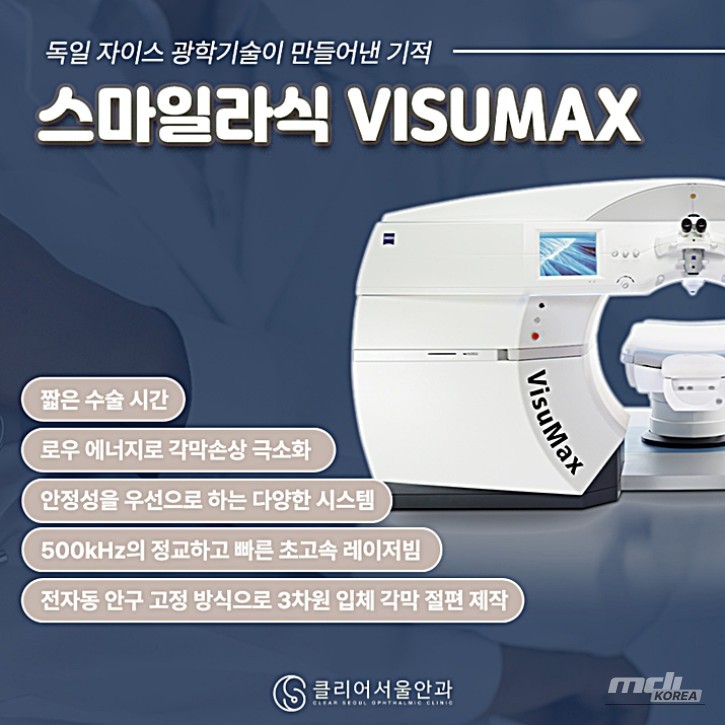
When experiencing blurry vision, many people now explore surgical equipment for vision correction. SMILE surgery utilizes the VisuMax 500 femtosecond laser platform, known for its precision in creating corneal lenticules. Its high-speed femtosecond laser technology allows for precise adjustments in size and shape at the nanosecond level, enhancing refractive outcomes and promoting natural vision correction. The VisuMax 500's small incision size minimizes bleeding and side effects, leading to a faster recovery and minimal post-operative discomfort.
The VisuMax employs ultra-fast laser pulses for precise corneal dissection, minimizing corneal damage while ensuring accuracy. It operates faster and with greater precision than previous laser systems, shortening surgery times and enhancing safety. Its 3D scanning system maps the corneal shape, enabling customized treatments. This allows surgeons to tailor lenticule size and angle based on the patient's unique eye characteristics.
Furthermore, an automated eye-tracking system detects even subtle eye movements in real-time, ensuring accurate laser delivery. This maintains laser precision even if the patient blinks during the procedure, reducing discomfort and anxiety, and promoting a more relaxed surgical experience.
5. What's More Important Than Surgery Costs
While the cost of SMILE LASIK is a significant consideration, it's crucial to prioritize the surgeon's experience, understanding of the technology, thorough pre-operative examination, and post-operative care program. SMILE is a significant decision that can transform your vision and quality of life. Choosing a technologically advanced method that offers stable vision correction is the wisest choice.
In addition to researching the differences between LASIK and SMILE and considering costs, it's essential to understand the need for regular check-ups and post-operative care based on your individual eye condition. Selecting a surgical approach that helps you achieve your target vision in a stable manner is paramount.
If you're considering vision correction surgery, carefully evaluate the procedure's safety and effectiveness to make an informed decision and begin a brighter, more comfortable life.











Source :https://blog.naver.com/whgus4231/223994927361
No comments yet.