LASIK vs. LASEK: Understanding Vision Correction Surgery Options in Seocho-gu



Those who regularly wear glasses or contact lenses often consider vision correction surgery. This is because it offers the possibility of clear vision without corrective aids, leading to a more comfortable daily life. Concerns about side effects and complications are natural, given that it's a surgery performed on the eyes. However, with thorough pre-operative examinations ensuring suitability and consistent post-operative care, the risks of inflammation, side effects, and complications can be minimized. Moreover, advancements in medical technology in Seocho-gu have led to the development of various LASIK and LASEK techniques that address previous limitations, enhancing the overall safety of these procedures.
Many people explore the differences between LASIK and LASEK. While the names are similar, the procedures differ. LASIK involves creating a flap in the cornea, resulting in less pain and faster recovery. However, because it requires a larger corneal incision, it may not be suitable for individuals with thin corneas or those in professions requiring caution against external impact, such as athletes. In such cases, LASEK is an alternative. LASEK involves removing only a thin layer of the corneal epithelium, requiring less corneal incision and making it suitable for a wider range of corneal conditions. The removed epithelium regenerates, providing greater resistance to external impact and stable vision correction. However, some individuals find the post-operative pain and slower recovery associated with LASEK to be burdensome. Streamlight LASEK addresses these drawbacks.
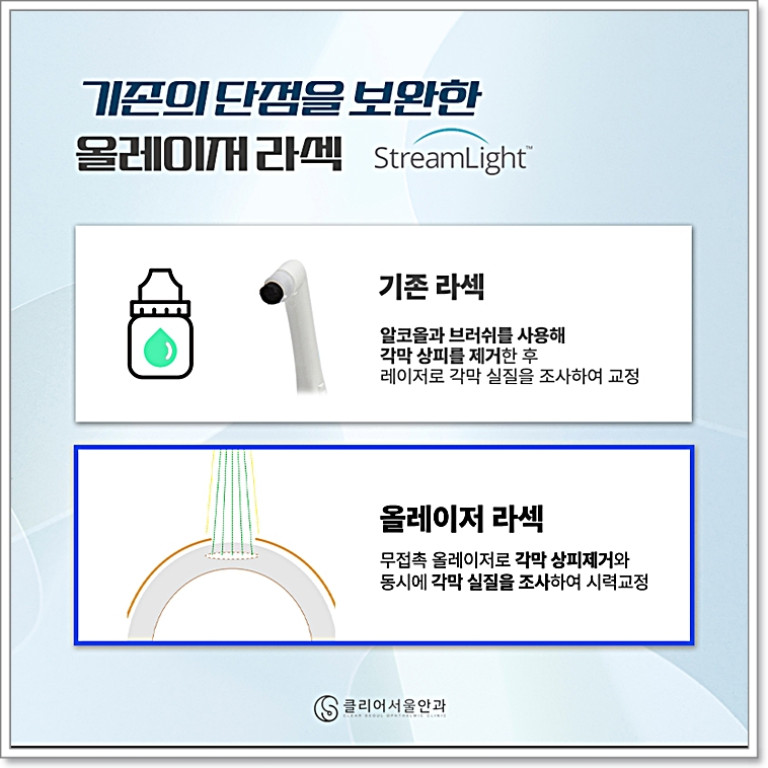
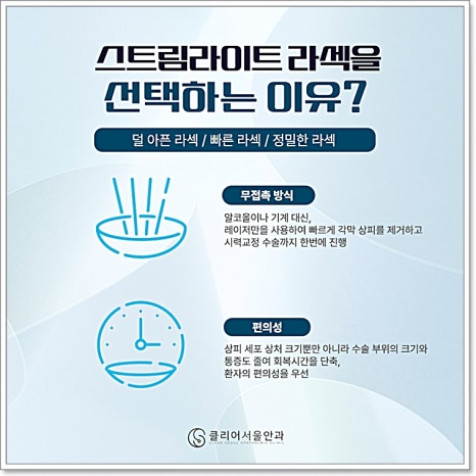
Streamlight LASEK may be unfamiliar to those exploring LASIK and LASEK. It's a procedure that improves upon the shortcomings of traditional LASEK. While the LASEK surgical method is similar, it uses only a laser instead of alcohol or a brush, further minimizing unnecessary incisions and reducing damage to the eye. This naturally leads to less pain and a shorter recovery period, allowing for a quicker return to daily life.
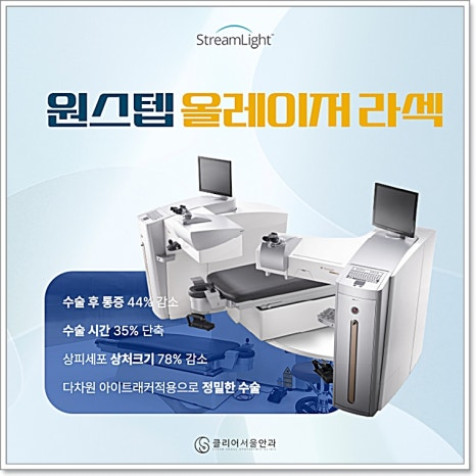
Streamlight surgery is a one-step procedure that uses an excimer laser to remove the corneal epithelium and correct the stroma simultaneously. This reduces surgery time by approximately 35%, naturally decreasing the exposure time of the cornea and lowering the risk of side effects such as dry eye and corneal haze. The laser is applied in a non-contact, all-laser manner, reducing the risk of secondary infection. Management after surgery is also simpler, and the quality of vision is improved.
Many people are curious about LASEK costs at Seocho-gu eye clinics. The cost of Streamlight surgery typically ranges from 1,000,000 to 1,500,000 KRW. However, surgical costs vary depending on the clinic, the surgical equipment used, the patient's eye condition, and the clinical experience of the medical staff.
Streamlight LASEK offers several advantages. It minimizes unnecessary incisions during epithelial removal, resulting in approximately 78% reduction in the size of the epithelial wound. This reduces post-operative pain because the area of the wound where pain receptors are located is smaller. While traditional methods typically involve pain lasting for five to seven days, Streamlight surgery usually involves pain for only one to two days. Vision also recovers relatively quickly, allowing individuals to resume light daily activities. However, caution is still needed regarding prolonged exposure to ultraviolet light and excessive use of electronic devices.
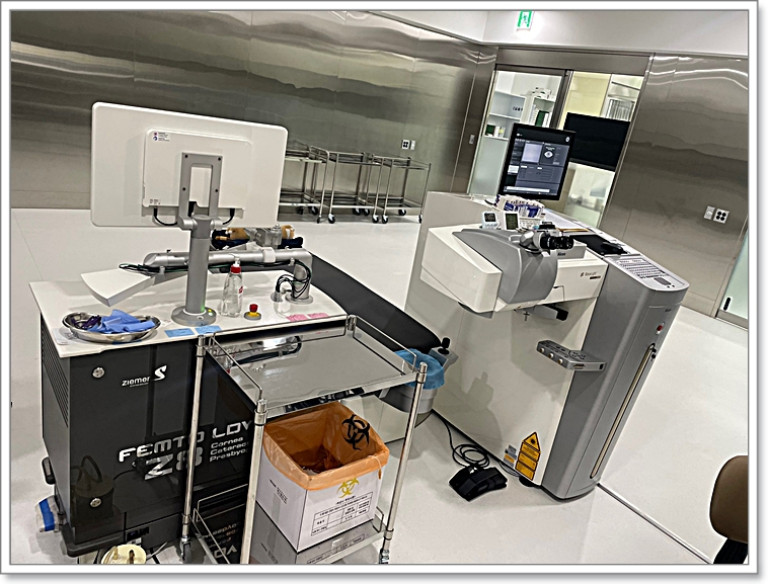
In Seocho-gu, Streamlight surgery is performed using the EX500 excimer laser. This equipment boasts the fastest surgical time among all-laser procedures. The laser flow is also stable, allowing for smoother correction of irregular corneas and improved vision quality. Equipped with a 6-dimensional eye tracker, rather than a general tracker, it prevents subtle eye movements and tremors, reducing the risk of accidents and enhancing surgical safety. The excimer laser also compensates for eye rotation caused by changes in the patient's posture during surgery, ensuring that the laser is directed to the center point, reducing errors, and enabling accurate vision correction.
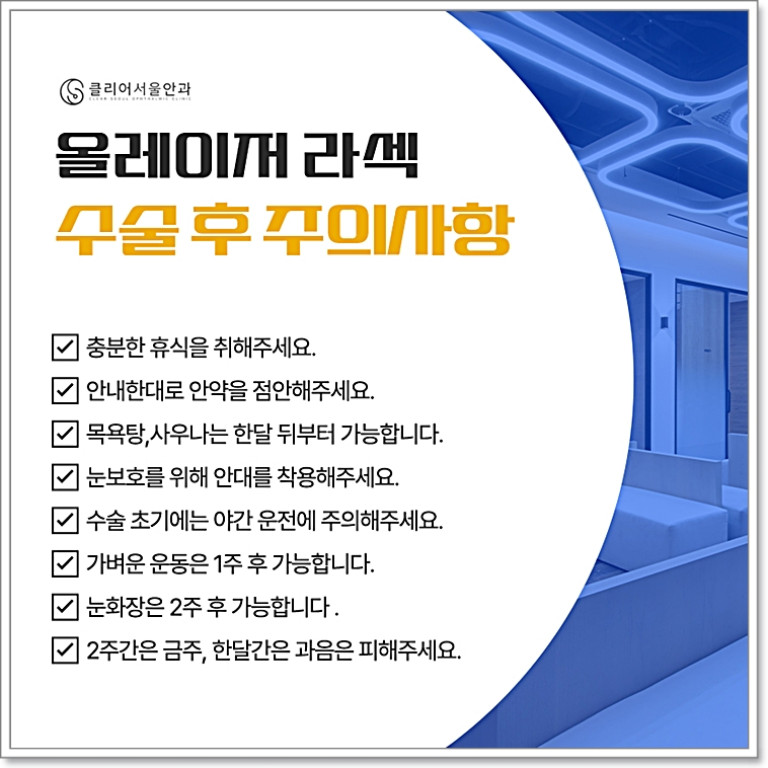
While Streamlight LASEK improves upon the disadvantages and enhances the advantages of traditional methods, it's still crucial to focus on post-operative care to ensure that the eyes stabilize. Although hospitalization is not required on the day of surgery, it's important to rest the sensitive eyes sufficiently upon returning home and to refrain from using electronic devices as much as possible. Eye drops should be administered to prevent inflammation, and visits to bathhouses or saunas should be avoided for about a month. Wearing an eye shield is recommended while sleeping to prevent unconscious eye rubbing. Some light scattering or glare may occur in the early stages of surgery, so caution should be taken when driving at night. This phenomenon gradually disappears over time, so there is no need to worry too much. Many people exercise these days, and light walks or jogging are possible after about a week, but it is important to wear protective glasses to prevent foreign substances or dust from entering the eyes during this period. Strenuous exercise can increase intraocular pressure and interfere with recovery, so it is best to monitor the condition for about a month, and eye makeup should be done about two weeks later. In addition, drinking and smoking, which are factors that cause inflammation, should be prohibited, especially excessive drinking should be avoided for a month.
Vision correction surgery must be performed using a method that is appropriate for the individual's eye condition. If a surgery that is not suitable for the eyes is performed, vision may be further impaired, and various side effects may occur, requiring long-term treatment. Therefore, if you want to restore clearer and brighter vision, it is best to visit an ophthalmologist for an examination and consult with a medical professional to find the most suitable surgical method for you.


Source :https://blog.naver.com/whgus4231/224052192819
No comments yet.