LASIK vs. LASEK: Comparing Procedures and Experiences



Looking to compare LASEK surgery experiences?
Q. Is regular eye check-up and care necessary when wearing contact lenses?
A check-up was necessary every six months to prevent corneal damage and inflammation.
Q. When should I get regular eye exams after LASIK surgery?
It was good to have several check-ups in the early stages after surgery and then regular check-ups once a year.
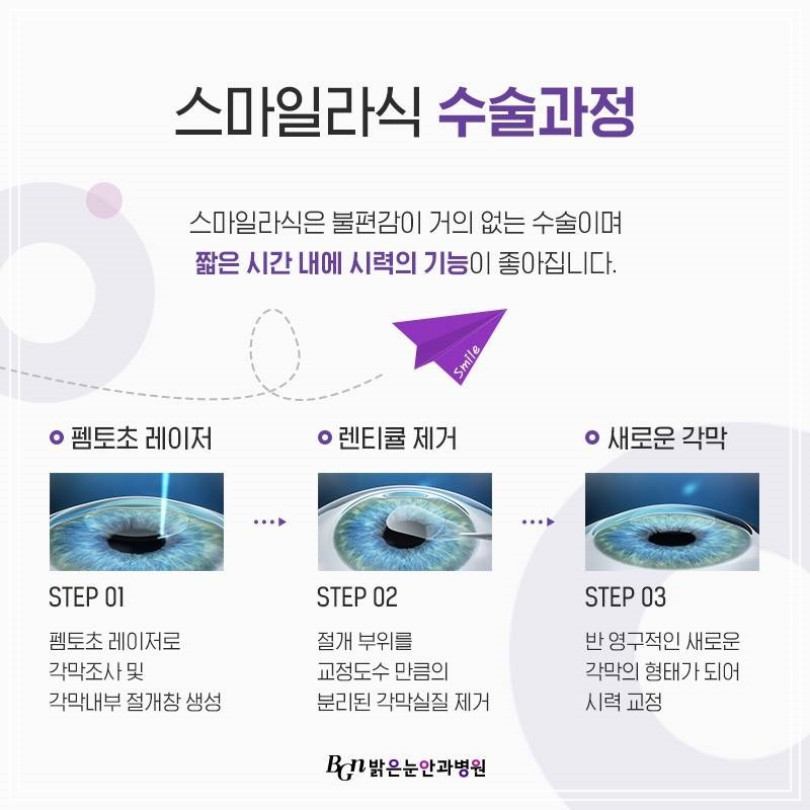
LASEK is a surgery that corrects vision by removing the corneal epithelium, while SMILE LASIK is a method of matching the degree by taking out lens-shaped tissue through a small incision in the cornea. Both methods were considered by people who want to live without glasses or contact lenses. Myopia is the main target, but astigmatism is also possible, and the choice may vary depending on corneal thickness, occupation, and degree of dryness.
In general, LASEK does not create a flap, so it provides stability for those who engage in intense exercise or are exposed to dusty environments. SMILE LASIK is known for its fast recovery due to the small incision. However, because the process and feeling of vision recovery vary from person to person, it was not concluded that one method is better.
Myopia is a condition in which light converges in front of the retina in the eye. It occurs when the refractive power of the cornea is strong or the length of the eyeball is long. It can progress if habits such as looking at digital screens closely from childhood or reading books lying down continue. Astigmatism refers to a condition in which the focal point is blurred because the corneal surface is uneven.
For this reason, surgery is considered if you want to take off your glasses, but whether surgery is possible depends on the eye structure, dryness, corneal thickness, and pupil size at night. Light scattering and initial pain, which are frequently mentioned in LASEK surgery reviews, vary greatly from person to person and are reported to decrease over time.
Pre-operative diagnosis was very thorough. The exact degree was checked with a refraction test, and the asymmetry and protrusion of the surface were checked with a corneal topography. The corneal thickness and the strength of the central part were checked to determine whether LASEK was suitable or SMILE LASIK could be considered.
The amount of tear secretion and surface condition were evaluated to estimate the risk of dryness, and pupil size was also checked because it can affect nighttime light scattering. A history of wearing contact lenses can affect the test results, so the test was performed after a certain period of discontinuation. Fine diopter residue or night vision shaking are mentioned in LASEK surgery reviews, but the direction was to reduce them through precise measurement and planning.
LASEK involves removing the epithelium and then trimming the corneal surface with a laser. Immediately after surgery, stinging, tearing, and light-sensitive symptoms may persist for several days. As the epithelium regenerates, it begins to stabilize and the clarity gradually increases. SMILE LASIK is a method of separating and extracting corneal tissue through a small incision.
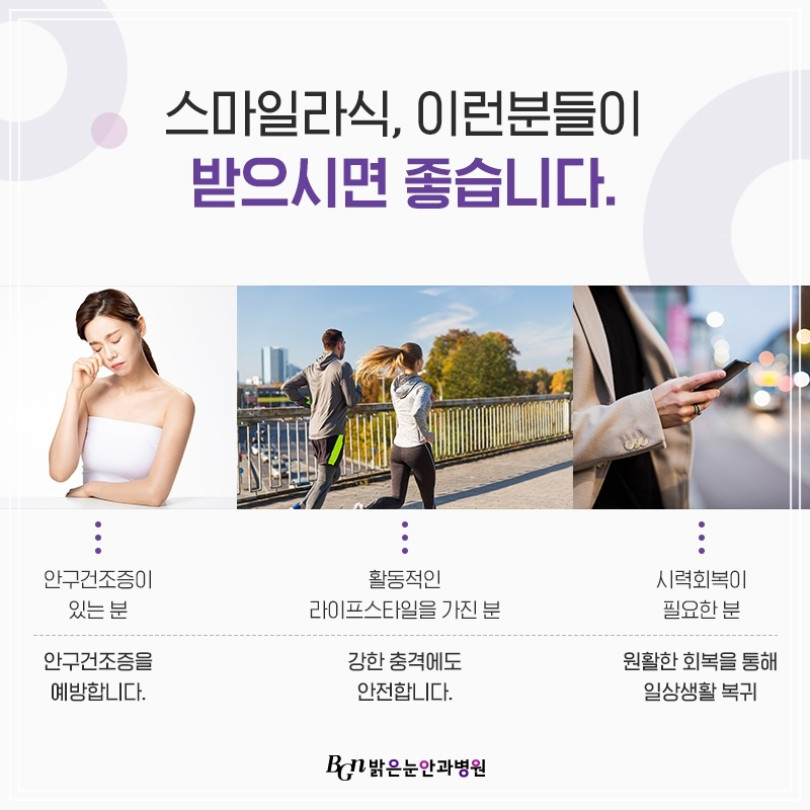
It is accepted that there is relatively little pain and a quick return to daily life, but dryness or the possibility of nighttime glare can occur in both methods. If you frequently wear safety equipment at work or are at risk of impact, it is reasonable to compare LASEK. If you need a quick return, it is reasonable to compare SMILE LASIK. LASEK surgery reviews frequently mention the timing of resuming sports activities, the feeling of returning to desk work, and impressions of night driving.
Post-operative care had many things in common. Prescribed eye drops should be used according to schedule, and the eyes should not be rubbed hard in the early stages. Avoid swimming pools or saunas until the fine wounds have healed, and wearing glasses that reduce UV rays when going out was comfortable. Screen use should be increased to the extent that discomfort decreases.
Dryness and foreign body sensation during the first week or two are frequently mentioned in LASEK surgery reviews, and changes in surface condition and vision should be checked at scheduled visits. If nighttime light scattering is uncomfortable, you should carefully consider whether fine-tuning the degree is necessary over time. The target vision is only a predicted value based on the test, and the recovery rate was affected by the individual's epithelial regeneration ability, tear film stability, and lifestyle patterns.
Some eyes were not suitable for surgery. Other options may be recommended in cases of keratoconus signs, excessively thin corneas, or severe dry eye. It was safer to postpone pregnancy and lactation because there may be changes in vision. Looking at LASEK surgery reviews, there was a mixture of positive and disappointing aspects.
The important thing was to compare the pros and cons based on my eye condition and life, and to make a decision by setting a safe range based on the test results. SMILE LASIK and LASEK have different directions, but the goal was a clear daily life. The criteria for selection were the living environment and recovery priority. If there is a lot of dust and sweat on site or frequent intense exercise, you may feel more comfortable with a method that does not create a flap.
Conversely, if you work at a desk for a long time and need a quick return, there was a tendency to prefer small incisions. If you drive frequently at night, you should carefully examine the pupil size and the subtle unevenness of the corneal surface and listen to a thorough explanation of the possibility of light scattering. For eyes with basic dryness, the plan for using artificial tears and the screen usage time should be adjusted together.
On the day of surgery, the eyes were disinfected and fixed, and the procedure was performed according to the planned method. Afterwards, I was given instructions on how to use eye drops and precautions, and for a few days there may be a mix of blurring and stinging. Swimming pools and saunas should be postponed until the surface is stable. Screen work should be increased to the extent that discomfort decreases, and it was comfortable to wear glasses that reduce UV rays when going out.
Recovery progresses in stages, and clarity may fluctuate even within a day. Reducing impatience and checking the condition at scheduled visits can reduce anxiety. Surgery may not be recommended if the cornea is too thin or if there are signs of keratoconus. It was safer to postpone the timing of pregnancy or lactation because there may be changes in vision.
The target vision was only a predicted value, and the experience varied depending on the individual's recovery rate, tear film stability, and lifestyle patterns. Overall, it was about comparing and deciding based on the condition of my eyes. It was important to set a plan within a safe range for both methods and to realistically plan the recovery. Sufficient consultation and repeated measurements before surgery can reduce variables and make the path clearer.





Source :https://blog.naver.com/koikoro/224049886060
No comments yet.