LASIK vs. LASEK at Gangnam Station Eye Clinic: Finding the Best Clinic to Minimize Recovery Time



Many people research the differences between LASIK and LASEK or visit eye clinics near Gangnam Station for consultations to undergo vision correction surgery. Most tend to prefer LASIK due to its minimal pain and quick visual recovery. With the advancement of medical technology, procedures like SMILE LASIK have gained significant attention. However, despite its wide applicability, it's not suitable for everyone. Those with thin corneas, excessively flat corneal refraction, or unstable corneal shapes may find this surgery challenging. Therefore, the suitability of vision correction surgery depends on corneal condition and eye structure. In such cases, Streamlight LASEK may be recommended.
Streamlight LASEK is a correction method similar to traditional LASEK but with improvements to address the shortcomings of the older procedure. Traditional LASEK involved using alcohol or brushes, which could cause significant irritation to the eye, leading to pain and slow recovery. Streamlight LASEK, however, is an all-laser procedure that reduces surgery time and minimizes eye irritation, thereby enhancing overall satisfaction.
Streamlight LASEK uses a stable excimer laser to thinly remove the corneal epithelium while simultaneously using the laser to correct refractive errors. By combining these two steps into one, surgery time can be reduced by 35%, which minimizes the cornea's exposure to the external environment, alleviating concerns about dry eye. Additionally, since the laser doesn't directly touch the eye, the risk of secondary infection is reduced. Real-time measurement of corneal thickness during ablation ensures sufficient residual corneal thickness, reducing the risk of corneal ectasia.
LASIK, LASEK, and SMILE LASIK all correct vision by reshaping the cornea. Sufficient corneal thickness is essential to maintain the eye's structural integrity. If the remaining cornea is too thin, it may not withstand intraocular pressure, leading to corneal ectasia, which can cause vision loss, irregular astigmatism, glare, and permanent damage. In severe cases, a corneal transplant may be necessary. Therefore, precise measurement and repeated verification of corneal thickness are crucial. Insufficient residual corneal thickness can also lead to gradual vision regression and unstable correction over time. Abnormal changes in corneal shape can cause uneven light refraction, resulting in glare and distortion. Individuals with high myopia or naturally thin corneas should consider Streamlight LASEK at a reputable clinic to avoid excessive corneal thinning.
Streamlight LASEK at Gangnam Station Eye Clinic involves removing the corneal epithelium with a laser, resulting in minimal physical trauma and reduced pain. Traditional methods using alcohol dissolve and remove the epithelium, causing chemical damage that irritates surrounding tissues, leading to a larger wound area and prolonged pain. Streamlight LASEK directly evaporates the epithelium with a laser, enabling precise removal and minimizing surrounding damage, thus significantly reducing pain. This naturally shortens the LASEK recovery period, allowing for a quicker return to daily activities.
Traditional LASEK can involve pain lasting approximately 3 to 5 days, with a recovery period of about 2 to 4 weeks. Streamlight LASEK reduces pain to about one to two days, with a return to daily life possible within 1-2 weeks. The continuous laser ablation of the epithelium and stroma allows for more precise surgery and improved visual quality.
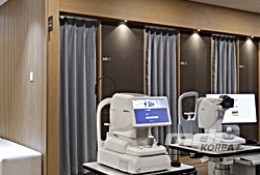
Gangnam Station Eye Clinic uses the EX500 excimer laser for Streamlight LASEK. This system delivers approximately 500 pulses per second, reducing the time the laser is exposed to the cornea, minimizing the risk of dry eye and errors due to movement. Its 6-dimensional tracking system detects horizontal, vertical, rotational, and cyclotorsion movements in real-time, correcting the laser's position for accurate ablation even with eye movements. The profile designed to preserve the cornea's original shape and structure allows for customized surgery based on individual eye conditions. The laser beam's uniformity and stability make it suitable for various refractive errors. Those researching the differences between LASIK and LASEK should carefully consider customized surgery based on their eye conditions to determine the safest and most effective procedure.
Even with the rapid recovery of Streamlight LASEK, it's important to heed precautions. Immediately after surgery, the epithelium needs to regenerate, which may cause temporary dry eye, foreign body sensation, or glare. Avoid rubbing the eyes or exposing them to water, dust, or cosmetics until the epithelium has healed. UV protection and adequate hydration are crucial during the recovery period, and consistent use of artificial tears and prescribed eye drops will accelerate LASEK recovery. Strenuous exercise, saunas, and swimming should be avoided until the epithelium has healed. Careful management during this short recovery period will determine the quality of vision and long-term stability, so adherence to these guidelines is advisable.
Streamlight LASEK is a popular choice due to its reduced pain and rapid recovery. However, combining post-operative care with sufficient rest can help maintain long-lasting vision. Get your eyes examined and plan your vision correction in the safest way possible.














Source :https://blog.naver.com/whgus4231/224073298273
No comments yet.