LASIK vs. LASEK: A Detailed Comparison of Vision Correction Procedures



Hello.
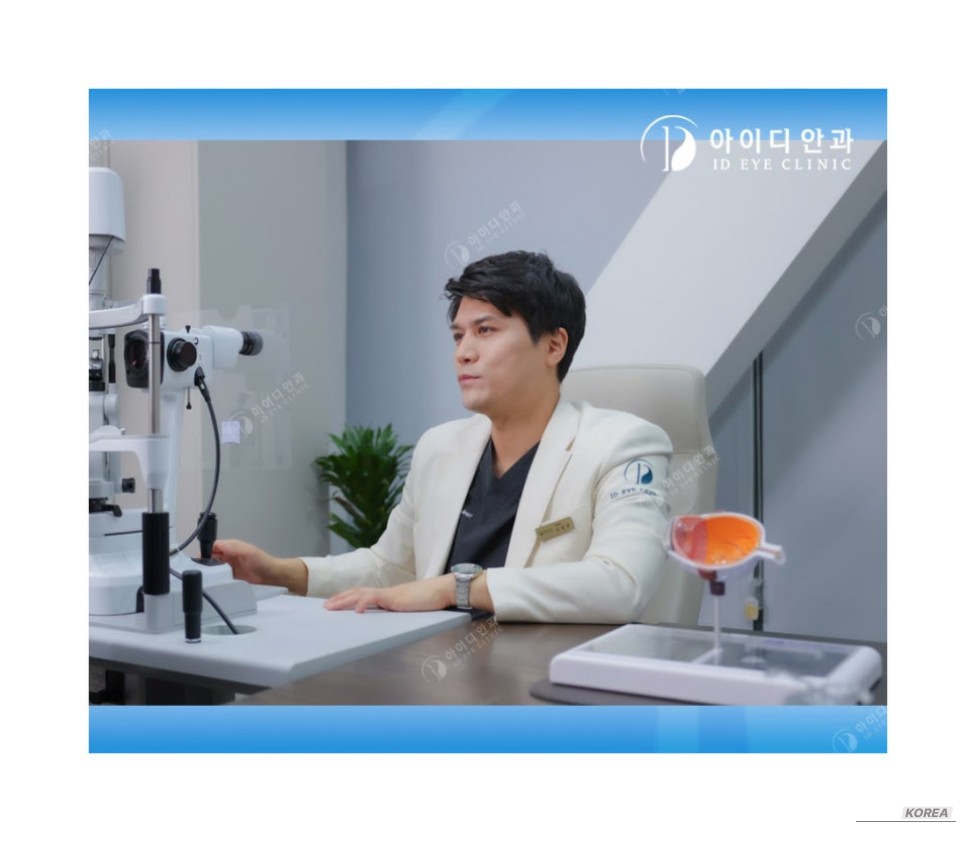
I'm Kim Joong-hoon, head director of Gangnam ID Eye Clinic.
With the university entrance exam finally over, many students are planning to tackle the things they've put off during the long exam period.
As they relieve academic stress and prepare for a fresh start, refractive surgery is often high on their bucket list.
Especially among students who have experienced discomfort with glasses or contact lenses, interest in vision correction surgery has recently increased significantly, leading many to research and compare LASIK and LASEK.
LASIK, LASEK, SMILE LASIK, and All-Laser LASEK each have different principles, advantages, and disadvantages.
It's best to decide on the most suitable method for each individual. To find the right option, it's crucial to clearly understand the differences between each procedure and the applicable conditions.
Therefore, today, I will compare the characteristics of each method, including the differences between LASIK and LASEK, as well as SMILE LASIK and All-Laser LASEK, which are known as next-generation laser vision correction techniques.
"What are the fundamental differences between LASIK and LASEK?"
Both LASIK and LASEK involve changing the refractive index by ablating the cornea.
While the basic principle is similar, there are significant differences in the process, pain, and recovery characteristics.
LASIK, a representative of traditional refractive surgery, corrects vision by creating a corneal flap.
LASEK involves removing the epithelium and then ablating the cornea with a laser for correction.
Although both methods have proven effective, LASIK can be vulnerable to external impacts, and its application may be challenging for those with thin corneas or high myopia due to limitations in the thickness that can be ablated.
LASEK has the disadvantage of longer pain and recovery periods but offers high structural stability and resistance to impact.
While both methods have advantages, the range of options may vary slightly depending on individual eye conditions and lifestyle.
Therefore, it's advisable to determine the best course of action through a thorough eye examination and consultation.
"What are the differences with SMILE LASIK?"
SMILE LASIK has a different structure compared to traditional LASIK and LASEK.
It involves removing only the lenticule through a small incision without widely incising the corneal epithelium.
Because it precisely excises while preserving most of the epithelial layer, it is resistant to external impact.
Recovery is relatively fast due to minimal epithelial damage, and the incidence of dry eye is low, reducing the risk of side effects such as light scattering.
Most people can return to daily life from the day after vision correction, making it a popular choice for those who need a quick return to their routines.
However, SMILE LASIK may not be suitable for all eyes.
If the corneal thickness is insufficient or the corneal condition is sensitive, stability is prioritized, which may limit the choice compared to correction methods that can be applied under a wider range of conditions.
"The emergence of 'All-Laser LASEK,' an improved version of the existing method"
If LASIK or LASEK is difficult due to excessive corneal ablation or a relatively thin cornea, All-Laser LASEK, which involves less corneal ablation and leaves more residual cornea, can be an alternative.
All-Laser LASEK is a method that compensates for the stability, pain, and recovery period of conventional LASEK.
It performs all processes, including corneal epithelial removal, with a laser, ensuring uniform corneal epithelial removal and reducing the extent of damage, which can reduce pain and recovery time.
In addition, there is less concern about side effects such as dry eye, corneal opacity, and light scattering.
If basic requirements are met, vision correction is possible even for those with high myopia or astigmatism, making it a highly preferred method.
All-Laser LASEK can be divided into Two-Day LASEK and Save LASEK depending on the equipment used.
Understanding the characteristics of each device and choosing a method that suits individual eye conditions can lead to satisfactory results.
"What are the differences between Two-Day LASEK and Save LASEK?"
Two-Day LASEK uses the Amaris Red equipment, which significantly reduces the long recovery and pain that were disadvantages of LASEK.
It uses the finest and fastest beam among existing lasers, reducing gaps and overlapping irradiation between lasers for precise correction.
Equipped with a 7-dimensional eye-tracking system, it corrects eye movements in real time and prevents the laser from overlapping on one area by sensing heat, reducing the risk of damage.
Save LASEK corrects vision using the EX500 equipment.
Even in cases where general vision correction may be limited, such as high myopia/astigmatism or thin corneas, application is possible if basic conditions are met because the amount of ablation is reduced.
Since epithelial removal and stromal ablation proceed in a one-step method, it is possible to reduce pain, recovery time, and the possibility of regression.
Structural stability is often mentioned as a definite advantage in terms of long-term vision maintenance, so it is naturally chosen by those who want careful vision correction.
"Compare, check, and make a careful decision"
A careful approach is necessary to achieve high-quality results.
The eye is a sensitive organ, and satisfaction can vary even with small differences, so systematic and delicate eye examinations and personalized plans must be established.
The experience and skill of the medical staff and the availability of aftercare after vision correction should be fully considered.
Technology has continued to develop to reduce unnecessary burdens and secure satisfactory vision and quality of life, and the options have widened.
However, the standard for creating good results is ultimately having a simple but unwavering principle of "a method that suits me."
As such, vision correction surgery has various types, and each has different advantages, disadvantages, and limitations.
Therefore, there is no one-size-fits-all method, and satisfactory results can be expected only when considering one's eye structure, occupation, lifestyle, and usual vision use environment.
Today, we took the time to learn about the differences and characteristics of LASIK and LASEK, as well as various other methods.
If you are considering vision correction surgery, I would like to recommend that you clearly understand your current eye condition and choose a method that suits your lifestyle and purpose.
Also, if you feel anything strange, you should visit an ophthalmologist immediately and develop a habit of checking your eye condition from time to time through regular checkups to protect your eye health and the vision you have worked hard to restore.
Thank you for reading this long article. This has been Kim Joong-hoon, head director of Gangnam ID Eye Clinic.






































Source :https://blog.naver.com/tkatlrltkatl/224087300971
No comments yet.