Key Considerations When Choosing the Right Time for LASIK



Important Criteria for Choosing the Right Time for LASIK
Q. Why do you visit the ophthalmologist regularly?
To detect eye diseases early and to consistently monitor changes in my vision.
Q. What symptoms prompt you to visit the ophthalmologist?
Blurred vision, eye pain, redness, sudden vision loss, flashes of light, and seeing dark spots.
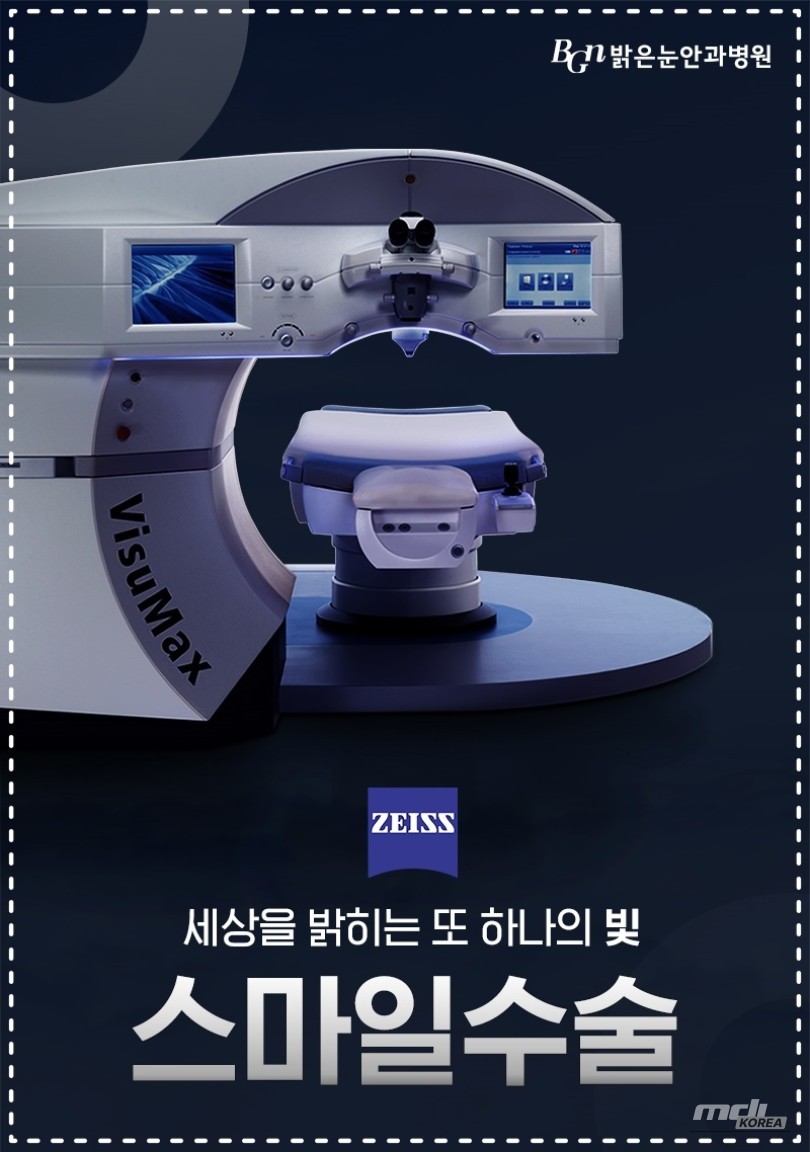
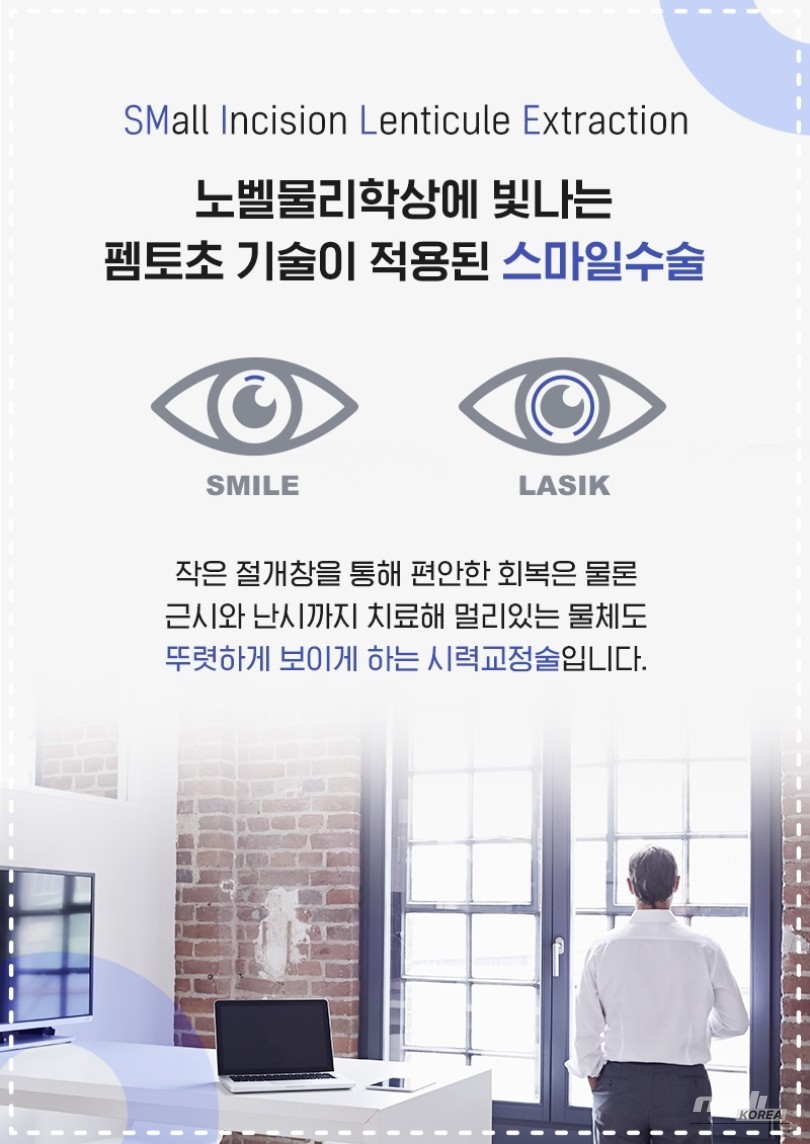
SMILE surgery involves making a small incision in the cornea and separating a thin piece called a lenticule to correct vision. Some people consider this option hoping to reduce the stinging sensation in the eyes when exposed to wind, due to the smaller incision size. In the past, surgeries that created large flaps were widely used, but now, techniques have evolved to reduce incisions, lessening the burden on daily life recovery.
However, it is not suitable for everyone, and the shape and thickness of the cornea, as well as tear secretion, must be checked first. Although it is often discussed based on age, like the term 'LASIK age,' the actual decision should be based on the structure of the eye and lifestyle patterns.
The situations where surgery is appropriate are relatively clear. These typically include cases where nearsightedness and astigmatism have stabilized with no further changes in prescription, and when wearing glasses or contact lenses is uncomfortable. If there are corneal scars or suspected keratoconus, the procedure is not performed. If the cornea is temporarily deformed due to long-term contact lens wear, the examination is conducted after a period of rest from lenses to allow natural recovery.
Rather than hastily concluding based on 'LASIK age,' it is important to first check if there is sufficient safety margin in the eyes. Discomfort becomes more apparent in daily life. Distant signs may appear doubled, or nighttime glare may worsen, making driving burdensome. Prolonged lens wear can also lead to repeated dryness.
SMILE surgery is known to have a relatively limited range of corneal nerve damage due to the small incision, which is a reference point for concerns about worsening dryness. However, individual differences are significant, and temporary blurring, foreign body sensation, and nighttime glare may occur in the early postoperative period. These changes usually subside within a few days to a few weeks, but may persist in some cases, so sufficient explanation and adjustment of expectations are necessary beforehand.
Rather than focusing solely on age, occupational demands and the frequency of nighttime activities should also be considered. The diagnostic process can be described as stepwise. Myopia and astigmatism are checked with vision and refraction tests, and corneal topography and tomography are used to examine the thickness of the central and peripheral areas, as well as asymmetry, to check for signs of keratoconus risk.
Pupil size, the possibility of centration, and corneal opacity are checked to estimate the possibility of nighttime glare. Tear film tests can help evaluate dryness. Contact lens wearers should have a break of several days for soft lenses and a longer period for hard lenses. 'LASIK age' often comes up in consultations, but even the same tests should be interpreted in conjunction with lifestyle habits and work environment to be realistic.
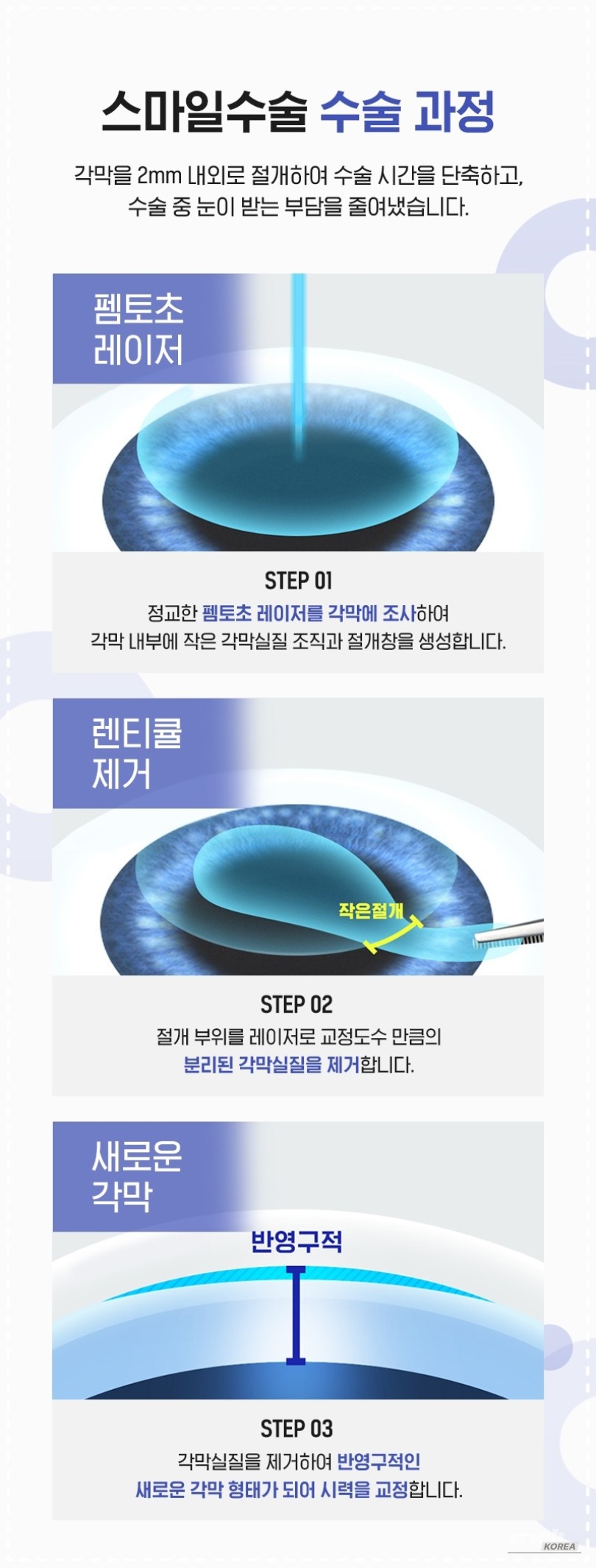
The procedure is performed in one breath. First, a thin lenticule is formed inside the cornea with a laser, and then the fragment is carefully separated and removed through a small tunnel. The incision length is short, so sutures are not required.
Pain is usually described as mild or stinging, and the vision is initially blurry immediately after the procedure, gradually stabilizing over a few hours to a few days. The next day, a basic check-up confirms the position and center, and artificial tears, antibacterial, and anti-inflammatory eye drops are used for a certain period. Lens re-fitting is done gradually according to instructions.
If you are frequently engaged in sports or outdoor activities, preparing protective eyewear can be helpful. Be careful not to rub your eyes and prevent water from directly entering your eyes when showering. Strenuous exercise or swimming should be resumed after the guided period. If there is dryness, artificial tears should be used regularly.
If your work involves prolonged screen time, frequent breaks are beneficial for recovery. Nighttime halo phenomena may appear large initially, but tend to decrease over time, so monitoring the progress is important. If you feel any abnormalities, it is safer to request a check-up immediately rather than waiting for the appointment date. Even if you have high expectations for 'LASIK age,' there is no formula that SMILE surgery is a more convenient option for everyone.
The interpretation of results should be cautious. The goal is to achieve correction close to the target prescription, but the final vision may vary depending on corneal thickness and shape, original prescription, and pupil size. Additional correction may be necessary in some cases. If the tear film is weak or there is an inflammatory element such as allergic conjunctivitis, the recovery rate may be slower.
During pregnancy or breastfeeding, the timing may be postponed considering medication use and recovery variables. People with severe skin itching such as psoriasis or atopic dermatitis should plan more conservatively due to the high possibility of rubbing their eyes. Rather than making a decision based solely on age, comparing the advantages and disadvantages of SMILE surgery, LASIK, and LASEK with actual figures and living environment side by side is a safer approach.
You should check in order whether the corneal shape is stable and there is sufficient thickness, whether the proportion of nighttime activities is high, and what the sensitivity to dryness is. If there are no problems in all three items, SMILE surgery can be a realistic alternative.
Conversely, if the cornea is thin or there are clear irregular findings, a conservative choice is necessary. All decisions were a process of balancing test figures and living requirements on the same scale. Because once you touch your eyes, it is difficult to reverse, it is less regrettable to calmly compare current discomfort and expected convenience to reach a conclusion. Also, it was better not to skip the eye drops that were instilled for a certain period of time.
Dryness varies depending on the season and indoor humidity, so the feeling changes even for the same person. If you use heating frequently, it was comfortable to use artificial tears more often and maintain a less irritating cleansing method.
If you participate in contact sports such as martial arts, it was safer to have protective equipment and take a conservative approach to resuming the timing. If you have long-distance driving plans, it may be helpful to adjust your schedule to daytime initially and check your vision changes in a bright environment.




Source :https://blog.naver.com/koikoro/224067947892
No comments yet.