ICL (Implantable Collamer Lens) Surgery: A Comprehensive Guide to Vision Correction



Hello everyone,
I'm Dr. Kim Joong-hoon, head director of Gangnam ID Eye Clinic.
With the 2025 College Scholastic Ability Test (CSAT) just around the corner, high school seniors are burning the midnight oil to complete their long journey of academic pursuit.
Many students and prospective college students are increasingly interested in vision correction to free themselves from glasses and contact lenses before embarking on a new chapter. Many have experienced significant vision decline due to prolonged screen time with books, computers, and smartphones, making this year-end a prime opportunity for vision correction.
As medical technology advances, concerns about potential side effects have diminished, leading to increased demand and wider adoption of vision correction procedures due to their enhanced convenience.
Consequently, many individuals with nearsightedness or astigmatism are opting for vision correction surgery to address the root cause of their vision problems.
Today, we will explore ICL (Implantable Collamer Lens) surgery, a solution for individuals with high myopia, astigmatism, thin corneas, or corneal surface irregularities, injuries, or diseases.
If you're curious about ICL surgery, its process, and characteristics, please stay tuned for the next 5 minutes.
"What if LASIK or LASEK isn't an option?"
LASIK and LASEK have been the most common vision correction surgeries. LASIK involves creating a corneal flap and using a laser to reshape the corneal stroma for vision correction.
While LASIK offers relatively less pain and faster recovery, the cornea becomes vulnerable to external impact, making it unsuitable for individuals engaging in strenuous activities.
LASEK involves removing a portion of the corneal epithelium before laser ablation. While the recovery period is longer and associated with pain as the epithelium heals, LASEK provides greater stability and resistance to external impact after recovery, leading to more reliable outcomes.
However, LASIK and LASEK are not suitable for individuals with excessively thin corneas or high myopia and astigmatism. Laser vision correction requires a certain corneal thickness. In such cases, ICL surgery can be a viable alternative.
"ICL: Preserving the Cornea"
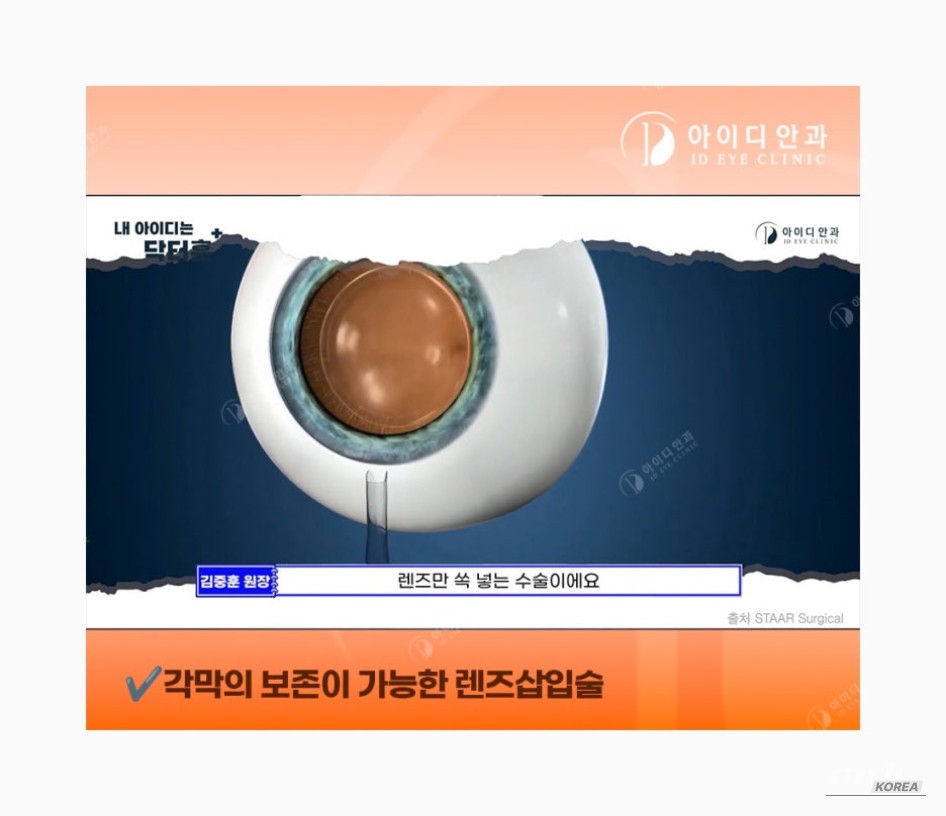
ICL surgery involves inserting a lens with a specific refractive power into the eye while preserving the cornea. This is done through a small 3mm incision.
ICL lenses are made of biocompatible Collamer material, ensuring stability and minimizing inflammatory responses within the eye.
With minimal pain and rapid recovery, ICL surgery is an excellent option for those seeking a quick return to their daily routines.
"The Advantages of ICL Surgery"
ICL surgery corrects vision without significant corneal damage, making it suitable for individuals with thin corneas, high myopia, or high astigmatism. It also reduces the risk of side effects like myopic regression, glare, and dry eye.
Furthermore, the implanted lens can be removed if necessary, restoring the eye to its original state, ensuring high safety. The lens can last a lifetime if there are no complications.
ICL surgery has broad applicability, especially for those with high or extreme myopia and astigmatism, corneal injuries or diseases, and thin corneas, who may not be suitable candidates for other vision correction procedures.
Before undergoing ICL surgery, various tests are performed to assess age, anterior chamber depth, and corneal endothelial cell count.
"Lens Placement Based on Lens Type"
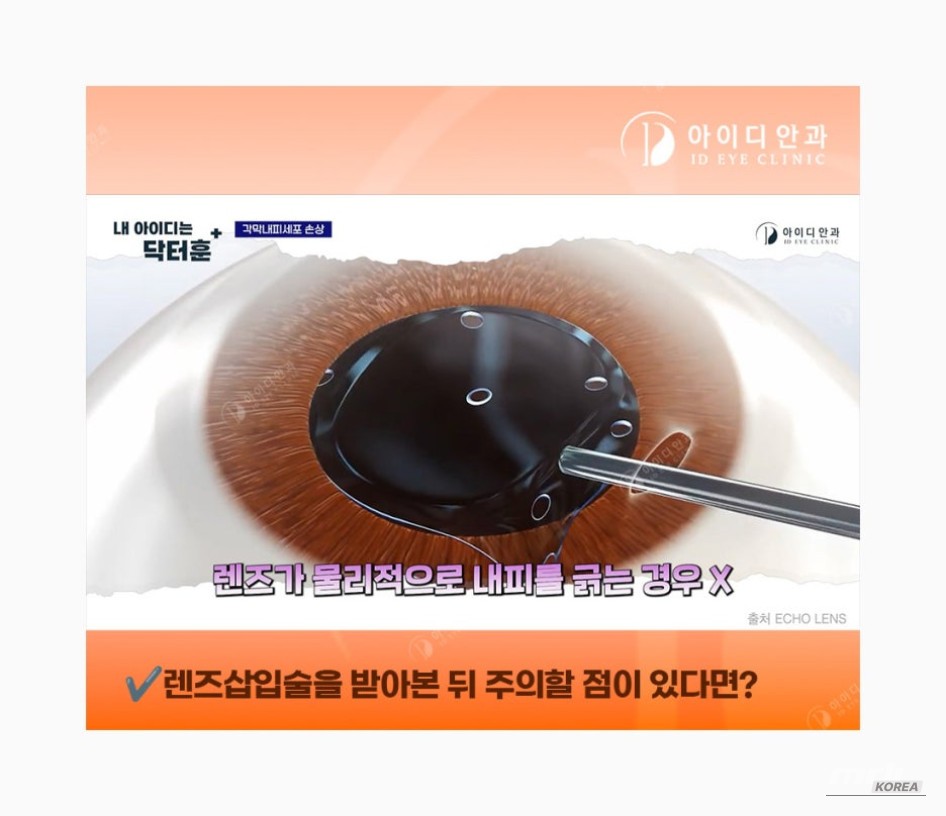
The location of the implanted lens depends on the type of lens used. Lenses are broadly categorized into posterior chamber lenses, placed between the iris and the crystalline lens, and anterior chamber lenses, placed between the cornea and the iris.
Anterior chamber lens implantation is effective for astigmatism correction and reduces glare, but requires an iridotomy.
Posterior chamber lens implantation offers high stability and allows for same-day bilateral procedures. It is suitable for individuals with severe myopia and astigmatism, corneal diseases or injuries, and thin corneas.
Posterior chamber lens implantation eliminates the need for iridotomy, reducing the burden of recovery and aftereffects, making it a preferred choice recently.
Accurate measurement of the eye's dimensions through precise testing is crucial to prevent errors during lens implantation. Therefore, it's important to choose a method that suits you rather than simply looking for ICL surgery reviews and costs.
"Post-ICL Surgery Precautions"
Even after successful ICL surgery, careful post-operative care is essential. Continuous care until the eye is fully recovered is necessary, and self-management is also helpful.
Use artificial tears frequently as directed by your doctor, avoid rubbing your eyes or exposing them to impact, and refrain from smoking and alcohol for 1-2 weeks to prevent inflammation.
Refrain from prolonged use of electronic devices like computers and smartphones, avoid saunas and public baths due to the risk of infection, and refrain from strenuous exercise. Proper management is essential even after achieving good vision.
"Considering ICL Surgery?"
ICL surgery outcomes can be significantly affected by even minor errors. Comprehensive precision testing is essential to determine suitability, lens type, power, and size. As this delicate procedure requires advanced technical skills, choose an eye clinic based on thorough criteria rather than being swayed by ICL surgery reviews, events, or costs.
The type and size of the lens should be selected based on individual eye conditions, age, and lifestyle. Therefore, a systematic pre-operative examination is essential, and it is important to check whether the clinic has the latest equipment and various lenses.
In addition, consider the clinical experience of the medical staff and whether they have a sophisticated follow-up system. After ICL surgery, it is recommended to have regular eye examinations every six months.
Thank you for reading this long article. This has been Kim Joong-hoon, head director of Gangnam ID Eye Clinic.















































Source :https://blog.naver.com/tkatlrltkatl/224073640775
No comments yet.