Gangnam SMILE Lasik: Reduced Pain and Recovery Time Explained



What is SMILE Lasik?
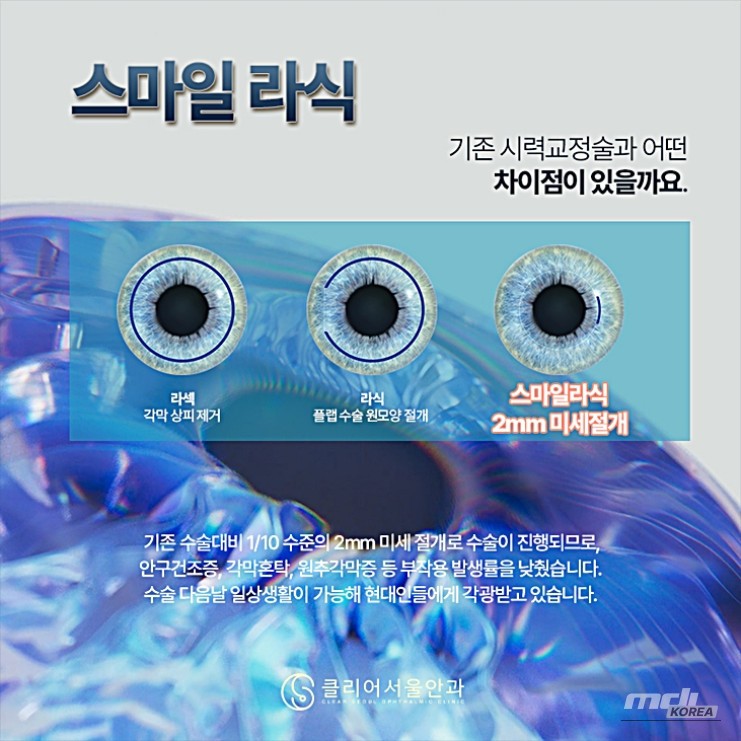
People with poor eyesight often rely on tools like glasses or contact lenses, but many consider vision correction surgery due to the inconvenience. When thinking about vision correction, LASIK or LASEK surgeries usually come to mind. However, with advancements in medical technology, Gangnam SMILE Lasik is gaining significant attention as a surgery that enhances safety. Unlike traditional methods that involve creating a flap (LASIK) or removing the epithelium (LASEK), this procedure corrects vision through a small incision of about 2mm. This approach minimizes corneal damage and irritation, offering a more stable path to vision recovery.
Surgical Procedure
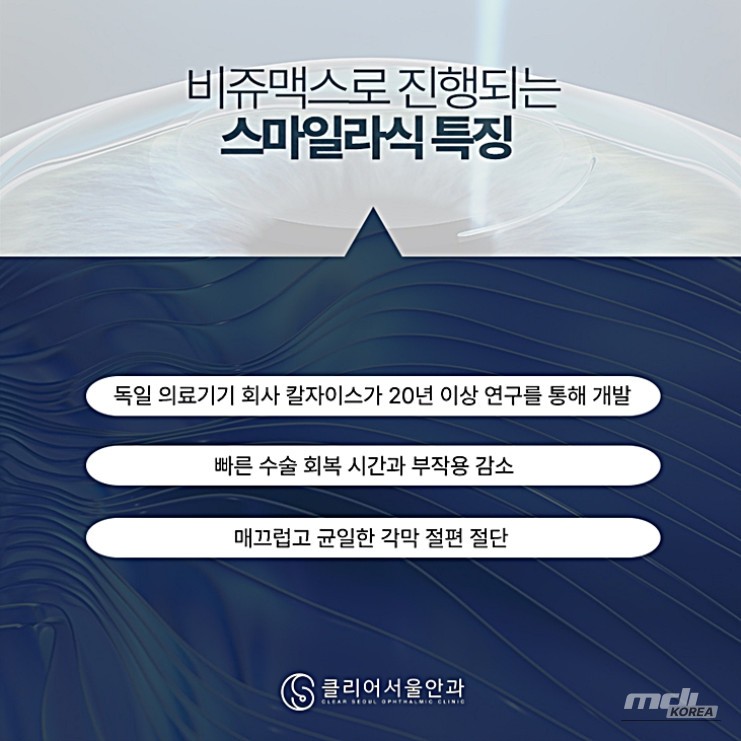
This surgery involves using a femtosecond laser to penetrate the cornea and create small pieces of stromal tissue (lenticules). These lenticules are then removed through the small incision, correcting the vision. Traditional LASIK involves a corneal incision of over 20mm to create a flap, resulting in a significant amount of corneal tissue being cut. This can be problematic for individuals with thin corneas, as it may not leave enough residual corneal thickness, making them unsuitable candidates. However, SMILE surgery involves a much smaller incision of about 2-3mm, making it applicable to various corneal conditions and helping to maintain the cornea's structural stability.
Reasons for Popularity
Compared to traditional LASIK, SMILE Lasik reduces the amount of corneal incision by more than 1/10, minimizing damage and irritation to the eye. It also reduces SMILE Lasik pain. The shorter surgery time reduces the eye's exposure, alleviating concerns about post-operative dry eye, making it a good option for those with sensitive eyes. The small incision size makes it suitable for individuals with thin corneas, high myopia, or extreme myopia. The small incision heals naturally without the need for sutures, making the eye more resistant to impact. This allows athletes, firefighters, and others in professions where eye trauma is possible to undergo the procedure.
The SMILE Lasik recovery period is relatively short, with most people able to resume daily activities the day after surgery. While individual recovery times may vary, most patients experience vision recovery within a few days, leading to high satisfaction with the procedure.
Suitable Candidates
While Gangnam SMILE Lasik is in high demand due to its minimal corneal damage and rapid recovery, it is not suitable for everyone. Generally, students under the age of 18 are not eligible because their eyes may still be developing. Regular monitoring of vision and eye condition is necessary, and the vision must be stable for at least one year before considering surgery.
Individuals with myopia and astigmatism outside a certain range may also find the surgery unsuitable. SMILE surgery can correct myopia up to -10 diopters, but severe cases may not allow for stable tissue removal. Astigmatism correction is possible up to about 5 diopters, but higher levels may not be accurately corrected.
SMILE surgery involves removing some tissue from within the cornea, which can increase the risk for individuals with very thin corneas. Thin corneas may result in insufficient residual thickness, leading to corneal protrusion. While SMILE surgery is more cornea-sparing than LASIK, a certain amount of corneal thickness is still required. For those with thin corneas who are not suitable for laser vision correction, an intraocular lens implant may be a good alternative.
Because not everyone is a suitable candidate, a thorough examination is necessary to determine eligibility. The surgical approach may vary depending on the examination results, so it is important to consult with a healthcare professional to find the most appropriate procedure.
VisuMax 500
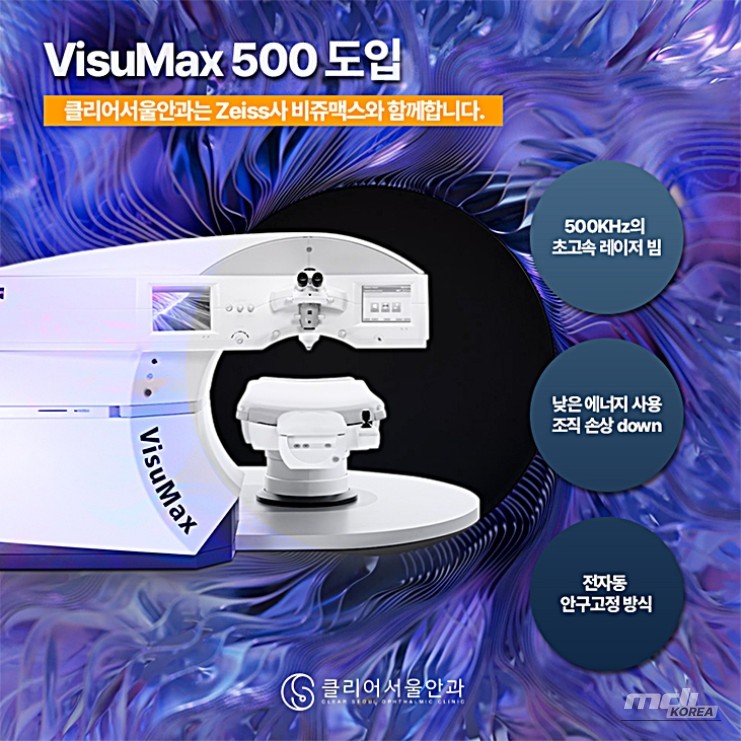
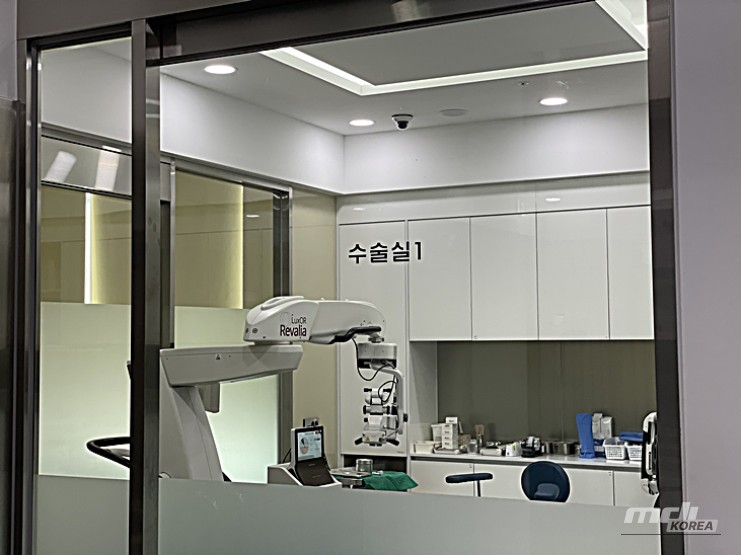
A key piece of equipment in SMILE surgery is the VisuMax laser system. This system uses a laser that vibrates one trillion times per second to precisely cut tissue, minimizing thermal damage and damage to surrounding corneal tissue. Its ability to make very fine and precise cuts helps to shorten the SMILE Lasik recovery time. The small incision size also reduces concerns about SMILE Lasik pain. The curved corneal fixation system further enhances precision, helping to maintain the natural shape of the cornea and preventing intraocular pressure from rising. Previous equipment required flattening the cornea, which could cause discomfort and distortion. These improvements allow for more comfortable and precise surgical outcomes. The laser irradiation time is very short, about 20-30 seconds, and the speed of lenticule creation is also fast, reducing the risk of blinking, minor movements, and tremors.
Limitations of VisuMax?
While VisuMax offers a wide correction range, it may have limitations in astigmatism correction, as mentioned earlier. SMILE surgery can be challenging to control the rotation of the astigmatic axis when separating the lenticule. Astigmatism is not a simple refractive error but a distortion in a specific direction, and SMILE surgery may have difficulty or limitations in aligning for rotation. Therefore, it is important to recognize that correction rates may be reduced in high astigmatism. Even a slight misalignment of the axis in high astigmatism can lead to significant errors. If the astigmatic axis is off by only 10 degrees, the correction rate may drop by more than 30%, making other surgeries more suitable for patients with severe astigmatism.
In SMILE surgery, the lenticule is separated manually by the surgeon, not by laser. If the lenticule is not properly separated, residual tissue may remain, affecting vision and resulting in undercorrection. Therefore, it is advisable to undergo the procedure with a skilled healthcare professional with extensive clinical experience.
SMILE Lasik Cost
The SMILE Lasik cost is a major consideration for many people considering vision correction surgery. It tends to be higher compared to other surgeries. The price varies depending on the clinic, the surgical equipment used, the patient's eye condition, and the surgeon's expertise. The average SMILE Lasik cost is between 2,000,000 and 3,000,000 KRW. While the price is high, the minimal post-operative pain, rapid vision recovery, and reduced risk of side effects make it a worthwhile investment. However, other surgeries may be more appropriate depending on the individual's eye condition, so it is important to visit an eye clinic for an examination and consultation to determine the best procedure for your eyes.
Once vision deteriorates, temporary correction with glasses or lenses is possible, but the underlying cause is not addressed. With the increasing use of digital devices such as smartphones and computers, eye health is constantly under strain. As a result, interest in vision correction surgery is only increasing. If you are considering vision correction surgery for a better life and a more comfortable daily routine, it is important to learn about it properly and make a careful choice before it is too late. However, since a single surgery can affect your vision for life, it is important to choose an eye clinic carefully and to consider the above factors rather than focusing solely on surgical costs or events.

















Source :https://blog.naver.com/whgus4231/224003722128
No comments yet.