Gangnam SMILE Lasik: Comparing Costs and Recovery Periods



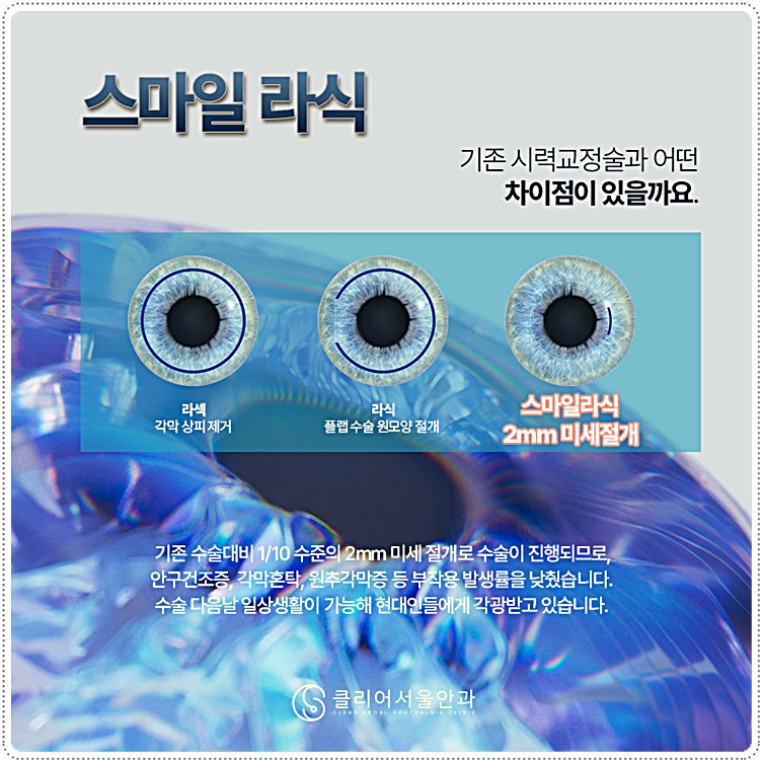
Vision correction surgeries like LASIK, LASEK, and ICL (Implantable Collamer Lens) have become increasingly diverse. Among these, Gangnam SMILE LASIK, which improves upon the shortcomings of LASIK and LASEK, is in high demand. This is because, unlike LASIK, it doesn't create a flap, reducing the corneal incision size by more than 1/10, thus expanding the surgical range. Also, unlike LASEK, it doesn't remove the corneal epithelium, minimizing post-operative pain and shortening the recovery period, allowing patients to return to daily life the day after surgery.
However, not everyone is a suitable candidate. If there's a corneal disease or if the cornea is too thin for even a small incision, other options may be better. In such cases, ICL may be appropriate. Unlike laser correction, ICL doesn't involve corneal abrasion, making it a good choice for those with thin corneas or high myopia where side effects are a concern.
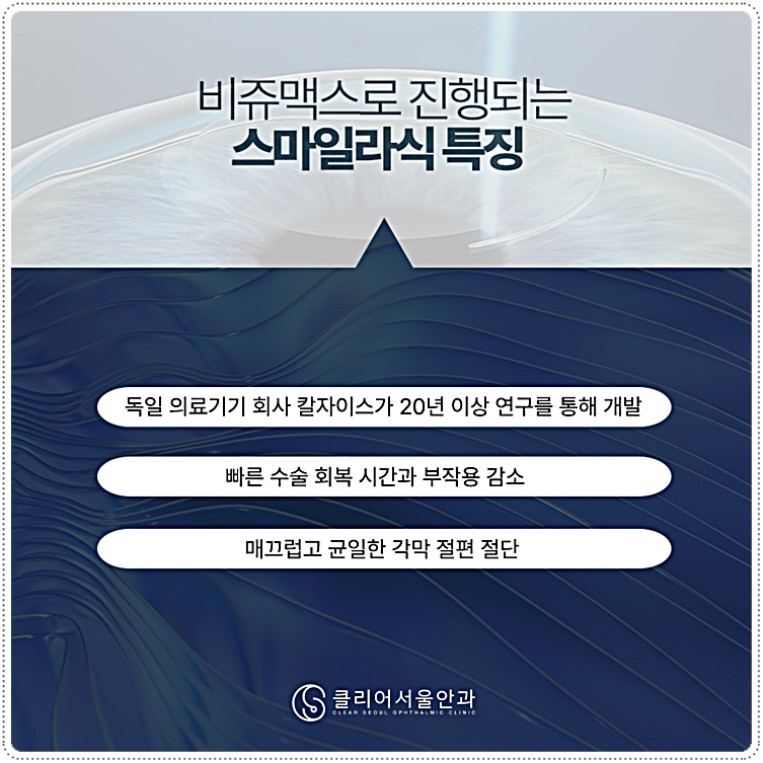
Gangnam SMILE LASIK uses a femtosecond laser to penetrate the cornea and create a lenticule, which is then removed through a 2mm micro-incision. The small incision size allows for faster wound healing and minimal pain, with vision gradually recovering from the day after surgery. Compared to traditional LASIK, the reduced incision size (by more than 1/10) lowers the risk of side effects like dry eye, offering stable results even for sensitive eyes.
This procedure preserves corneal nerve structure, contributing to its stability. However, many focus primarily on the cost of Gangnam SMILE LASIK. The cost varies depending on the equipment used, surgical complexity, the surgeon's experience, and the individual's eye condition. Generally, the precision of the femtosecond laser equipment also affects the price, often making it somewhat higher than traditional LASIK or LASEK.
Instead of focusing solely on price, it's important to consider corneal preservation, post-operative vision stability, and potential side effects. SMILE surgery minimizes corneal nerve damage and maintains long-term structural stability since it doesn't create a flap like LASIK. Therefore, it's considered a cost-effective option with high clinical value and patient satisfaction. When considering surgery, evaluate the equipment generation, surgeon's skill, and aftercare system. These factors directly impact not only short-term vision recovery but also long-term eye health and vision maintenance. The average cost of Gangnam SMILE LASIK ranges from approximately 2,000,000 to 3,000,000 KRW.
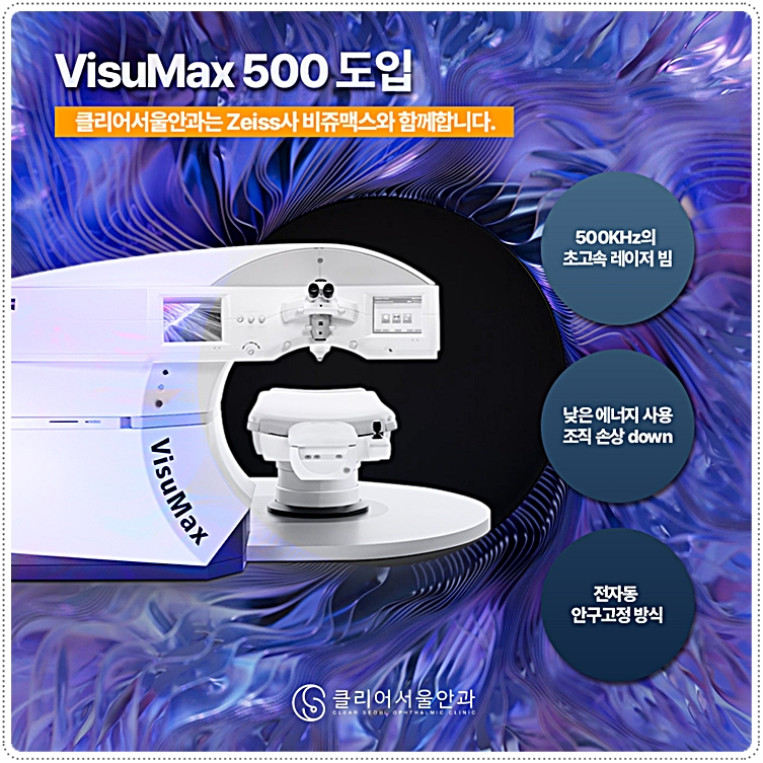
The VisuMax 500 equipment used in SMILE surgery operates with a 500 kHz repetition pulse system. The pulse duration is approximately 220-580 fs, and the extremely short laser pulses minimize thermal damage and impact on surrounding tissues. The laser beam's precision reduces errors in incision surfaces and lenticule creation. VisuMax uses a curved contact lens interface tailored to the corneal shape, reducing corneal pressure compared to flat methods and enhancing surgical stability by closely mimicking the natural state. This reduces intraocular pressure elevation during surgery and minimizes stress on eye tissues, making the procedure less burdensome for patients.
The surgery uses low energy levels tailored to the eye's condition, further reducing irritation and damage. This minimizes corneal fiber structure deformation, improves incision smoothness, and enhances vision quality. Low energy also limits bubble formation, reducing blurred vision and discomfort during surgery, and minimizing concerns about corneal edema or inflammation. These features allow for rapid recovery of corneal transparency immediately after surgery, leading to stable and predictable vision recovery.
While simple daily activities are possible from the day after surgery, it's advisable to manage your eyes for about a week to allow them to stabilize, minimizing irritation. During the SMILE LASIK recovery period, reduce electronic device usage and avoid eye strain. Washing and showering are possible, but avoid getting too much water in your eyes to reduce the risk of infection. When going outside, wear protective glasses to prevent foreign substances or dust from entering your eyes. Protect your eyes from UV rays with sunglasses or a hat, as they can hinder recovery. Consistent use of prescribed eye drops is crucial to prevent inflammation, and wearing protective eyewear can prevent accidental rubbing, which can cause corneal damage.
Many people who undergo vision correction surgery often neglect regular check-ups and aftercare once their vision recovers and they can resume daily life. However, continuous aftercare is essential because corneal changes, dry eye, and glare can occur even after vision correction surgery. Regular check-ups, especially within the first year after surgery, are necessary to monitor vision stability and the condition of the ocular surface. After the first year, annual check-ups are important. The goal of vision correction surgery is not just to temporarily restore vision but to maintain stable and continuously improved vision. By consistently undergoing regular check-ups and carefully managing your eyes, you can continuously monitor their condition and maintain clear and healthy vision for a long time.






Source :https://blog.naver.com/whgus4231/224057535674
No comments yet.