Factors Influencing LASIK and LASEK Cost Differences


Hello.
I am Kim Joong-hoon, head director of Gangnam ID Eye Clinic.
It's a pleasure to greet you.
With the college entrance exam approaching, an increasing number of students are complaining of deteriorating eyesight due to long hours of studying and the use of electronic devices.
Many are planning to undergo vision correction surgery after the exam to reduce the inconvenience of wearing glasses or contact lenses.
Interest in vision correction surgery is significantly increasing, but it's also true that it's not an easy decision. Some hesitate because of concerns that the recovery period after vision correction might disrupt their daily lives.
Vision correction surgery is not just a method of correcting eyesight; it requires a comprehensive assessment of individual eye conditions, including refractive error and corneal shape. Therefore, it's crucial to carefully research and choose the right option.
Today, we will delve into everything from LASIK and LASEK costs to procedures, features, and more advanced vision correction methods.
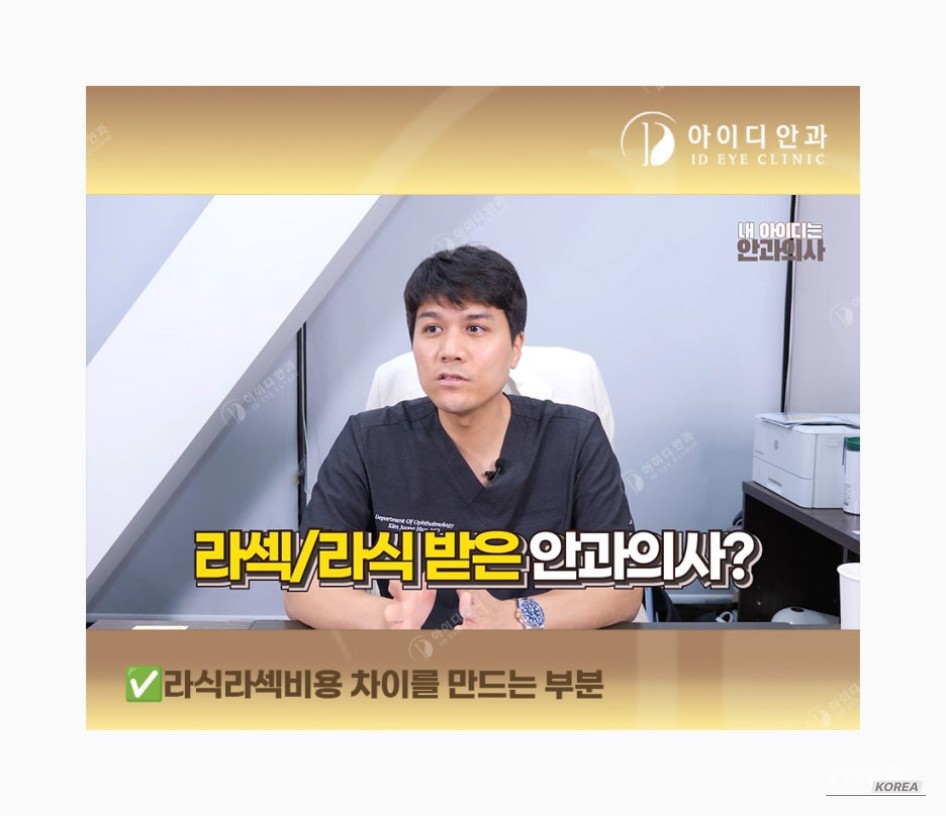
"What are the fundamental differences between LASIK and LASEK?"
LASIK and LASEK have long been established as leading vision correction surgeries.
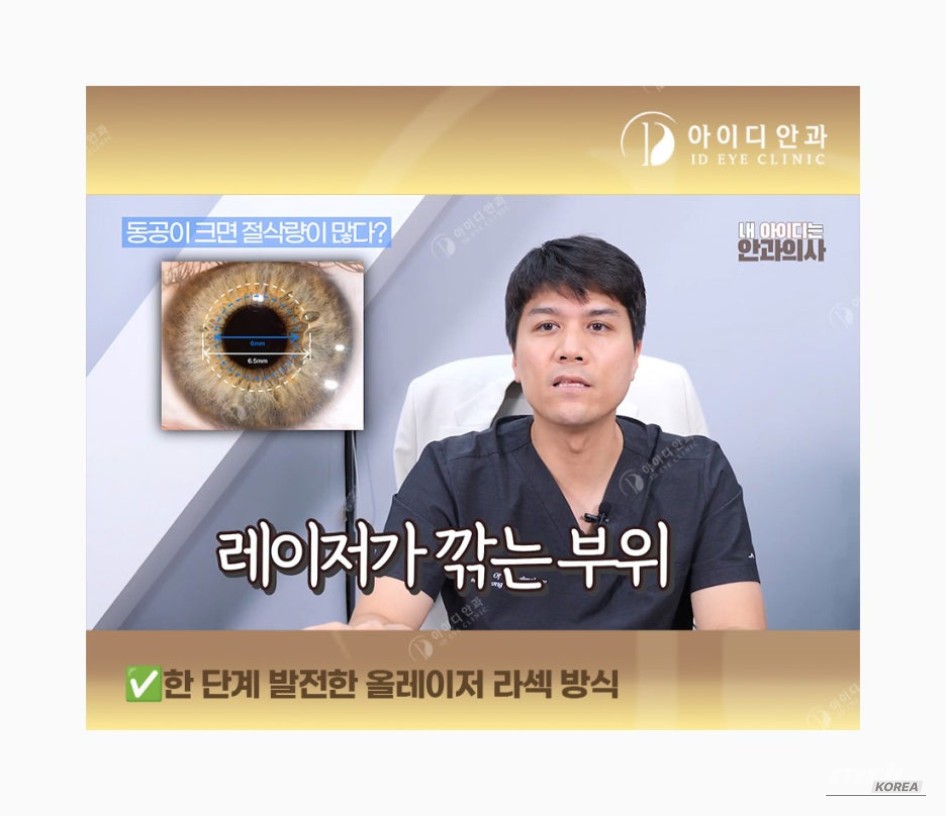
LASIK involves creating a corneal flap and correcting the stroma with a laser, resulting in less pain and faster recovery. However, it has drawbacks such as vulnerability to trauma due to the flap and increased corneal ablation. Therefore, LASIK may not be suitable for those with thin corneas or high myopia and astigmatism.
LASEK involves removing the epithelium without creating a flap and ablating the stroma, which is advantageous for corneal preservation and relatively resistant to trauma. However, it has the disadvantage of requiring patients to endure initial pain and delayed recovery, often causing hesitation before choosing this option.
"Why do LASIK and LASEK costs vary?"
LASIK and LASEK costs generally range from ₩1,000,000 to ₩3,000,000, but the actual cost can vary depending on the clinic.
The equipment and methods used can differ based on individual factors such as the degree of vision impairment, corneal shape and thickness, lifestyle, and occupation. This is why LASIK and LASEK costs can vary.
Simply put, correcting astigmatism along with myopia requires more precise and detailed correction than correcting myopia alone, which can increase the cost. Additionally, as there are various LASIK and LASEK methods, using upgraded techniques can also lead to cost differences due to technological advancements.
Rather than focusing solely on LASIK and LASEK costs and choosing clinics that offer events or discounts, it's important to choose a clinic that can provide customized vision correction surgery tailored to your individual needs.
"All-Laser LASEK: A Step Forward"
In cases where LASIK is not possible due to high myopia or thin corneas, LASEK is considered as an alternative. However, many are concerned about the recovery period and pain. Recently, all-laser LASEK, which addresses these drawbacks, has gained attention.
All-laser LASEK involves removing only the corneal epithelium using a laser and then correcting the corneal stroma. Unlike conventional methods, the entire process, including the removal of the corneal epithelium, is performed using a laser. This ensures uniform and precise removal of the corneal epithelium, resulting in less pain and faster recovery.
Furthermore, because the laser is applied quickly and accurately to the corneal stroma to achieve the target vision, there is less corneal damage, reducing the risk of side effects such as dry eye and corneal haze, even in cases of thin corneas, high myopia, or astigmatism.
"Two-Day LASEK: Addressing Previous Shortcomings"
Two-Day LASEK is performed using the AMARIS RED equipment, a next-generation excimer laser that smoothly ablates the corneal epithelium in one step, minimizing damage and improving pain and recovery speed.
The process is more precise, and the wound area is reduced by approximately 40%, increasing resistance to external impact and minimizing the extent of corneal damage. This also reduces the incidence of side effects such as dry eye, glare, and myopic regression.
It also features 7-dimensional eye-tracking technology that predicts and follows eye movements, minimizing errors during laser irradiation and enhancing safety.
Like LASIK and LASEK, Two-Day LASEK, which has recently gained popularity, is a preferred vision correction surgery, especially for those in their 20s and 30s who have poor vision and need a quick recovery.
"Save LASEK: Expanding the Correctable Range"
Despite these remarkable advancements, vision correction surgery can still be challenging in some cases, particularly for those with thin corneas, high myopia, or astigmatism.
Save LASEK can alleviate the anxiety that vision correction surgery may not be an option. Save LASEK is performed using the EX500 White equipment.
This equipment is designed to minimize the amount of corneal ablation, ensuring sufficient residual corneal thickness. It boasts a wide correction range and is welcome news for those who have hesitated to undergo vision correction surgery due to various limitations.
It precisely removes only the targeted amount of corneal epithelium, minimizing unnecessary irritation and significantly reducing corneal damage.
This significantly reduces pain and shortens the recovery period for corneal epithelial regeneration, allowing for a quick return to daily life.
It also effectively prevents the risk of side effects such as myopic regression and dry eye, which are major concerns for high myopia and astigmatism, and provides stable vision correction results, making it a popular choice.
"Establishing and Verifying Criteria"
If you are considering vision correction surgery, it's crucial to make a safe decision based on accurate information and thorough consultation, as it directly impacts your quality of life beyond simple vision improvement.
It's important to carefully examine several criteria, including a comprehensive eye examination process, the availability of the latest equipment, and various procedural methods.
Additionally, whether the surgery is performed directly by experienced medical staff is an important consideration, as precise planning and experience with various cases are key factors in increasing satisfaction with vision correction surgery.
Finally, rather than focusing solely on LASIK and LASEK costs or events, it's important to check whether systematic aftercare is provided, as this can be an important criterion for achieving satisfactory results.
Thank you for reading this long article. This has been Kim Joong-hoon, head director of Gangnam ID Eye Clinic.





























Factors Influencing LASIK and LASEK Cost Differences
Source :https://blog.naver.com/tkatlrltkatl/224057899334
No comments yet.