Dry Eye Syndrome: Causes, Symptoms, and Advanced Treatment Options


Reduced tear production in dry eye syndrome exacerbates eye dryness.
As winter begins in November, the cold wind becomes harsher, and indoor heating increases, many people complain of dry and irritated eyes. Cold, dry air quickly evaporates moisture from the eye surface, irritating the eyes, and low indoor humidity from heating further worsens the symptoms. On windy days, eye irritation becomes so severe that it's difficult to open the eyes properly, and as dryness intensifies, reflex tears may occur.
These are typical early signs of "dry eye syndrome," which, if left untreated, can lead to eye fatigue, redness, and pain. Dry eye syndrome occurs when tear production decreases or the tear film evaporates easily. In severe cases, corneal damage can lead to blurred vision or a persistent foreign body sensation. Therefore, consistent care and treatment are necessary to maintain the moisture balance of the eyes.
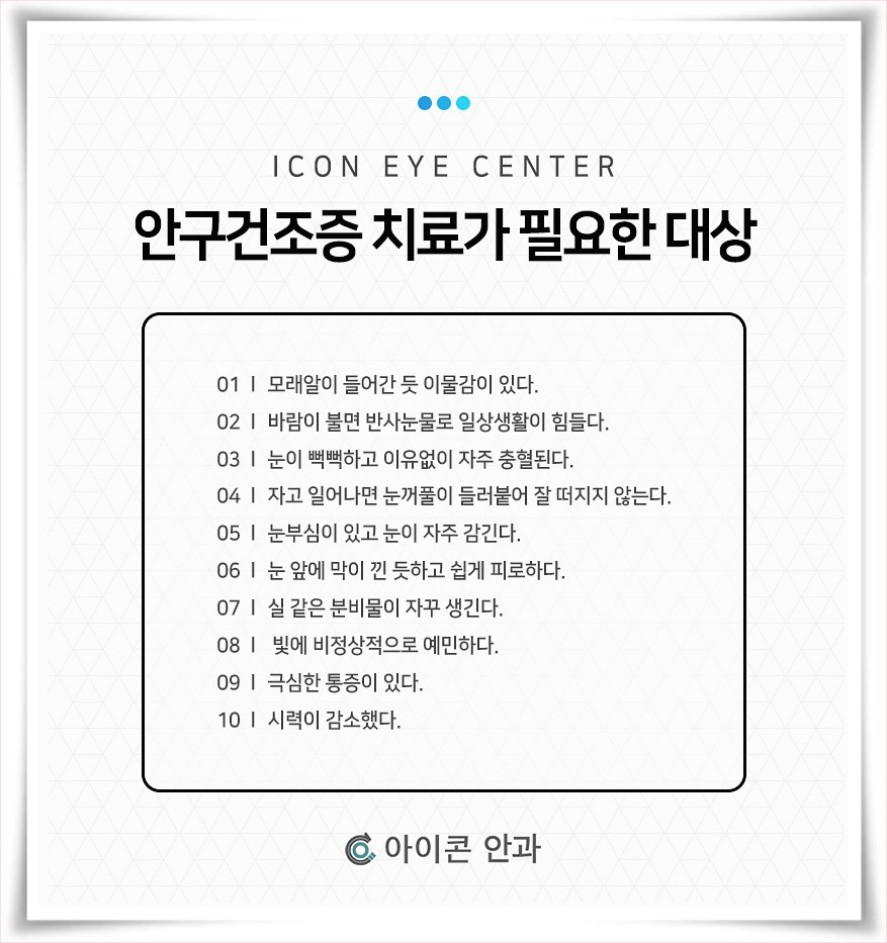
There are several signs that can indicate dry eye syndrome:
Light Sensitivity: Glare, photophobia
Foreign Body Sensation: Feeling like something is in the eye
Discomfort When Using Digital Devices: Increased eye fatigue
Blurred Vision: Unclear vision
Stinging and Irritation in Dry Environments: Sore and irritated eyes
Difficulty Opening Eyes in the Wind: Sensitivity to wind
This condition can be caused by various factors, including the aging process, dryness or inflammation of the eyelids, environmental factors such as dust, dry weather, and air conditioning use, and certain medications. Treatment methods may vary depending on the cause and severity of dry eye symptoms, so a detailed diagnosis should be performed first to establish a personalized treatment plan.
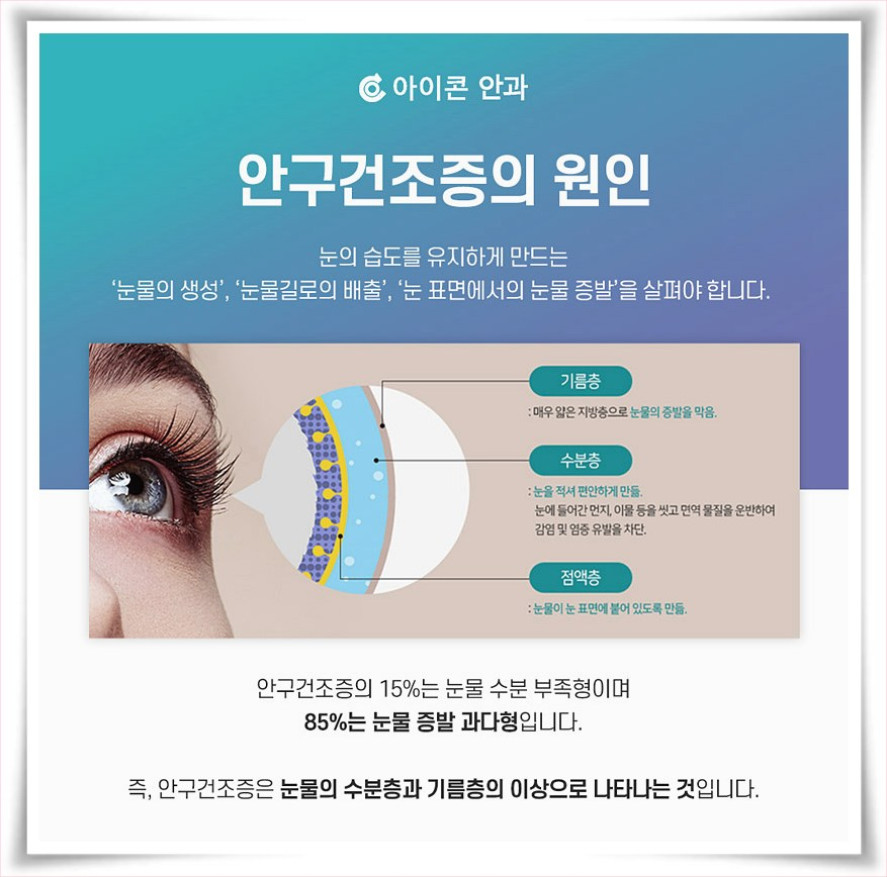
Tears are not just simple water but a complex biological substance. Healthy tears consist of an oil layer, a water layer, and a mucus layer, each performing a specific function.
Oil Layer (outermost): Prevents tear evaporation.
Water Layer (middle): Keeps the eyes moist and helps remove foreign substances and prevent infection.
Mucus Layer (innermost): Helps tears spread evenly over the eye surface.
Dry eye syndrome occurs when any of these three layers is compromised. In particular, if there is a problem with the oil layer, the water layer evaporates quickly, leading to dry eyes, and symptom relief may be difficult with conventional treatments alone.
Aging is a major cause of dry eye syndrome. As all parts of the body change with age, so do the eyes. Just as the skin becomes dry and wrinkled, the organs related to the eyes also age. In particular, the function of the glands that secrete tears and oil decreases with age, reducing tear production and causing qualitative changes.
In addition, the elasticity of the muscles that move the eyelids decreases, reducing blinking and causing uneven distribution of tears. As a result, aged eyes are more vulnerable to external stimuli and easily feel dry even with small environmental changes. Dry eye symptoms due to aging tend to be chronic rather than temporary, requiring continuous management.
If dry eye symptoms persist, appropriate treatment is necessary. First, the cause and severity of dryness should be identified through a detailed diagnosis. In mild cases, symptoms can be relieved by using artificial tears or consciously blinking frequently. However, more aggressive treatment is needed if it is not simply a lack of moisture but is related to meibomian gland dysfunction, eyelid inflammation, or autoimmune diseases.
In particular, in the case of meibomian gland dysfunction, frequent blinking may worsen symptoms, and general artificial tears may not be very effective. In this case, treatments that directly improve the oil layer deficiency are needed, and IPL laser treatment can be an effective alternative.
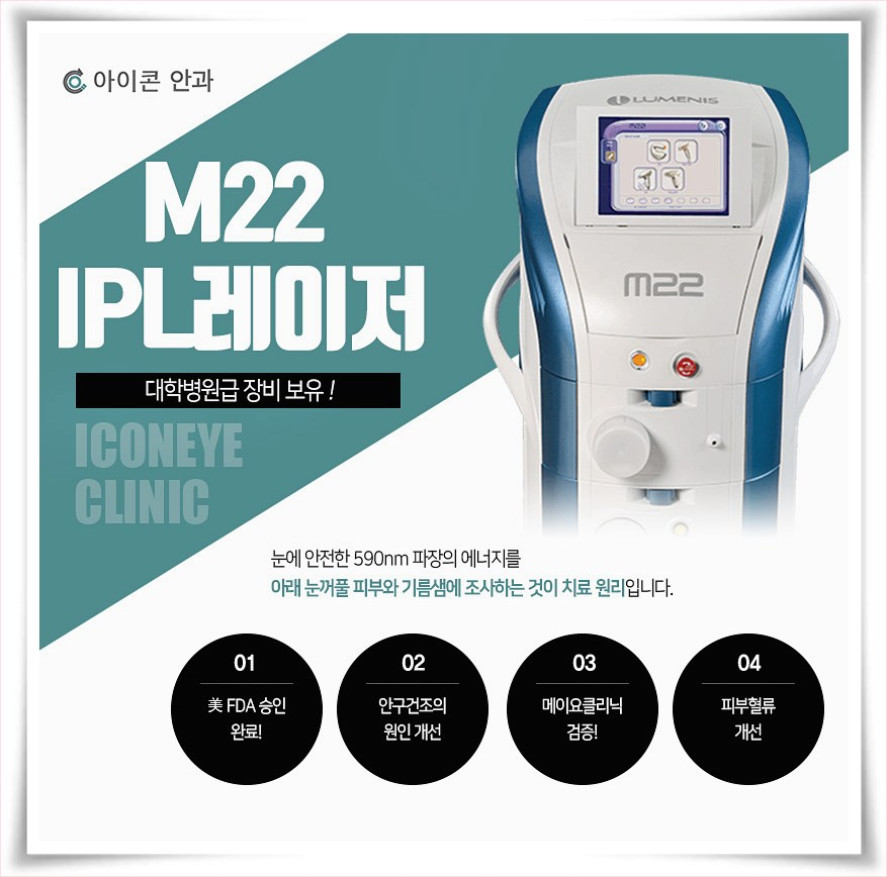
IPL laser treatment can be an effective method for dry eye syndrome related to meibomian gland dysfunction.
➡️Technology Principle: Applying IPL laser (590nm wavelength), which was used in dermatology, to the eyes.
????Treatment Effects????
Melting hardened oil in the meibomian gland opening → Improving tear secretion
Shrinking dilated blood vessels → Improving blood circulation
Reducing inflammatory substances → Relieving blepharitis
Removing Demodex mites → Maintaining cleanliness and preventing inflammation
The treatment is performed effectively using eye shields and cooling gel, and a total of about 3 sessions are performed at 2 to 3 week intervals. Each session takes about 10 minutes, does not require anesthesia, and patients can return to daily life immediately after the procedure, making it a convenient treatment option for busy modern people. IPL laser treatment can be an effective alternative for chronic patients who do not improve with general warm compresses or artificial tears.














Source :https://blog.naver.com/iconiconeye/224071372760
No comments yet.