Dry Eye Syndrome: A Growing Concern Among Young Adults


Samsung Station Eye Clinic emphasizes the severity of dry eye syndrome, which is increasingly affecting younger generations.
The number of people complaining of dry eye symptoms has been rapidly increasing. In the past, this condition was mainly observed in middle-aged and elderly individuals, but it is now commonly found in people in their 20s and 30s. This shift cannot be explained by seasonal factors alone.
The surge in digital device usage, excessive operation of heating and cooling systems, and worsening air pollution have collectively created an environment that triggers dry eye syndrome. Furthermore, increased stress and irregular lifestyles are contributing to a rise in cases of reduced tear secretion. Patients visiting the Samsung Station Eye Clinic are also increasingly reporting symptoms caused by these environmental factors.
Various Factors Causing Dry Eye
The causes of dry eye syndrome are diverse:
✔️Aging: Tear production naturally decreases after age 40, gradually worsening the condition.
✔️Younger Generation: Prolonged use of computers and smartphones → reduced blinking → tear deficiency.
✔️Indoor Environment: Use of air conditioners and heaters → decreased humidity → increased tear evaporation.
In addition to these, exposure to air pollutants like fine dust and yellow dust, prolonged use of contact lenses, or taking certain medications can also cause symptoms. Therefore, a comprehensive analysis of the causes is necessary.
Symptoms Resulting from Abnormalities in the Tear Film Structure
A healthy tear film consists of three layers: the mucin layer, the aqueous layer, and the lipid layer.
Mucin Layer: Adheres to the cornea → helps tears spread evenly.
Aqueous Layer: Makes up most of the tear volume → provides moisture to the eye.
Lipid Layer: Outermost layer → prevents evaporation of the aqueous layer.
☞ If any of these three layers is compromised, the stability of the entire tear film is affected.
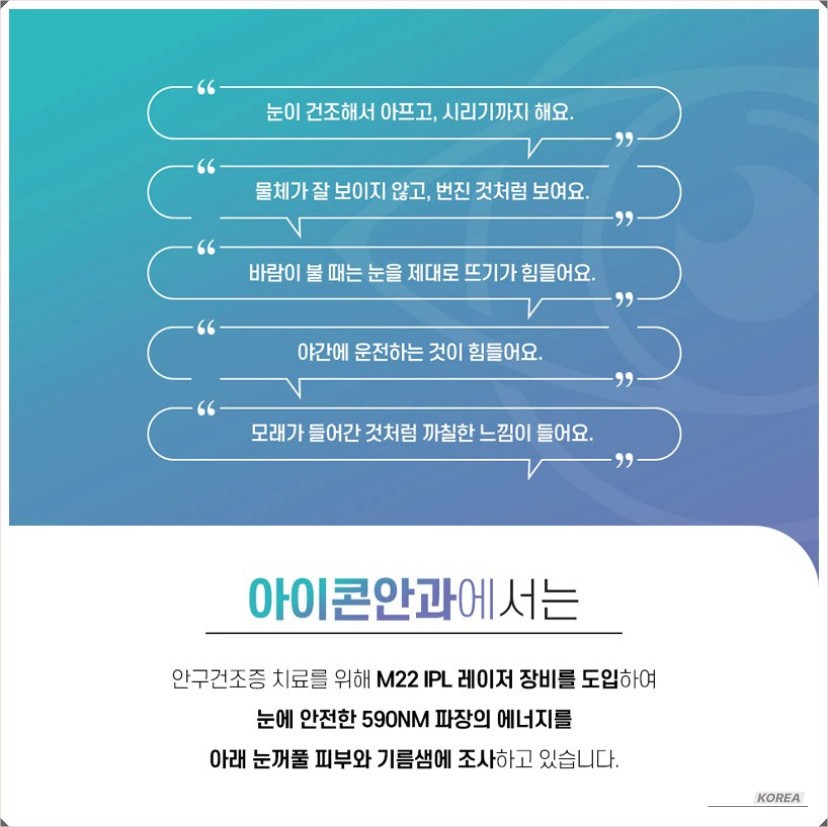
As a result, symptoms such as stinging or burning sensations, a feeling of grittiness like sand in the eye, blurred vision, glare, and stabbing pain may occur. In some cases, reflexive excessive tearing can also happen. At the Samsung Station Eye Clinic, tear film tests are conducted to identify which layer is problematic and determine the appropriate treatment plan.
Consider M22 IPL Laser for Lipid Layer Issues
Treatment for dry eye syndrome varies depending on the cause.
????Aqueous Layer Deficiency
Artificial tears are effective.
Correct method: Tilt your head back and pull down the lower eyelid to instill the drops into the conjunctival sac.
Hygiene rules: Do not share with others.
????Lipid Layer Issues
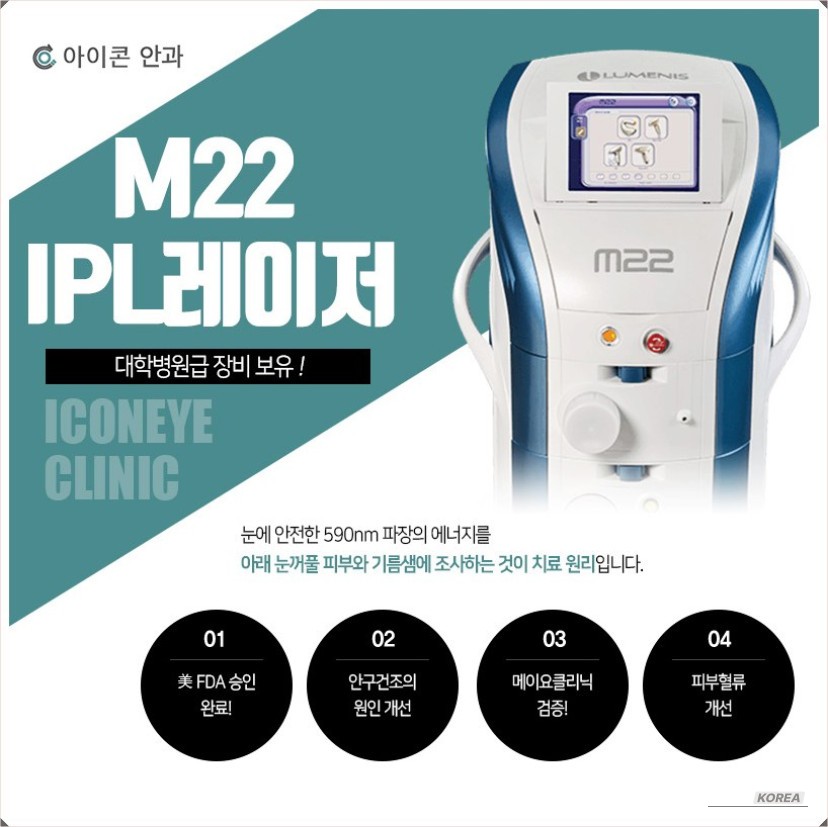
M22 IPL laser treatment may be considered.
A 590nm wavelength laser opens the meibomian glands and reduces inflammation.
Its effectiveness has been proven through several studies.
It is important to accurately assess the severity and cause of the symptoms and choose the most appropriate treatment method for each individual.
Prevention Through Lifestyle Improvements
Improving lifestyle habits that trigger dry eye is key to long-term management.
✅Eye Health Management
20-20-20 rule: Every 20 minutes, look at an object 20 feet (about 6 meters) away for 20 seconds.
Maintain indoor humidity: Keep it at 40-60% using a humidifier or wet towel.
Healthy lifestyle habits: Quit smoking, abstain from alcohol, and manage stress.
Contact Lens Management:
Reduce wearing time
Maintain thorough hygiene
Adhere to cleaning and replacement schedules
Get enough sleep: Helps to relieve eye fatigue.
Nutritional intake: Consume fish and nuts rich in omega-3 fatty acids.
Prevent Complications with Early Detection and Appropriate Treatment
Neglecting dry eye symptoms can lead to serious complications beyond simple discomfort. Early detection and appropriate treatment can alleviate symptoms and prevent serious complications such as corneal damage.
At the Samsung Station Eye Clinic, we monitor the tear film condition through regular check-ups and continuously adjust the treatment plan to suit each individual. This systematic management can reduce discomfort in daily life, improve quality of life, and contribute to maintaining healthy eyesight in the long term.























Source :https://blog.naver.com/iconiconeye/224053599676
No comments yet.