Dry Eye Relief: Understanding Treatments Beyond Artificial Tears



Do you find yourself reaching for artificial tears late at night because your eyes feel dry or irritated?
If so, you're likely among many who can relate.
However, the relief from artificial tears often feels minimal and short-lived.
That's because artificial tears only provide temporary symptom relief, typically lasting just 20 to 30 minutes.
Furthermore, dry eye syndrome isn't a simple issue that can be resolved with IPL treatment alone.
It's a complex condition requiring a comprehensive approach that addresses various underlying factors.
As an ophthalmologist with 18 years of experience and the operator of a YouTube channel with 58,000 subscribers, I'd like to explain effective treatment methods based on the underlying cause.
At our dry eye clinic, we've dedicated an entire floor to dry eye treatment, as shown in the photos.
Dry Eye Clinic Treatment Option 1: IPL (Intense Pulsed Light)
You've probably heard of it.
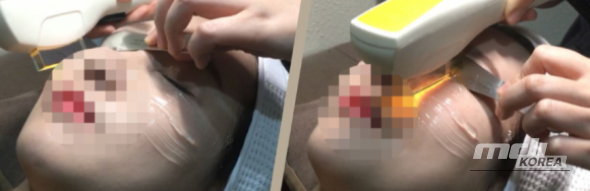
IPL treatment involves applying gentle heat to the eyes to melt blockages in the oil glands.
So, who can benefit from this treatment?
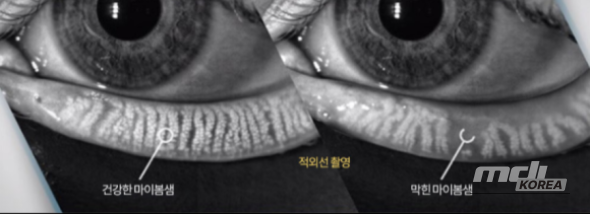
Infrared imaging often reveals blocked meibomian glands, similar to what's seen in the right eye in the image.
The meibomian glands are responsible for coating the eye's surface with oil.
When these glands become blocked, they can't secrete the clear, healthy oil needed.
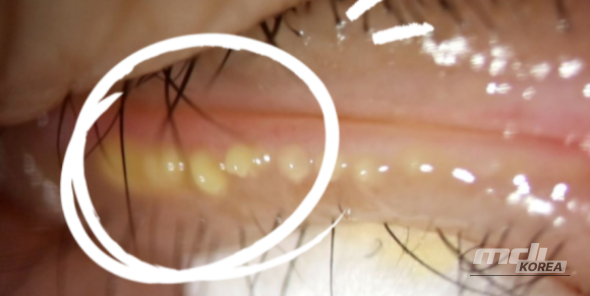
In fact, when I express the meibomian glands of patients with blockages in the office, hardened, yellowish oil, similar to pus, is released.
Without a proper oil layer coating the eye's surface,
tears evaporate quickly, leading to dryness.
This is why artificial tears often fall short.
In these cases, IPL treatment can provide noticeable relief.
While some patients schedule 3 to 5 sessions,
many experience satisfactory results after just one treatment.
Dry Eye Clinic Treatment Option 2: Punctal Plugs
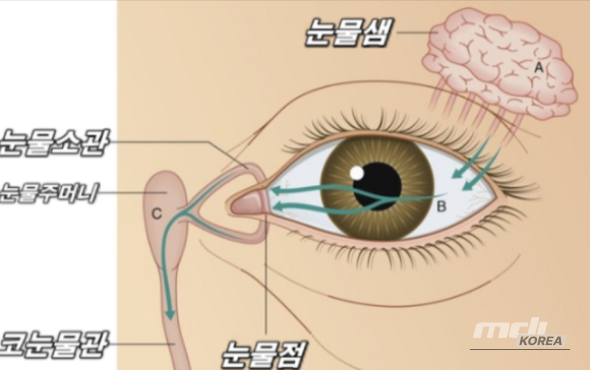
The image above should help you understand.
Tears are typically produced in the lacrimal gland (upper right),
then flow across the eye's surface
and drain through the puncta (tear ducts).
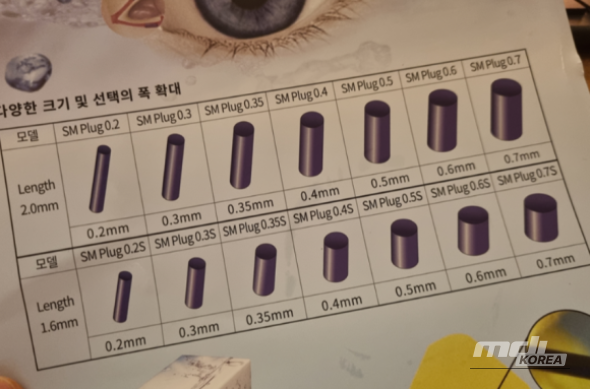
In this procedure, small collagen plugs are inserted into the puncta to block drainage.
This blockage prevents tears from draining away,
allowing them to remain on the eye's surface for longer, providing increased lubrication.
This is punctal occlusion using punctal plugs.
The purple plugs are made of dissolving collagen, making them completely harmless.
The procedure takes only 30 seconds,
offering a quick and easy solution.
(It's virtually painless.)
I can confidently say that many patients find this method more effective than other dry eye treatments.
I may have been among the first to introduce punctal plug treatment in the Gangnam area.
I can confidently recommend this treatment.
The cost is approximately 35,000 won for both eyes and is covered by insurance.
(Considering that IPL costs around 100,000 to 150,000 won, it's quite affordable.)
However,
while I mentioned it's a quick 30-second procedure,
inexperienced doctors may take 5 minutes or longer just to locate the puncta and insert the plugs.
Sometimes, the plugs are inserted too shallowly and fall out.
It's also possible to accidentally poke the eye.
(The insertion process can be tricky, which is why some doctors avoid it.)
Therefore, it's best to seek treatment from a clinic with experienced practitioners.
Of course, there are other dry eye treatments available,
such as autologous serum eye drops,
but in my professional opinion, as a specialist in dry eye treatment,
I believe these two methods are the most effective.
For more detailed information,
please refer to my YouTube video below.
If you're interested in learning more,
please watch the video.
If you're interested in receiving treatment at our dry eye clinic,
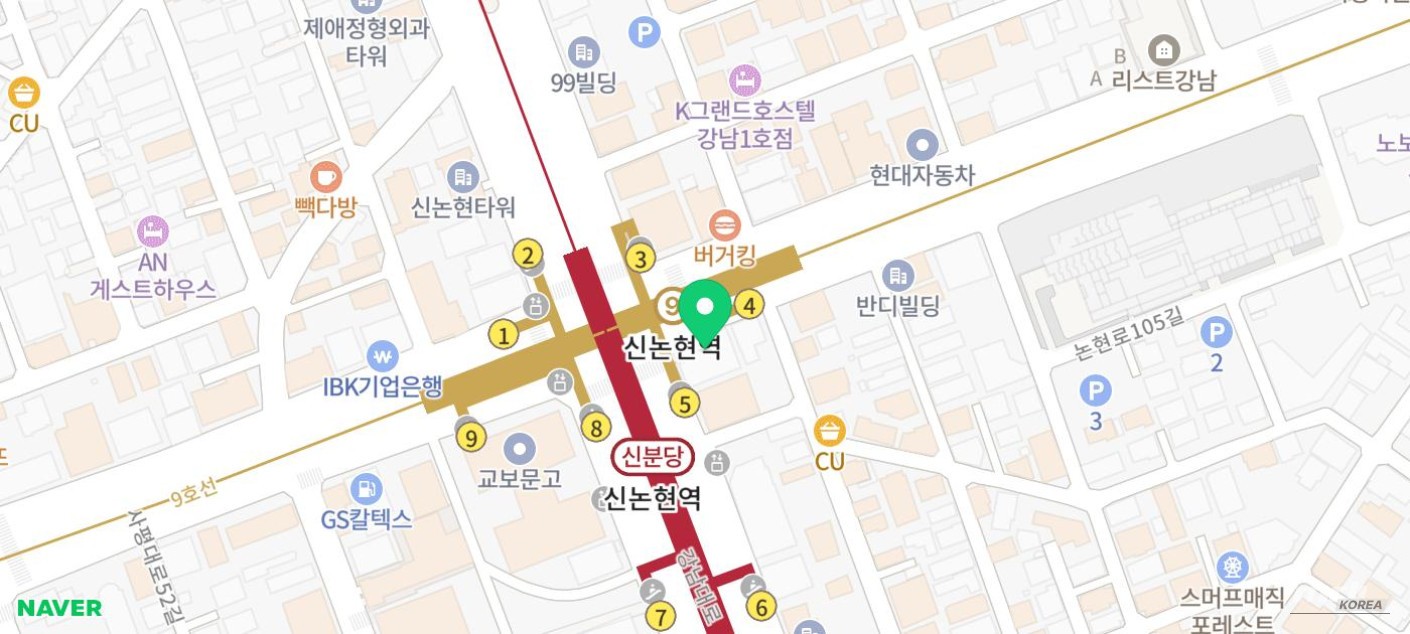
please contact us at the location below.
Our staff will be happy to assist you.
I hope this information has been helpful.
Thank you for reading, and I hope your dry eye issues are resolved!
<Dry Eye IPL Laser Appointment & Directions>
This post is written in compliance with Article 56, Paragraph 1 of the Medical Law for the purpose of providing medical information.


Source :https://blog.naver.com/wpsjtltmals7/224008825565
No comments yet.