Dry Eye-Related Vision Loss: Understanding SMILE Lasik, Reviews, and Costs



In modern society, the increasing use of electronic devices like smartphones and computers has led to a rapid rise in the nearsighted population. This causes inconvenience in daily life, and many people are considering vision correction surgeries such as LASIK, LASEK, or SMILE Lasik. However, concerns arise due to potential side effects, the safety of the surgery, and its suitability, as it directly involves the eyes. It's crucial to understand that the suitability of any vision correction surgery varies depending on individual eye conditions, and a thorough pre-operative examination is necessary for careful decision-making. Each vision correction method has its unique advantages and disadvantages, necessitating a comprehensive consideration of corneal thickness, shape, degree of refractive error, occupational characteristics, and lifestyle habits to determine surgical eligibility and the type of surgery. Post-operative complications, such as corneal clouding, dry eye, glare, or light sensitivity, can occur in rare cases. Therefore, it's essential to approach this with more than just the expectation of vision recovery. Visiting an ophthalmologist for a detailed examination and consulting with medical professionals based on the results is crucial for making a scientifically sound decision.
Just as people have different appearances, the internal conditions of their eyes also vary. Not everyone can undergo the same surgery, and the most suitable surgical method depends on individual eye conditions. Therefore, when considering vision correction surgery, it's more important to have a precise diagnosis of your eye condition and choose the most appropriate surgical method based on the results, rather than simply comparing LASIK, LASEK, SMILE Lasik reviews, or SMILE Lasik costs.
The primary vision correction methods include LASIK and LASEK. LASIK involves creating a corneal flap and using a laser to reshape the underlying corneal stroma to correct refractive errors. It offers quick recovery and minimal pain but has the disadvantage of making the eye more vulnerable to external impacts due to the flap creation. On the other hand, LASEK involves separating the corneal epithelium with alcohol and directly ablating the corneal surface. Since it doesn't involve creating a flap like LASIK, it's more resistant to external impacts and can be performed even on thin corneas. However, it's characterized by relatively greater post-operative pain and a longer recovery period. In addition to these traditional surgical methods, SMILE Lasik surgery has recently gained attention as a more advanced technique.
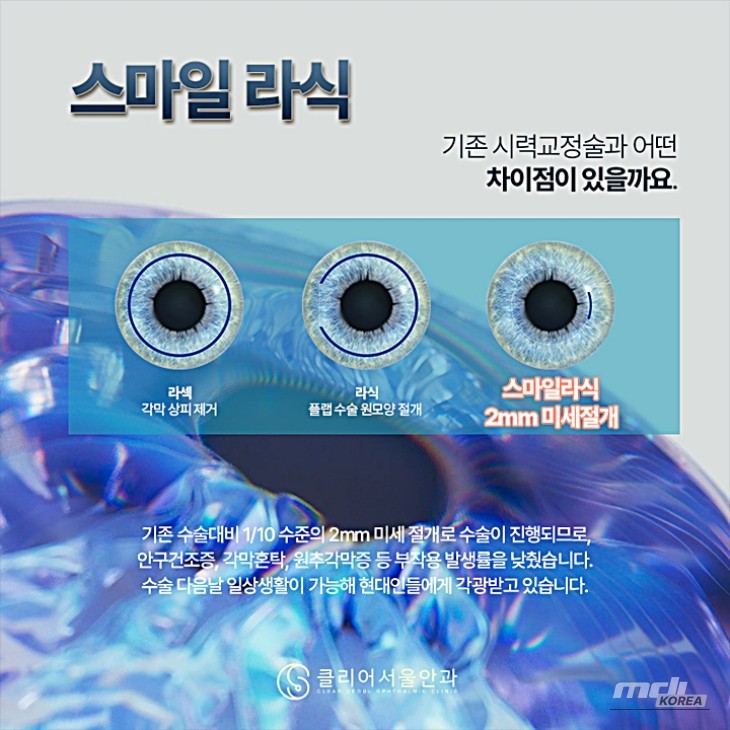
Unlike traditional LASIK and LASEK, this surgery doesn't create a corneal flap. Instead, a femtosecond laser is used to create a lenticule, a small piece of corneal tissue, within the cornea. This tissue is then removed through a small 2-4mm incision, thereby correcting the refractive error.
SMILE Lasik has many positive reviews because the corneal incision is very small and precise, which helps maintain the stability of the corneal structure. It also reduces the incidence of side effects such as dry eye and corneal opacity. It is considered a suitable surgery, especially for those with high myopia or those with occupations that carry a high risk of exposure to external impacts. Above all, vision recovers from the day after surgery, and a return to daily life, including washing, showering, and light walks, is possible, which is why many people are paying attention to this surgery.
The micro-incision is about 1/10th the size of a traditional LASIK incision. This further reduces concerns about dry eye that could occur after surgery. It can be a suitable surgery for those who have experienced dry eye and vision loss, and the surgery takes about 15 minutes, increasing safety even for those with very sensitive eyes. The small incision does not require separate sutures and heals naturally, naturally reducing post-operative pain. It also does not significantly alter the internal structure of the cornea, allowing for a more precise surgery.
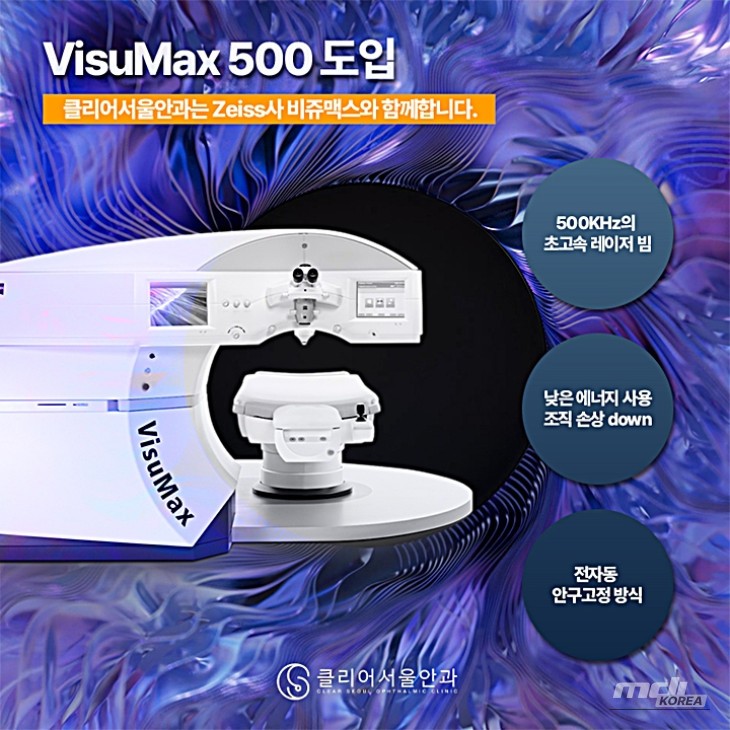
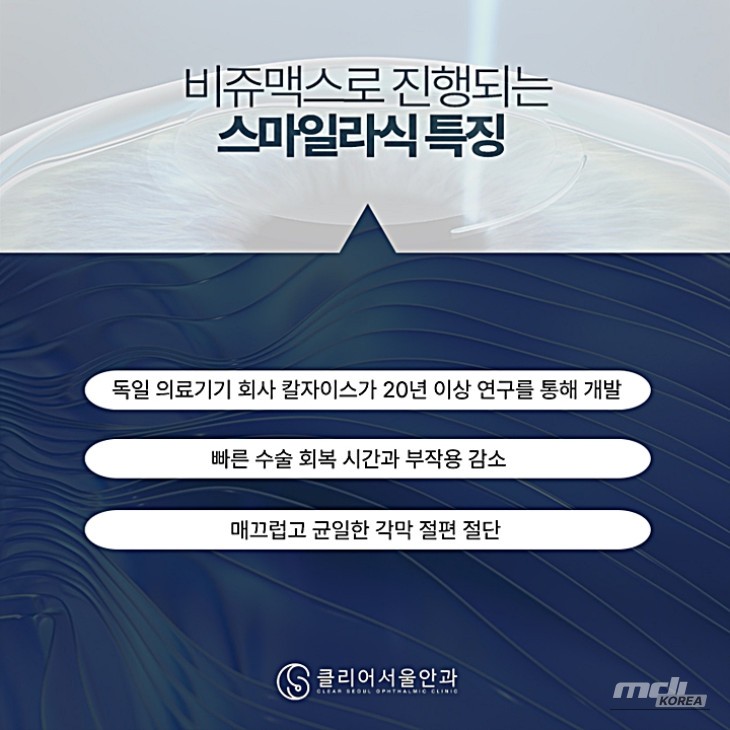
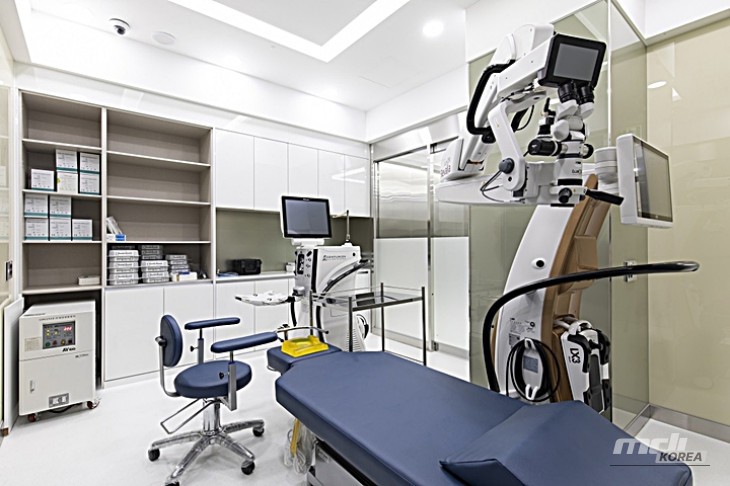
SMILE surgery uses a surgical device called VisuMax. This device provides customized low energy based on each patient's unique eye condition, rather than the same high energy for everyone, which further reduces the recovery period. With a fast laser speed of 500kHz, it creates a smoother lenticule, improving the quality of vision. The fully automated eye fixation method stabilizes the eye even if it shakes or tremors during surgery, prevents excessive pressure from increasing intraocular pressure, and reduces concerns about side effects such as conjunctival hemorrhage.
Many people who have experienced dry eye and vision loss inquire about SMILE Lasik costs. The cost of SMILE Lasik ranges from about 2 million to 3 million won. Of course, it varies from eye clinic to eye clinic and may vary depending on the surgical equipment and eye condition, so it is important to check with a consultation for detailed information.
Post-operative care is also a very important part of SMILE surgery. Even if vision recovers from the next day, it is necessary to reduce irritation and damage to the eyes for about 1 to 2 weeks. Caution is required when lifting heavy objects to avoid excessive pressure on the eyes. To reduce the risk of infection, it is best to avoid places such as swimming pools, saunas, and jjimjilbangs for the time being, and alcohol and smoking should be prohibited as much as possible as they can cause inflammation in the eyes. Artificial tears should be instilled to maintain moisture, as dryness may persist in the eyes for the time being, and sunglasses and hats should be used to cover the eyes when going out to protect them from UV rays, although they do not have a significant effect. Even if vision is restored and you can see well, you should check the condition of your eyes through regular checkups. Rather than neglecting it, it is important to develop a habit of continuously managing and checking the recovery status to further improve eye health.
Many people have undergone vision correction surgery, and many more will do so in the future. The most important thing to focus on is a surgical method suitable for your eye condition. If an improper surgery is forced on the eye, it can lead to greater side effects and complications. Just because a surgery has recently appeared doesn't mean it's possible for everyone. In some cases, surgeries performed in the past may be more stable. If you've decided on vision correction surgery, visit an ophthalmologist for an examination and consultation to find a stable surgical method for you.

















Source :https://blog.naver.com/whgus4231/224009939565
No comments yet.