Dry Eye Disease: Personalized Eye Exams and Treatment for Persistent Symptoms, Including Eye Discharge



Dry eye disease has become a common ophthalmological condition affecting people of all ages in modern society. With the widespread use of digital devices, our eyes are exposed to more risks than ever before. Office workers spend most of their day in front of computer screens and continue to use their eyes through smartphones even after work. Artificial tears are a temporary solution for many in this environment, but they have limitations in addressing the underlying problem.
In particular, if dry eye is accompanied by persistent eye discharge, it may indicate inflammation or infection rather than simple dehydration, requiring careful attention. Without proper management, it can progress beyond discomfort to more serious eye diseases, and it should be recognized as an important health issue that directly affects quality of life, including vision impairment, decreased concentration, and reduced work efficiency.
Understanding the Tear Film Structure and Analyzing Dysfunction in Each Layer
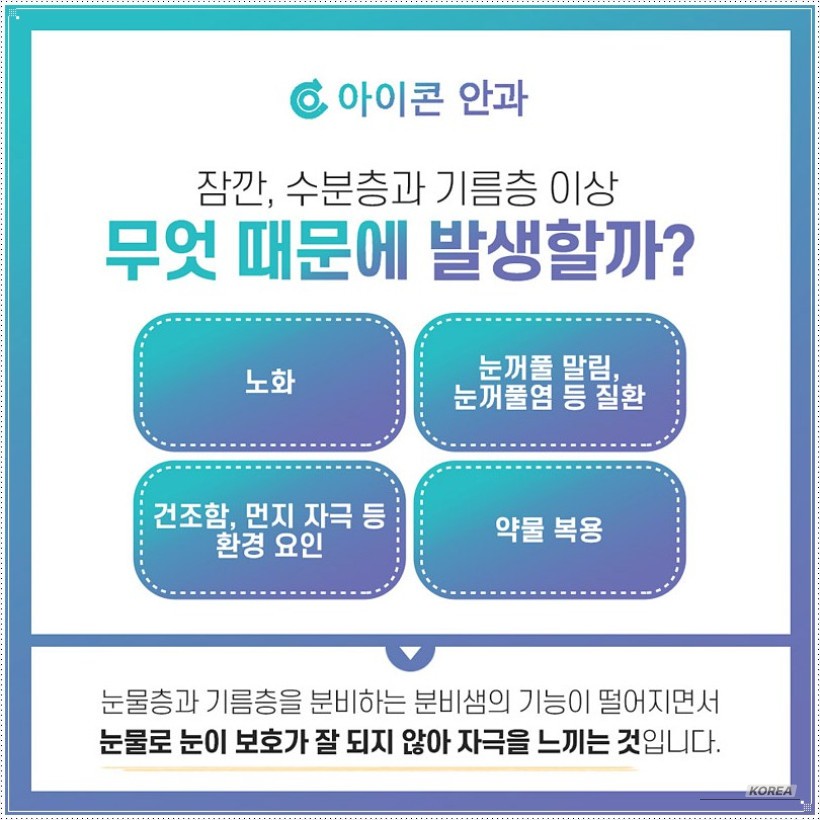
Dry eye disease can be caused by various factors, including aging, exposure to dry environments, conditions such as rheumatoid arthritis, radiation and chemotherapy, a history of eye surgery, long-term use of eye drops, contact lens wear, and facial nerve paralysis.
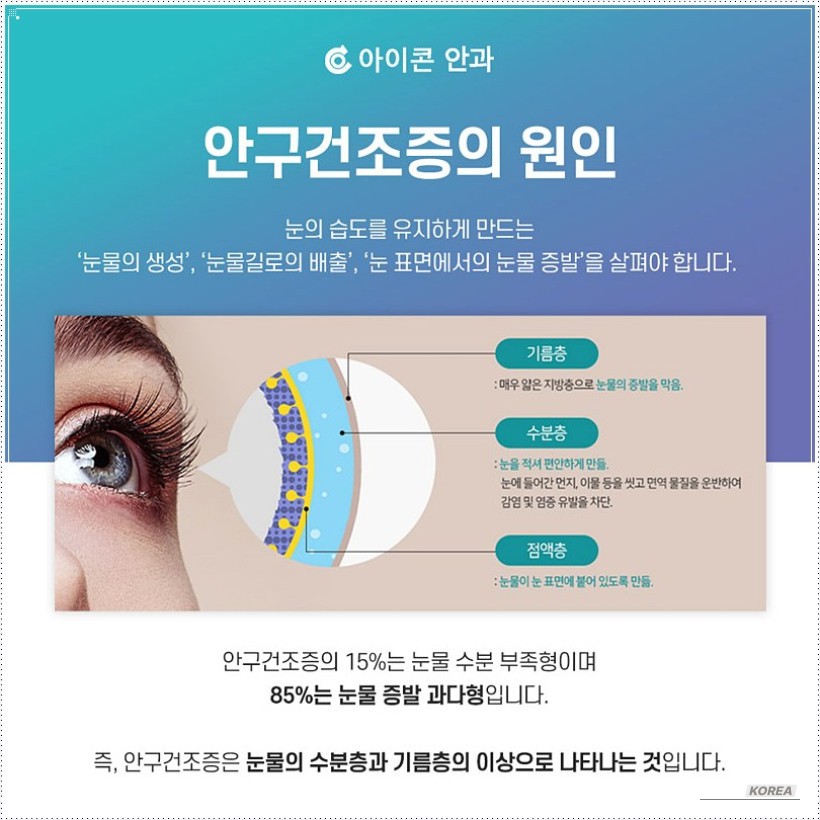
✅The tear film consists of three layers: the lipid layer, the aqueous layer, and the mucin layer. Dry eye disease occurs when the balance between these layers is disrupted.
????The lipid layer is a thin oily layer that prevents tear evaporation.
????The aqueous layer washes away foreign substances and prevents infection and inflammation.
????The mucin layer helps tears adhere to the surface of the eye.
Artificial tears primarily replenish the aqueous layer, but their effectiveness may be limited if there are problems with the lipid or mucin layers. Therefore, a personalized treatment approach through analysis of individual tear film structure is important.
Self-Diagnosis Methods and Recognizing Warning Signs by Major Symptoms
※ Major Symptoms of Dry Eye Disease
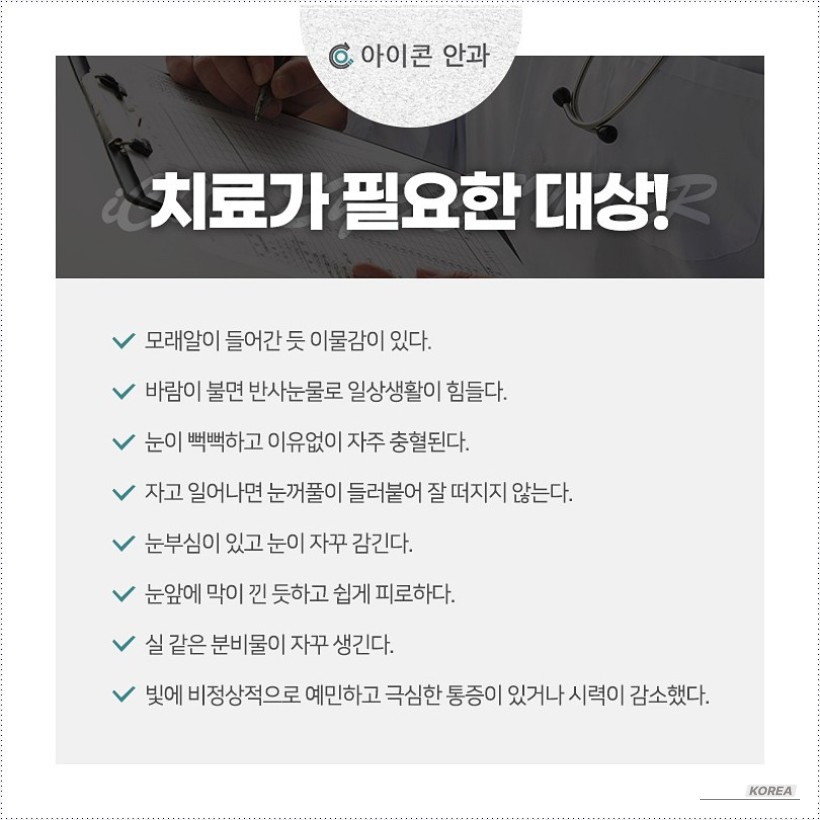
Severe eye pain and redness upon waking in the morning
Stinging and discomfort in the eyes when exposed to wind
Blurred or hazy vision after prolonged computer use
Burning and discomfort in the eyes
Sensitivity to light and glare
An unpleasant feeling of having a foreign object in the eye
If these symptoms persist, dry eye disease may be suspected, and an eye exam is necessary for accurate diagnosis. Symptoms can occur regardless of the season and may worsen, especially during periods of heavy air conditioning or heating use, or on days with high levels of fine dust.
If eye discharge is more frequent than usual or changes color, it may indicate a bacterial infection or inflammation, requiring immediate consultation with a healthcare professional.
Seasonal Factors and Risk of Corneal Function Decline
Dry eye disease is commonly known as a winter condition, but it can occur regardless of the season.
▶️Various factors can trigger dry eye disease in each season.
Fine dust and yellow dust in spring
Increased use of air conditioning and hot environments in summer
Dry weather in autumn and winter
Many people try to alleviate symptoms temporarily with artificial tears, but this is not a fundamental solution. If the eye surface is not continuously protected, corneal function can decline, and in severe cases, inflammation can lead to vision problems. Therefore, comprehensive eye health management is necessary along with appropriate treatment for the cause of dry eye disease, and it is particularly important to monitor changes in the characteristics of eye discharge to assess the progression of the disease.
Effective Lifestyle Improvements and Daily Management Methods
There are several lifestyle improvements for preventing and managing dry eye disease.
Use artificial tears regularly
Take breaks when using digital devices (20-20-20 rule)
Avoid rubbing your eyes
Wash your hands before and after going out
Maintain indoor humidity
Avoid wearing contact lenses for extended periods
Eat foods that are good for the eyes
Above all, if symptoms persist, it is important not to self-diagnose but to see an ophthalmologist. In particular, if there are changes in the amount or color of eye discharge, you should seek immediate medical attention.
Improving Eyelid Blood Circulation and Removing Demodex Mites
It is important to identify and treat the cause of dry eye disease in its early stages.
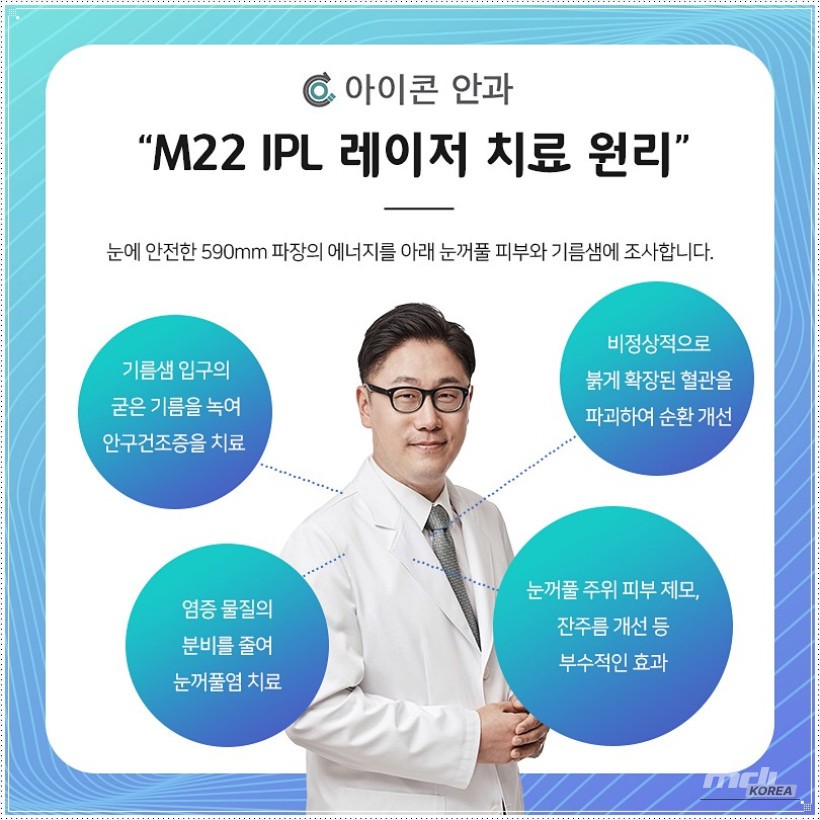
????For dry eye disease caused by meibomian gland dysfunction, M22 IPL laser treatment is effective.
590nm wavelength IPL laser melts the oil in the meibomian glands
Safe treatment approved by the US FDA
Cooling gel + eye shield to protect the eyes
Improves blood circulation + removes Demodex mites
Relieves redness, itching, and fatigue
Short procedure time + quick recovery allows for a return to daily life
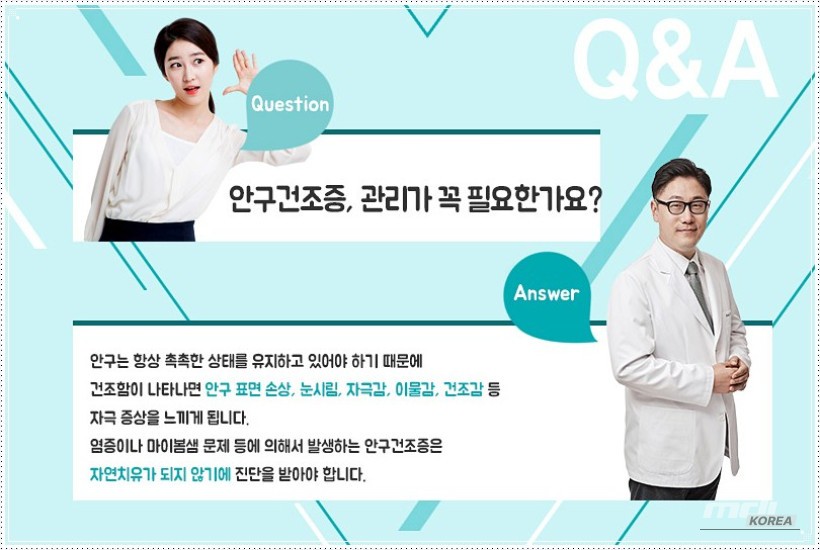
Dry eye disease is a condition that is difficult to improve with simple eye drops, so it is important to receive appropriate treatment through accurate diagnosis, and a comprehensive management plan tailored to individual conditions is necessary.











Source :https://blog.naver.com/iconiconeye/224014499278
No comments yet.