Dry Eye Disease: Comprehensive Diagnosis and Tailored Treatment for Complex Causes


Dry eye disease, a major ailment threatening the eye health of modern individuals, affects approximately 20% of the global population. Often dismissed as mere dryness, it can lead to severe complications if left untreated, emphasizing the importance of early detection and intervention. The primary mechanisms of dry eye disease involve excessive tear evaporation and insufficient tear production, which can damage the ocular surface and cause various uncomfortable symptoms.
Recently, dry eye clinics have begun offering surgical treatments to directly address the underlying causes, enabling the creation of personalized treatment plans based on symptom severity and etiology. If eye discomfort persists, a thorough examination to identify the precise cause and appropriate treatment is recommended.
Complex Causes of Eye Discomfort
Various factors influence eye health:
Aging: Natural decline in tear secretion function
Environmental Factors:
Fine dust → Weakens the tear film
Dry air (indoors and outdoors) → Increases moisture evaporation from the eye surface
Lifestyle Habits:
Prolonged digital device use → Reduces blinking frequency
Contact lens wear → Unstable tear film
Health Factors: Systemic diseases like autoimmune disorders
These complex causes can lead to corneal damage, vision impairment, inflammation, and, in severe cases, corneal ulcers. Therefore, proactive treatment at a dry eye clinic may be necessary.
Easily Detectable Early Symptoms
Early symptoms of dry eye disease are often easily noticeable:
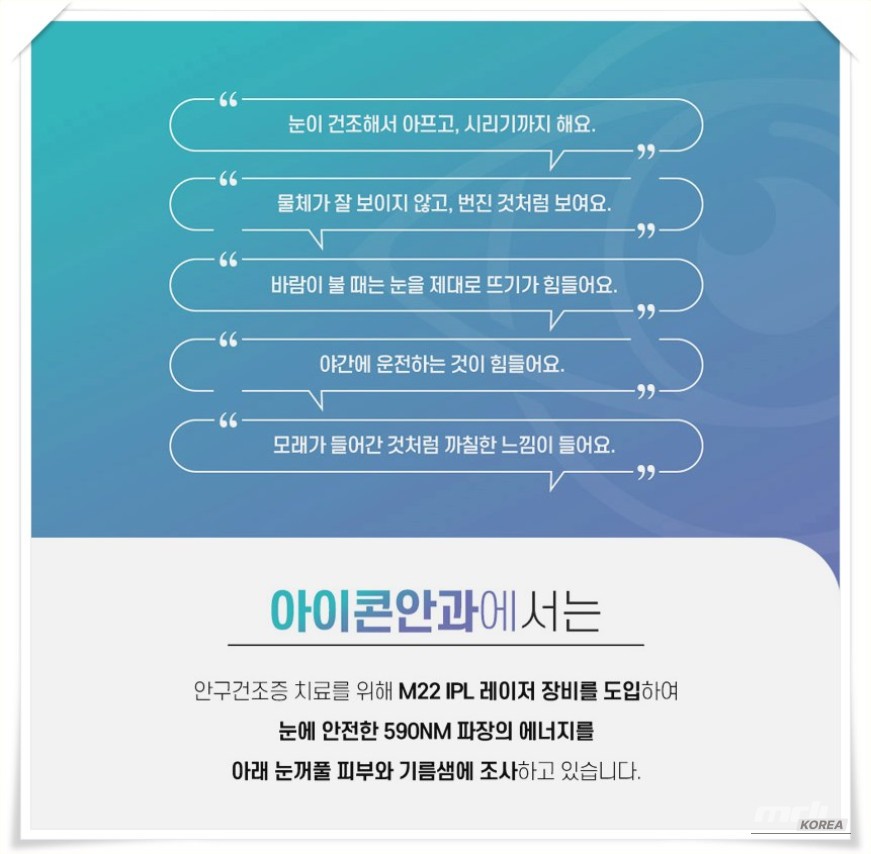
Upon waking: Eyes feel gritty and painful
During outdoor activities: Eyes feel irritated and sensitive to wind
After prolonged digital device use: Blurred vision or increased eye fatigue
Reaction to light: Increased sensitivity to light
Persistent discomfort: Constant foreign body sensation
If these symptoms persist, various treatments, including surgery, can be considered. Tear secretion tests, tear film breakup time tests, and corneal staining tests can help determine the severity of the condition and guide the selection of the most suitable treatment.
The Complex Structure of Tears: Three Layers
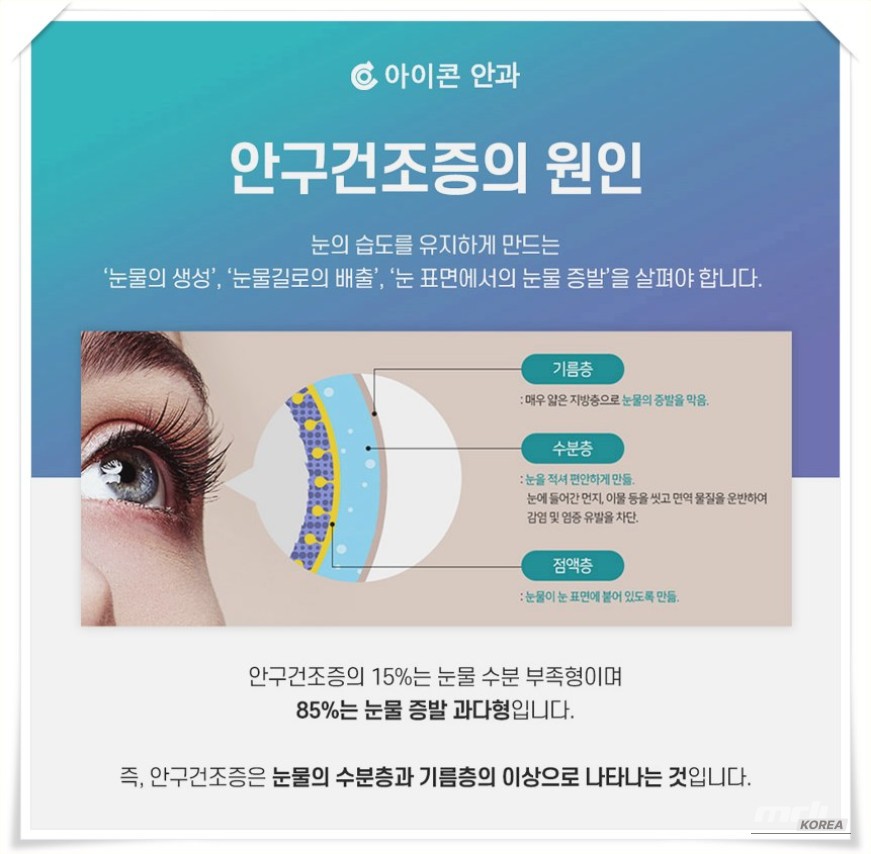
Adequate tear production and balance are essential for maintaining healthy eyes. Tears are not just simple fluid but a complex biological substance composed of three layers: the mucin layer, the aqueous layer, and the lipid layer.
Mucin Layer:
Helps tears spread evenly across the cornea
Enhances adhesion between the eye and tears, forming a stable tear film
Aqueous Layer:
Washes away foreign substances and supplies nutrients to the cornea
Keeps the eye surface moist
Lipid Layer:
Inhibits tear evaporation, preventing moisture loss
Stabilizes the tear film, protecting the eye surface
Each layer performs a unique function, and their harmonious interaction is crucial for maintaining eye health.
However, as aging progresses, problems can arise in the secretion of these tear components, particularly abnormalities in the lipid layer secreted by the meibomian glands.
Artificial Tears Alone Are Insufficient for Treating Complex Causes
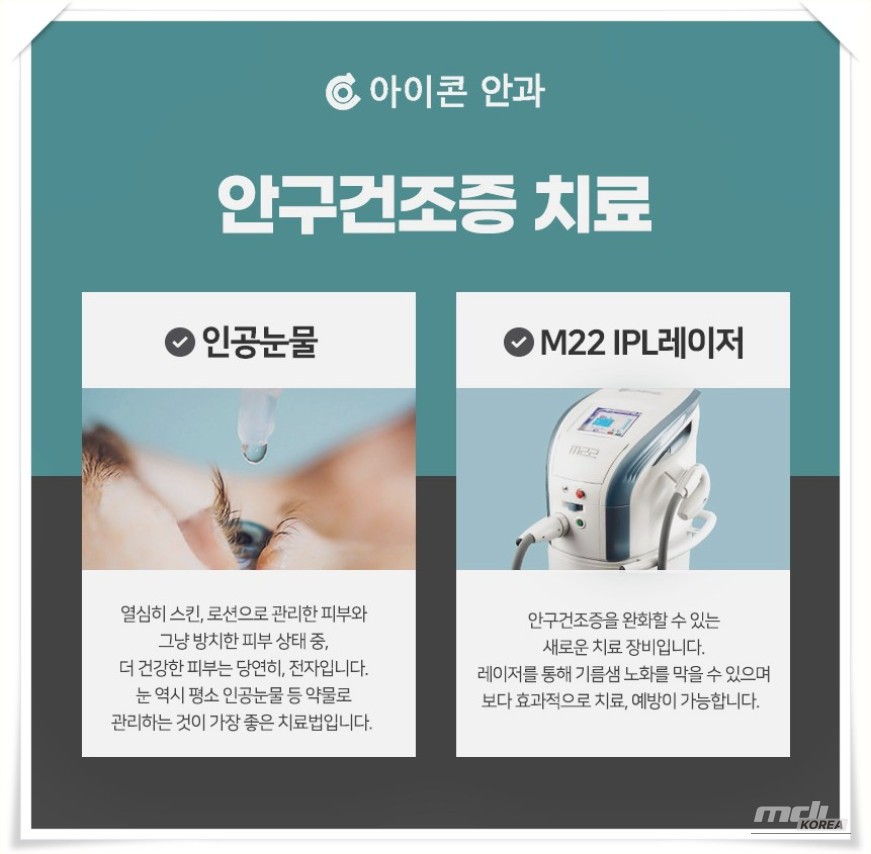
Artificial tears are a fundamental treatment for dry eye disease, providing moisture to the eye surface, temporarily alleviating discomfort, and protecting minor corneal damage. However, artificial tears alone may not address the underlying causes of dry eye disease.
Additional treatment may be necessary, especially for complex causes such as meibomian gland dysfunction or inflammatory dry eye disease. Therefore, artificial tears should be used as a supplementary treatment, and if symptoms persist or worsen, a thorough examination at a dry eye clinic is crucial to identify the cause and choose the appropriate treatment.
Early Detection and Tailored Treatment Are Key to Eye Health
Early detection and appropriate treatment are crucial for dry eye disease. Chronic dry eye disease can be more challenging to treat and may lead to severe complications such as vision loss or corneal damage. Fortunately, advancements in modern medical technology, such as T-OCT and topography, allow for detailed assessment of the eye's condition.
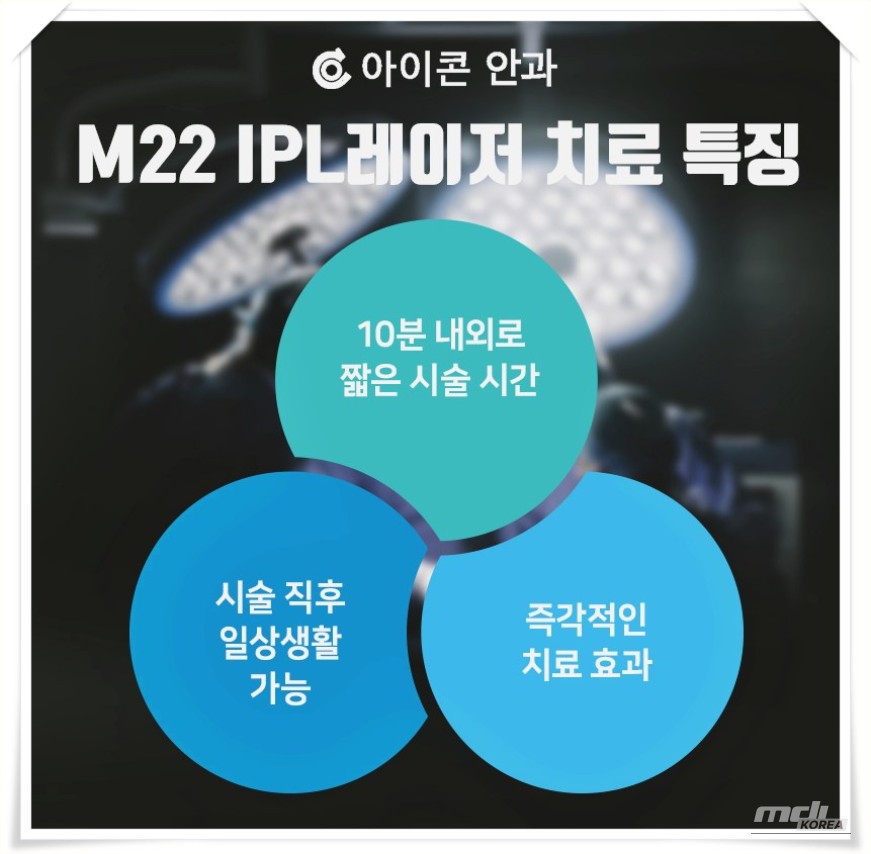
IPL laser therapy for improving meibomian gland function is an effective FDA-approved method that enhances tear layer efficiency and reduces inflammation.
Personalized treatment at a dry eye clinic, tailored to individual symptoms and causes, can lead to more effective dry eye management.















Source :https://blog.naver.com/iconiconeye/224086542206
No comments yet.