Considering SMILE Lasik: What You Need to Know



If you're considering SMILE Lasik for vision correction,
Those with severe myopia or astigmatism may experience eye strain more easily, making vision correction a necessity. While glasses can restore vision, they come with inconveniences like fogging and the risk of damage. These issues often lead people to explore vision correction procedures.
As you begin to seriously consider surgery, deciding on the best approach is crucial. Comparing SMILE Lasik costs is important, but understanding which procedure suits you best is paramount. LASEK is an option even with thin corneas or poor vision and is resistant to impact. However, it involves a longer recovery period and can be painful.
LASIK presents contrasting characteristics. It offers rapid recovery and minimal pain but is vulnerable to impact, and may not be suitable for everyone depending on their corneal condition. Given these opposing traits, carefully selecting the appropriate method is essential.
Undergoing a thorough examination to determine the best method for your cornea is advisable. If both LASIK and LASEK are viable, the decision becomes more complex. In such cases, exploring SMILE Lasik costs can be a good alternative. This procedure addresses the drawbacks of both LASIK and LASEK, making it a popular choice.
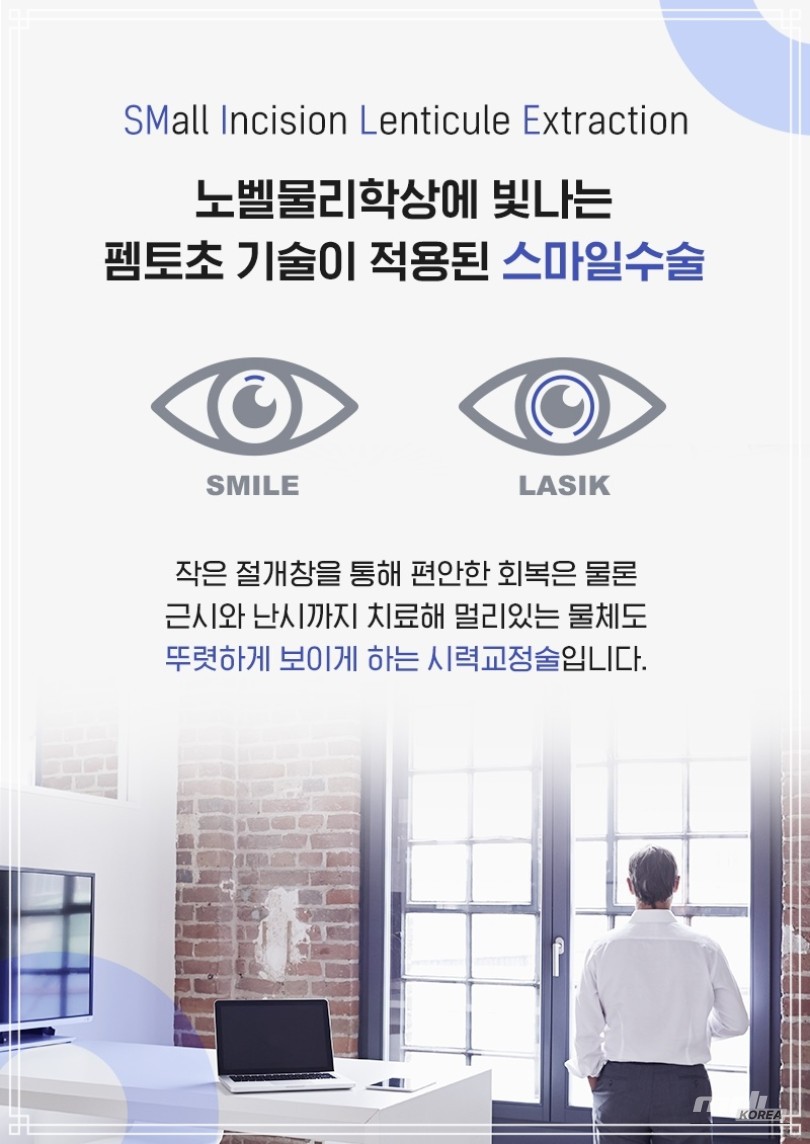
Traditional methods often require creating a corneal flap or removing the epithelial layer. SMILE, however, eliminates these steps. The laser used in SMILE acts on the corneal stroma within a short time frame, minimizing external recovery time and avoiding unnecessary corneal incisions.
SMILE allows for lenticule extraction through a small incision. Its numerous advantages have garnered significant attention. Consequently, many are now researching SMILE Lasik costs and seeking ways to ensure a safe and successful procedure.
SMILE requires the surgeon to manually separate and extract the lenticule. Therefore, it's important to verify the surgeon's clinical experience and credentials. Ensure the clinic is officially certified and uses genuine equipment. Consider the surgeon's experience and other factors when making your decision.
SMILE Lasik costs typically range from ₩2,000,000 to ₩4,000,000. Due to the significant price difference, there's a tendency to favor cheaper options. However, focusing solely on cost can compromise the quality of the outcome.
Therefore, consider various factors before making a decision. Technical expertise, equipment quality, and the surgeon's experience are all crucial for achieving the desired correction. Don't prioritize cost alone; evaluate all relevant aspects.
The appropriate energy level varies depending on individual eye conditions. A thorough assessment of your eye health is necessary to ensure safe treatment with tailored energy settings. Choose a clinic with extensive experience in detailed analysis and treatment, and a proven track record of successful outcomes.
Using the correct energy level for your specific eye condition is crucial to minimize tissue damage. A personalized approach ensures smooth ablation surfaces and adequate residual corneal thickness, leading to more positive results. Each person's eyes are unique, with varying degrees of dryness and the presence of other conditions.
The risk of side effects can vary significantly based on your individual circumstances. Finding a method to minimize these risks is important. While SMILE Lasik costs may be a concern, its small 2mm incision promotes faster visual recovery, making it a popular choice.
SMILE is favored worldwide for its minimal burden on patients and low risk of side effects. However, even the best technology cannot completely eliminate the risk of complications if the procedure is performed without considering the patient's eye condition. It's ideal to consider various factors like eye health, lifestyle, environment, and age to determine the most suitable method.
To find and apply the right method for you, several tests will be conducted in advance. During this process, check whether communication with the medical staff was sufficient and whether there are any major problems, and prevent expected risks. To do this, it is best to carefully review the detailed conditions and respond carefully.
The more clinical experience, the greater the likelihood of the medical staff's proficiency. It can be more helpful to look at recent history and evaluations. In addition, if you find out how to provide aftercare and apply it, you can greatly reduce the burden. So, if you are feeling uncomfortable due to poor eyesight and are looking for a way to improve it through surgical methods, I hope you will refer to it and respond.





















Source :https://blog.naver.com/koikoro/224020317174
No comments yet.