Considering Multifocal Lens Options for Cataracts?



If you're considering multifocal lens options for cataracts,
Q. What are some common eye diseases that occur in the elderly?
Common eye diseases in the elderly include cataracts, glaucoma, and macular degeneration. As we age, the eyes naturally deteriorate, leading to symptoms like blurred vision or decreased eyesight.
Q. Why is it good to get regular eye exams in your 40s?
Regular check-ups in your 40s are important because presbyopia (age-related farsightedness) begins, and diseases like cataracts or glaucoma can slowly develop. In the early stages, there may not be noticeable symptoms, so regular check-ups can help detect these issues early.
As you get older, it becomes harder to focus on close-up text for extended periods. You might notice that you can see well in bright daylight, but street signs or screen text become blurry as the sun sets. Many people realize their eyesight isn't what it used to be when they start holding their smartphones further away or reaching for reading glasses more often.
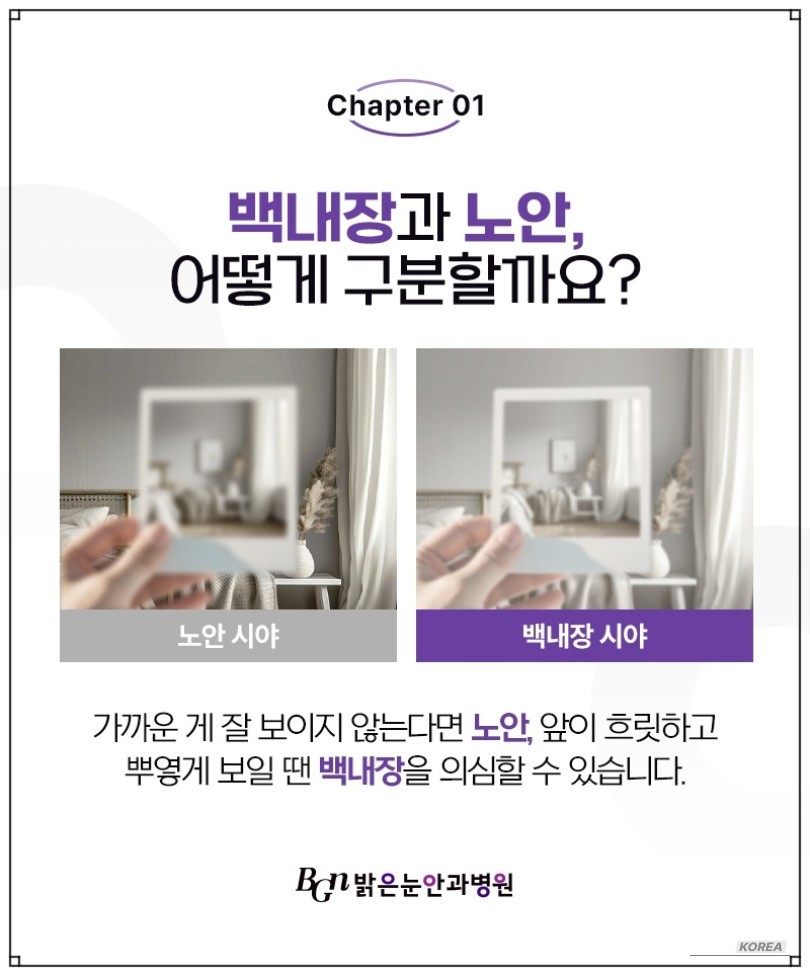
The most noticeable change in daily life is presbyopia. Around the same time, the lens of the eye gradually becomes cloudy, leading to cataracts, which can cause double vision, glare, and a dulling of colors.
Although these two changes have different causes and progression rates, they both ultimately affect the clarity and comfort of your vision, so it's important to have a plan that suits your lifestyle. Presbyopia is the loss of ability to focus on near objects. You might find yourself extending your arm to read a book or receipt, and it becomes more difficult in dim lighting.
Cataracts cause the lens to become cloudy, scattering light and reducing contrast. This can make you sensitive to changes in brightness and cause glare and halos when driving at night. When both conditions occur together, the same text can appear differently depending on the time of day and lighting, so it's important to pay attention to your condition and avoid overexertion.
One way to manage these issues is to use reading glasses or multifocal glasses as needed. Adjusting screen brightness and font size, and blinking frequently to reduce dryness can also help slow down the rate of fatigue.
If you only experience discomfort at a specific distance, you could try a method where one eye is corrected for near vision and the other for distance vision. However, individual results may vary, so it's best to allow a gradual adjustment period rather than immediately switching to new tools.
When cataracts start to significantly impact your daily life, you may notice reduced contrast even in bright light, a yellowing of colors, or bothersome glare at night. Your lifestyle patterns, such as how often you look at different distances, whether you engage in tasks requiring long periods of focus, and how much time you spend outdoors, can all be factors in your choice of treatment.
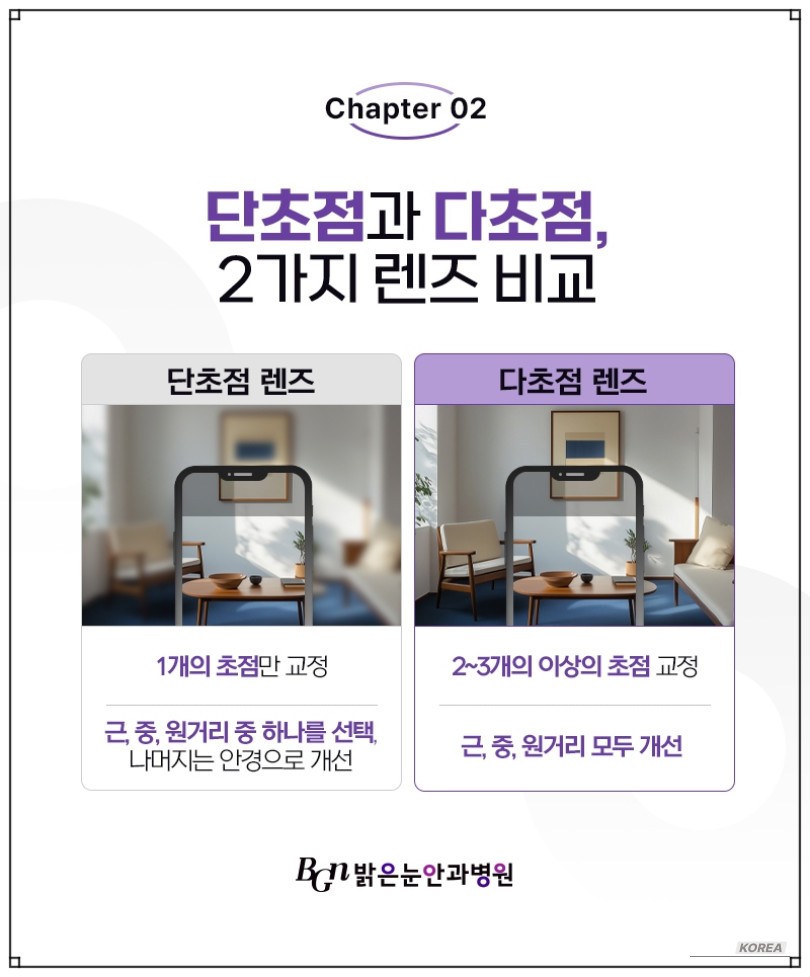
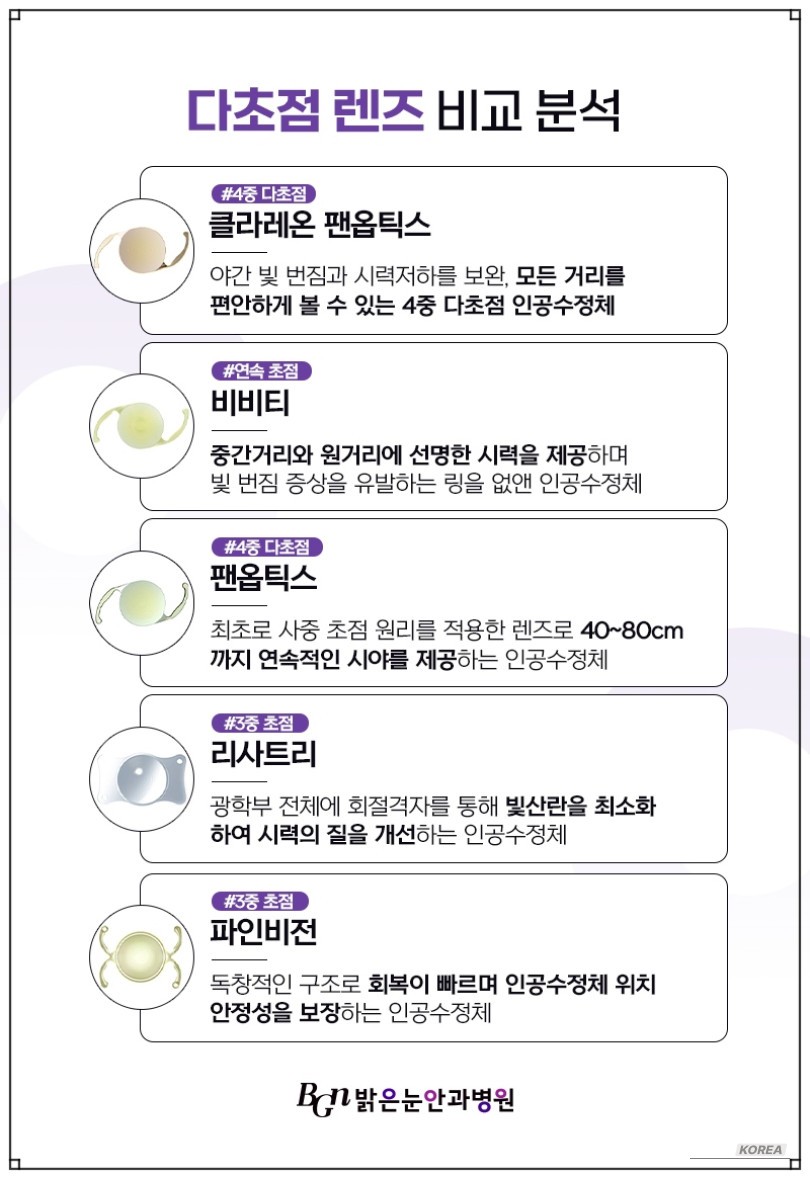
If you want to address both near and far vision, you might consider multifocal lens options for cataracts. These are particularly popular among professionals who use a variety of distances and parents who frequently read books with their children.
Multifocal lenses for cataracts aim to provide a broad range of vision for distance, near, and intermediate ranges by utilizing multiple focal points when replacing the internal lens. This can be beneficial if you want to reduce your reliance on reading glasses, alternate between outdoor activities and indoor work, or frequently switch between screens and documents.
However, it's important to note that you may not always have perfectly clear vision at all distances, and you may experience some glare or halos at night that require adjustment. Therefore, thorough consultation and prior information are essential. For those who want to focus on correcting presbyopia, an intermediate-distance-focused option may be more suitable.
Conversely, if you do a lot of reading or detailed work, you might consider a combination that helps you see clearly at close range. People who drive frequently may prioritize comfort in nighttime vision, while those who work at screens for long periods may prefer an option that provides ample intermediate-range vision. Considering these preferences and habits when deciding whether to get multifocal lenses for cataracts can lead to a well-balanced choice.
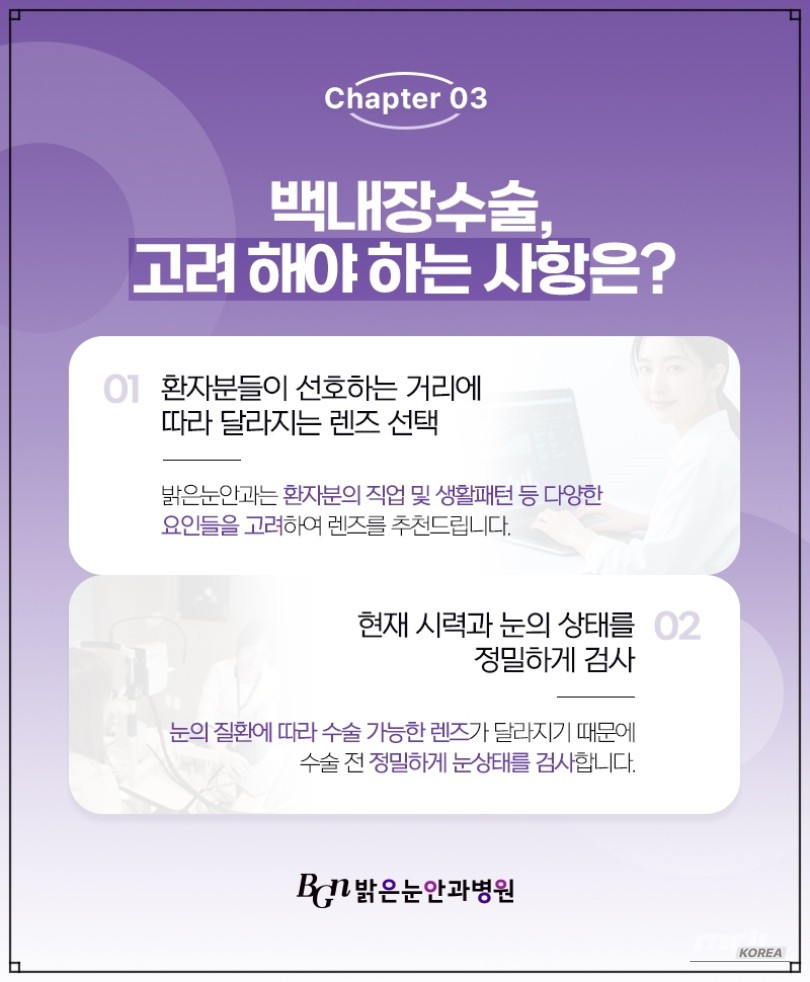
Before surgery, it's important to carefully check your eye's refractive power, pupil size, surface smoothness, and dryness. If the tear film is uneven, the perceived clarity may vary, so you should review your lifestyle habits and establish a simple routine to rest your eyes when looking at screens.
It can be helpful to determine your target distance by considering how you see in bright and dim lighting, and the differences between indoor and outdoor environments. Afterward, it's important to follow basic guidelines during the recovery period, such as avoiding rubbing your eyes and postponing strenuous exercise.
When considering multifocal lenses for cataracts, it's important to have a thorough consultation. You should discuss potential changes in light perception, the amount of time you spend focusing at close range, and how important nighttime vision is to you, using everyday language.
Rather than making a decision based on a single criterion, it can be helpful to consider your daily life, including your work, hobbies, and time spent with family, and prioritize what's most important to you. This can lead to greater satisfaction.
Whatever you choose, remember that your eyes need rest. If you've been looking at a screen for a long time, shift your gaze to a distant landscape. Ventilate indoor spaces to prevent dryness. On days with strong UV radiation, use hats and sunglasses, and warm your eyes with a warm compress before bed.
These small habits can help maintain the clarity of your vision, even if they don't completely eliminate the discomfort caused by presbyopia and cataracts. It's wise to carefully compare multifocal lens options for cataracts to find the best fit for your daily life and to use other assistive devices as needed.
Also, be aware that you may be sensitive to brightness contrast for a certain period. Blue light from screens may feel more glaring at night, so switch to a warmer color temperature at night and use indirect lighting in the bedroom to avoid shining light directly into your eyes.
Avoid overusing artificial tears, blink frequently, and take short breaks to reduce eye fatigue. Finally, it's important to align your expectations with reality. It's difficult to satisfy all different scenarios at once, such as near and far vision, daytime and nighttime vision, and screen and paper.
Therefore, it's helpful to determine which distance is most important to you and to identify the priorities you want to address by recalling moments of discomfort. I recommend that you assess whether this choice is right for you based on your own experience, in order to make your daily life a little easier.


Source :https://blog.naver.com/koikoro/224008951833
No comments yet.