Considering Cataract Treatment: What You Need to Know



When to consider cataract treatment?
Q. What is the recommended frequency of eye exams for cataract prevention?
Even without specific symptoms, it's generally recommended to have regular eye exams every 1-2 years after the age of 40. If you have a family history of cataracts or other eye conditions, more frequent check-ups are advisable.
Q. What eye condition causes objects to appear blurry, as if seen through a fog?
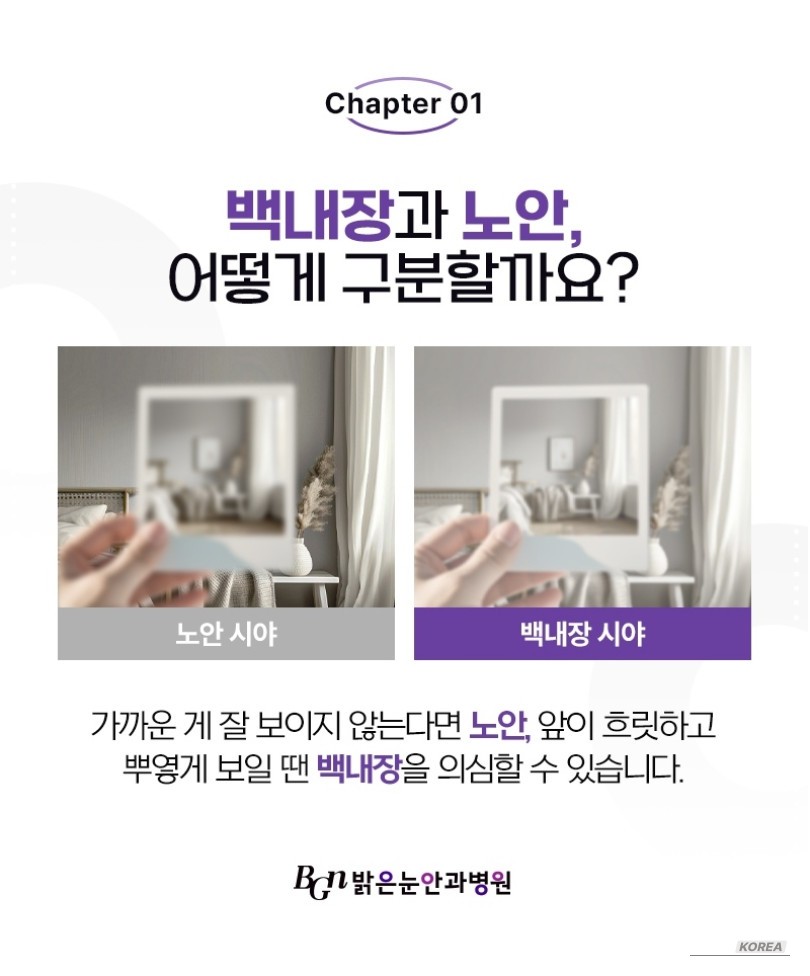
The most common condition is cataracts. Cataracts are characterized by the clouding of the lens, which causes blurry vision and glare.
As you age, you may experience moments when your eyes struggle to focus quickly, and text appears blurred. You might find yourself holding reading material at arm's length or needing more time for your eyes to adjust when moving between bright and dark environments. Many people dismiss these symptoms as simple fatigue, but they are often related to presbyopia, a condition where the lens of the eye gradually loses its elasticity and ability to focus.
Presbyopia is more of a natural change than a disease, and adjusting your lifestyle habits can help alleviate discomfort. Taking breaks while reading for extended periods, maintaining consistent indoor lighting, and adjusting font sizes and screen brightness to a comfortable level can be beneficial.
Cataracts, often mentioned alongside presbyopia, involve changes caused by the clouding of the lens. Initially, you might experience increased glare, noticeable light scattering at night, and a yellowish tint in your vision.
Rather than a sudden loss of vision, cataracts typically develop gradually. If you notice a change in your vision, prioritizing rest and proper lighting can help. You can also try simple self-care techniques, such as alternating your focus between near and far objects. However, if the blurriness persists or significantly impacts your daily life, it's essential to determine the underlying cause.
Cataracts are often associated with aging, but they can also be related to factors such as UV exposure, smoking, long-term use of steroid medications, and eye trauma. If your vision quality steadily declines and brightening the light doesn't help, reading glasses alone may not be sufficient.
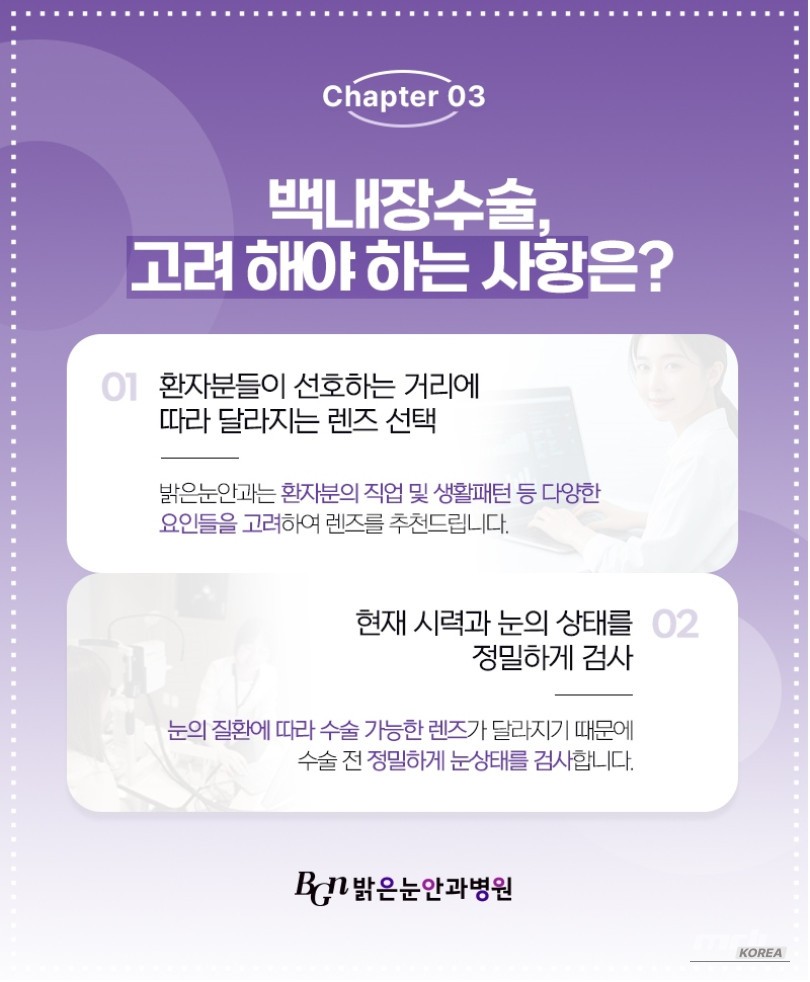
In such cases, it can be helpful to mentally note your current discomfort and observe your daily routine to identify when and in what situations the discomfort worsens. Cataract treatment primarily involves surgery to replace the clouded lens with an artificial lens. The extent of the incision and the type of anesthesia may vary depending on the individual. Before surgery, it's important to consider the degree of astigmatism, any co-existing eye conditions, and your work environment and lifestyle.
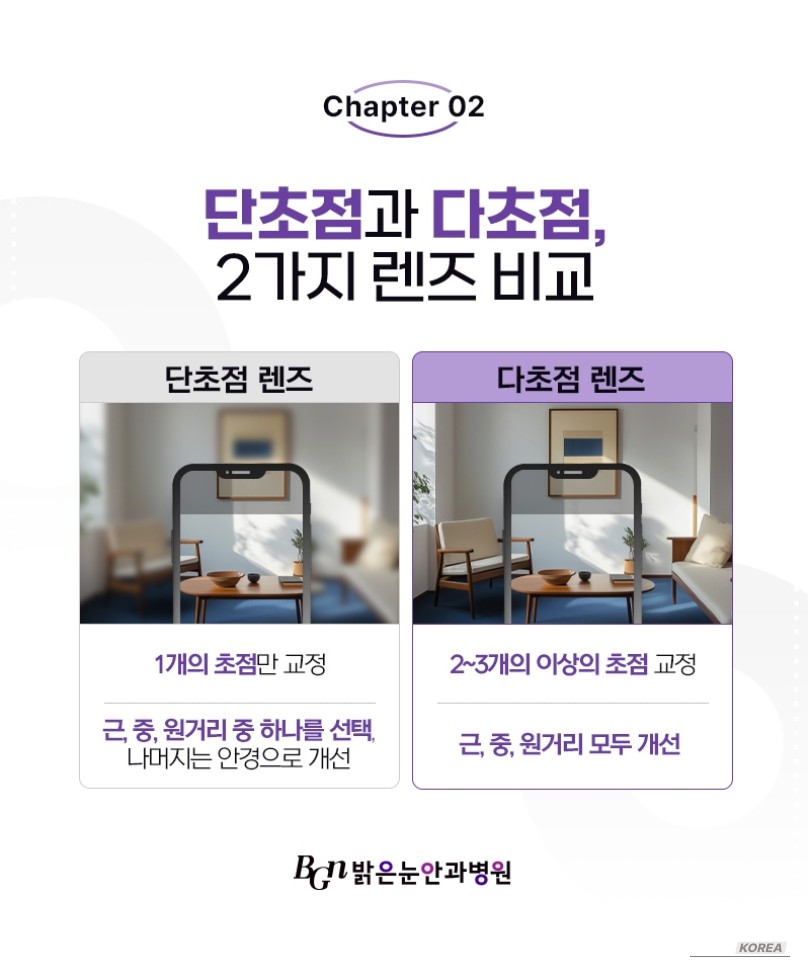
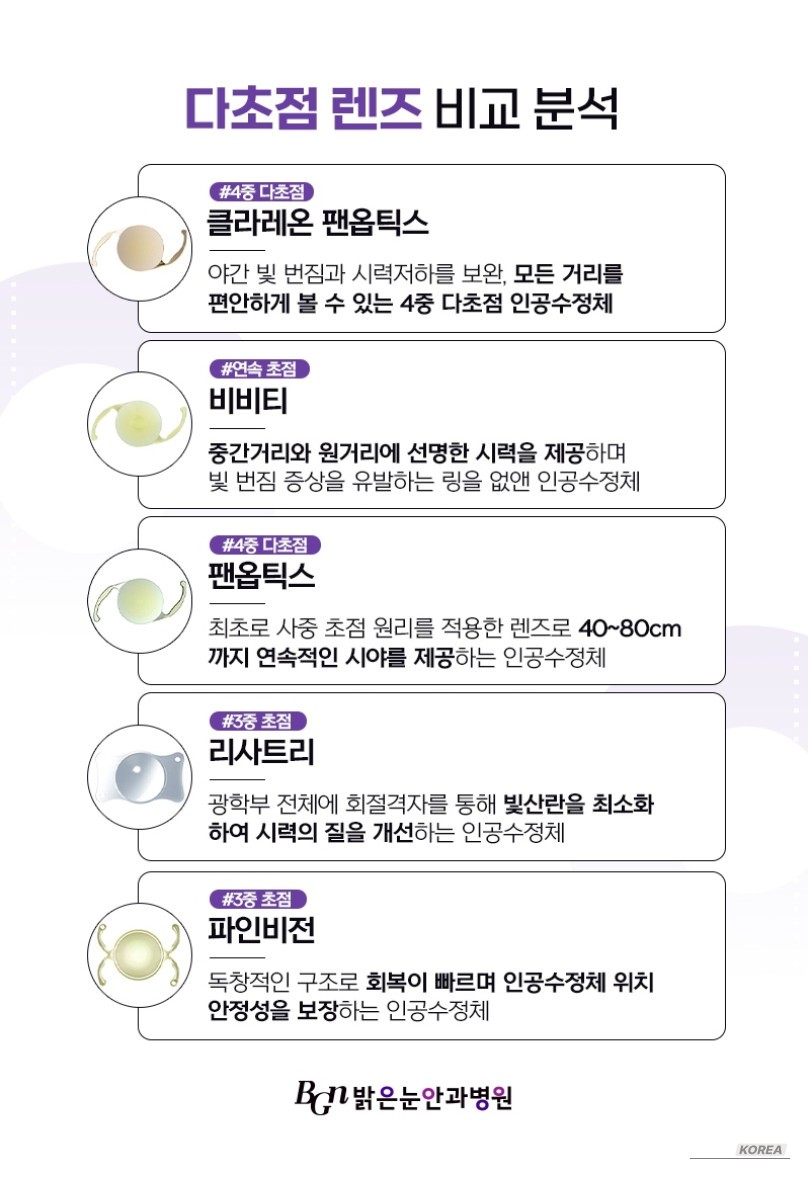
Artificial lenses offer choices such as monofocal lenses, which focus on a single distance, and multifocal lenses, which divide focus across multiple distances. The advantages and disadvantages of each option depend on your individual vision needs and priorities. Since no single option is universally superior, reflecting on how you typically use your eyes can aid in your decision.
If you also have presbyopia, factors such as the amount of time you spend focusing on close-up tasks, the frequency of outdoor activities, and the amount of night driving you do are important. These factors will be considered when determining the best course of cataract treatment. If you spend long periods reading or working on a computer, prioritizing near vision may be beneficial. If recognizing signs is important, prioritizing distance vision may be more suitable.
Every choice involves both advantages and disadvantages, and the goal may be to prioritize clarity at the distance you use most often or to balance clarity across various distances. There are also points to remember in pre- and post-operative care. Reduce the habit of rubbing your eyes as much as possible, and when you feel a foreign body sensation, blink frequently and use artificial tears.
Since UV protection is helpful, it is good to prepare a wide-brimmed and light hat or comfortable sunglasses. During the recovery process, avoid strenuous exercise, be careful not to let water get directly into your eyes, and if you look at the screen for a long time, take breaks to look at a distance.
The relationship between cataract treatment and presbyopia correction is also a frequent question because the comfort of near vision can vary depending on the choice of artificial lens. If tasks at arm's length, such as reading, using a smartphone, or cooking, are important, you may prioritize seeing that distance clearly. Conversely, if distance recognition is important, such as jogging, hiking, or taking pictures, you may first consider the comfort of distance vision.
Thinking about which moments you spend more often and longer in your life can make your choice clearer. In some cases, discomfort can be reduced with daily management alone. Indoor lighting should be kept bright enough without glare, and the screen should be set neither too cold nor too warm.
If you often feel dryness, maintain stable indoor humidity and use protective glasses in windy environments. Eye health is also closely related to sleep, hydration, and a balanced diet, so maintaining a stable rhythm of life can be helpful.
Cataract treatment is a series of choices tailored to an individual's eye condition and lifestyle. The results vary from person to person, and it is important to clarify your priorities in the preparation process. Thinking about what you want to see clearly and at what distance you want to be comfortable can help you organize your direction.
Rather than expecting all discomfort to disappear with a single decision, it is more realistic to have a mindset of gradually expanding comfort. Finally, presbyopia is a natural change that comes to everyone.
Cataracts are also just a common change in the eyes that has become more common as life expectancy has increased. Understanding your own eye usage patterns and taking time to rest your eyes in your daily life can change the clarity of the day. Even if the term cataract treatment feels unfamiliar, starting with small adjustments tailored to your lifestyle can reduce the burden.
Another thing to remember is that the two eyes do not always change at the same rate. If one side becomes blurred first, the other side can compensate for this, temporarily reducing discomfort, but if the balance is broken, fatigue can easily accumulate. When reading, try covering one side and comparing it, or alternate between bright and dark backgrounds to find a comfortable distance to reduce discomfort in your daily life in advance.
You can experience a relaxation of eye strain with just a short preparation of ventilating the room air and taking a slow breath after closing your eyes before starting work that requires long periods of concentration.

Source :https://blog.naver.com/koikoro/223995067491
No comments yet.