Comprehensive Management of Chronic Dry Eye Syndrome at Yeoksam Station Ophthalmology Clinic


The modern environment presents increasing threats to eye health. Continuous operation of indoor heating and cooling systems, prolonged exposure to smartphones and computer monitors, increased use of contact lenses, and exposure to cosmetics and fine dust are major factors contributing to dry eye. These factors, combined with the natural aging process, often lead to symptoms such as gritty or foreign body sensations in the eyes. Many people use artificial tears for temporary relief, but this is not a fundamental treatment.
Dry eye syndrome is the second most common chronic disease, and if left untreated, it can lead to serious complications such as corneal damage or inflammation, necessitating systematic management. The ophthalmology clinic near Yeoksam Station offers various approaches for detailed diagnosis and treatment of dry eye syndrome.
The Impact of Aging and Environmental Factors on Dry Eye Syndrome
One of the main causes of dry eye syndrome is the aging process of the eyes. Compared to other parts of the body, the eyes age relatively quickly, and tear production and quality generally begin to decline from the age of 40. However, there has been a rapid increase in dry eye patients in their 20s and 30s recently, which is closely related to the explosive increase in digital device usage.
Staring at screens for extended periods significantly reduces blinking frequency, increasing tear evaporation, which is further exacerbated by the dry environment caused by indoor heating and cooling systems.
For prevention, it is effective to maintain indoor humidity levels between 40-60% and practice the 20-20-20 rule, which involves looking at an object 6 meters away for 20 seconds every 20 minutes during near work. Consciously increasing blinking and massaging the eye area can also be helpful.
Composition and Functional Role of Tears
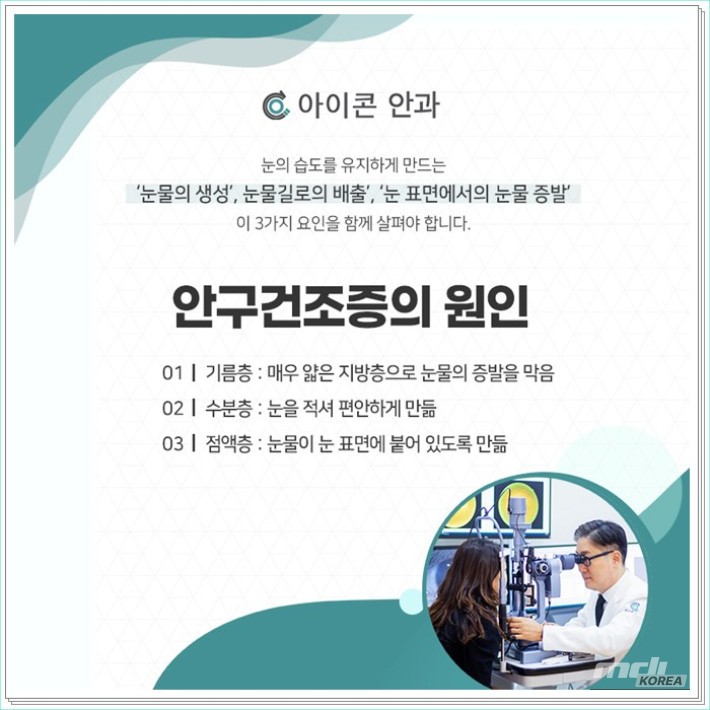
Tears are not just simple moisture but a complex fluid essential for maintaining eye health. Tears consist of three layers: the aqueous layer, the mucin layer, and the lipid layer, each serving a unique function.
■ The aqueous layer provides moisture to the eye surface and protects it from external pollutants.
■ The mucin layer helps tears spread evenly over the corneal surface.
■ The lipid layer prevents tear evaporation and provides lubrication for smooth eyelid movement.
The role of tears is particularly important because the cornea, which has no blood vessels, receives oxygen and nutrients only through tears. An imbalance in these tear components can lead not only to dry eye syndrome but also to various other eye diseases. Sometimes, excessive tearing may occur reflexively due to dryness-induced irritation, which is a sign of qualitative tear imbalance and should be carefully observed.
Negative Consequences of Dry Eye Syndrome on Eye Health
Reduced tear function has various negative effects on eye health.
Early stage: Mild inflammation occurs on the eye surface.
Progression: Microscopic wounds on the cornea → risk of infection and vision loss (unstable tear film → blurred vision, increased glare).
Severe cases: Possible complications such as corneal ulcers and perforations.
Key point: Early treatment is crucial.
The persistent discomfort caused by dry eye syndrome significantly reduces the quality of daily life, leading to decreased work efficiency and concentration. To effectively manage these symptoms, treatment based on detailed diagnosis and prescription by a healthcare professional is necessary. If discomfort or side effects occur while using prescribed eye drops, it is advisable to consult a medical institution immediately.
Proper Use and Precautions for Artificial Tears
Artificial tears are a widely used method for managing early-stage dry eye, but their effectiveness depends on proper usage.
✅ Product Selection and Storage
Check expiration date: Must be checked before purchase.
Use quickly after opening: Use as soon as possible to prevent contamination.
Single-use products: Use all on the day of opening.
Multi-use products: Use no more than 10 times a day, and use up within one month of opening.
⚠️ Precautions for Contact Lens Wearers
Choose products compatible with lenses: Check that the ingredients do not affect the lenses.
Maintain hygiene during instillation: Be careful not to let the container tip touch the eyelid or eyelashes.
⚠️ Infection Prevention
Do not share: Sharing artificial tears with others can cause infection and should be strictly avoided.
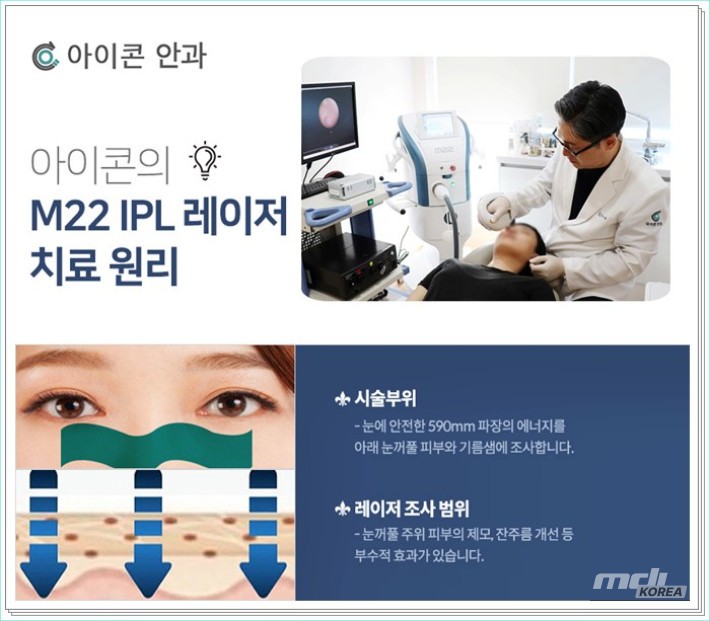
Since treating dry eye syndrome in its early stages before it becomes chronic is more effective, it is important to undergo a thorough examination at an ophthalmology clinic near Yeoksam Station to identify the underlying cause if you experience persistent symptoms. In cases where meibomian gland dysfunction is the cause, treatments such as IPL therapy may be effective.
Systematic Examination and Treatment for Persistent Discomfort
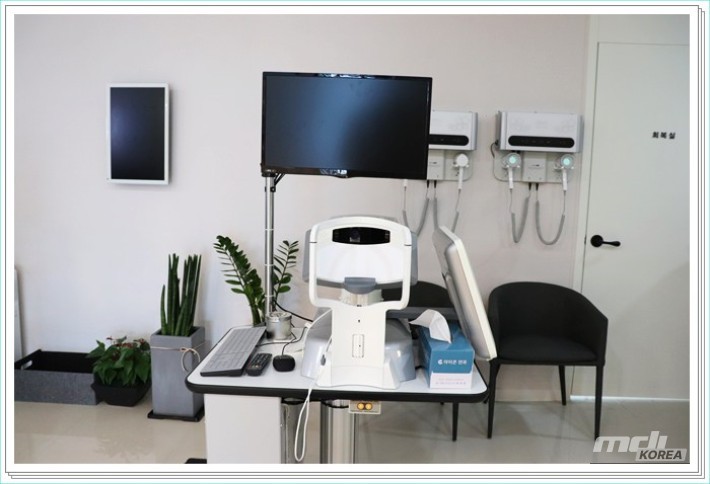
Precise diagnosis and personalized treatment are essential for the effective treatment of dry eye syndrome. Currently, ophthalmology clinics use various examination methods to accurately determine the cause and severity of dry eye syndrome, including tear secretion measurement, tear film stability evaluation, and assessment of corneal damage using dyes. Precise examinations using imaging diagnostic equipment such as OCT and measurement of inflammation levels can help select the most appropriate treatment method for each individual patient.
Treating the underlying cause rather than simply alleviating symptoms is important for long-term eye health. Dry eye syndrome is a condition that can be sufficiently managed with early detection and appropriate treatment. If you experience persistent eye discomfort or vision loss, visit the ophthalmology clinic near Yeoksam Station for a systematic examination and treatment.

























Source :https://blog.naver.com/iconiconeye/224004297863
No comments yet.