Choosing the Best Cataract Surgery Clinic in Busan: A Careful Decision



Q. Are ophthalmology treatments covered by national health insurance?
A. Most examinations and treatments are covered by insurance, with only elective procedures being non-covered.
Q. What eye conditions affect the retina?
A. Common conditions include diabetic retinopathy, macular degeneration, retinal detachment, and retinal vein occlusion. It's best to seek treatment immediately if you experience early symptoms like blurry or distorted vision.
Presbyopia and cataracts are common age-related eye changes. If you notice that close-up text is difficult to see or your vision often blurs even in bright light, you should suspect changes in the crystalline lens, which acts as the lens of the eye, rather than dismissing it as simple fatigue. Presbyopia refers to the condition where the lens loses its ability to freely adjust and focus on nearby objects.
Cataracts are characterized by the crystalline lens gradually becoming cloudy, causing blurred or foggy vision. These two conditions often occur together, so it's important to monitor your vision for changes.
The biggest factor is age. The lens is constantly working throughout life, gradually losing elasticity and undergoing changes in its protein structure. This process leads to hardening and clouding, increasing discomfort at both near and far distances. Exposure to ultraviolet light, smoking, systemic diseases like diabetes, and long-term steroid use can accelerate cataract progression.
Prolonged smartphone and monitor use can also strain the eyes' focusing abilities, leading to earlier onset of presbyopia. Understanding these factors can help you choose a cataract surgery clinic in Busan that considers your lifestyle and overall health, not just your age.
The symptoms are relatively clear. When presbyopia begins, it becomes more comfortable to hold books or phones at a distance, text appears blurred, and the eyes tire easily. If cataracts are also present, sharpness decreases even in bright daylight, lights may appear blurry, or you may experience double vision in one eye.
If frequent changes in eyeglasses don't provide lasting relief, you may suspect more than just refractive error changes. When reviewing information about surgery, it can be helpful to check if these symptoms are described in detail. The diagnostic process is not complicated. A visual acuity test checks your current near and far vision, and corrective lenses are used to determine the extent of possible correction.
A slit-lamp microscope is used to magnify the cornea, lens, and iris, allowing for a stage-by-stage assessment of cataract progression. If necessary, a fundus examination is performed to check the condition of the retina and identify factors that may affect vision recovery after surgery. This may involve dilating the pupils to observe the entire lens.
The best cataract surgery clinics in Busan often explain your current condition and future changes based on these basic examinations. The treatment approach varies depending on whether you have only presbyopia or the extent of cataract progression. In the early stages of presbyopia, reading glasses or progressive lenses can reduce discomfort, but surgery may be considered if cataracts progress and vision loss begins to affect your daily life.
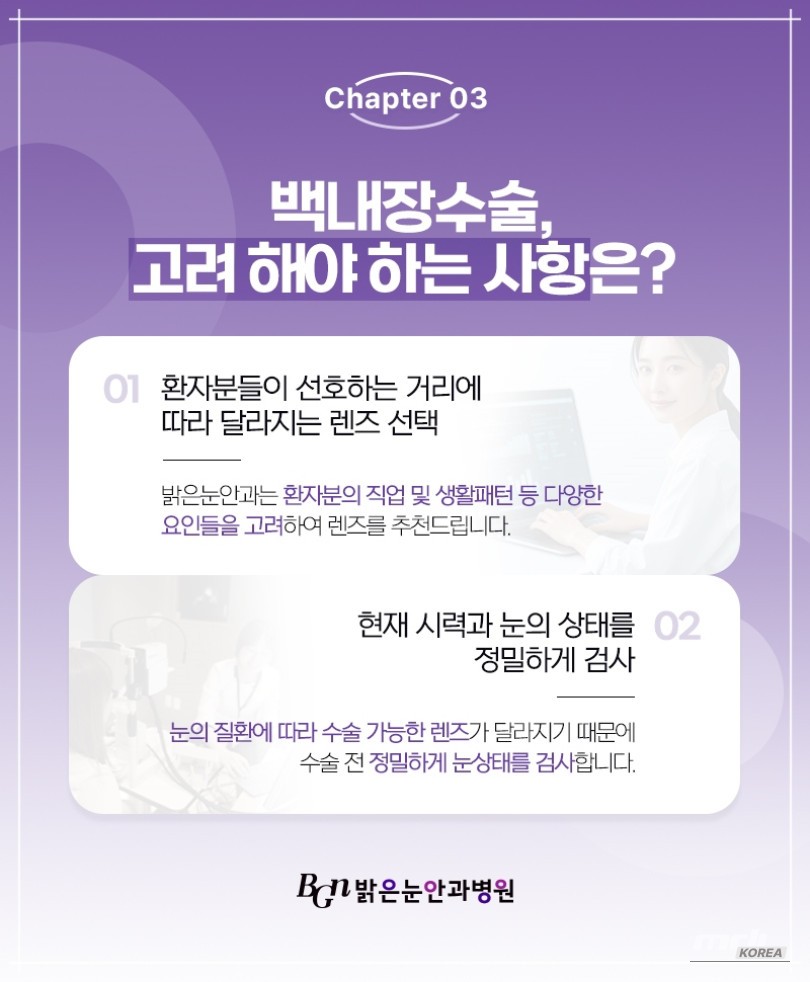
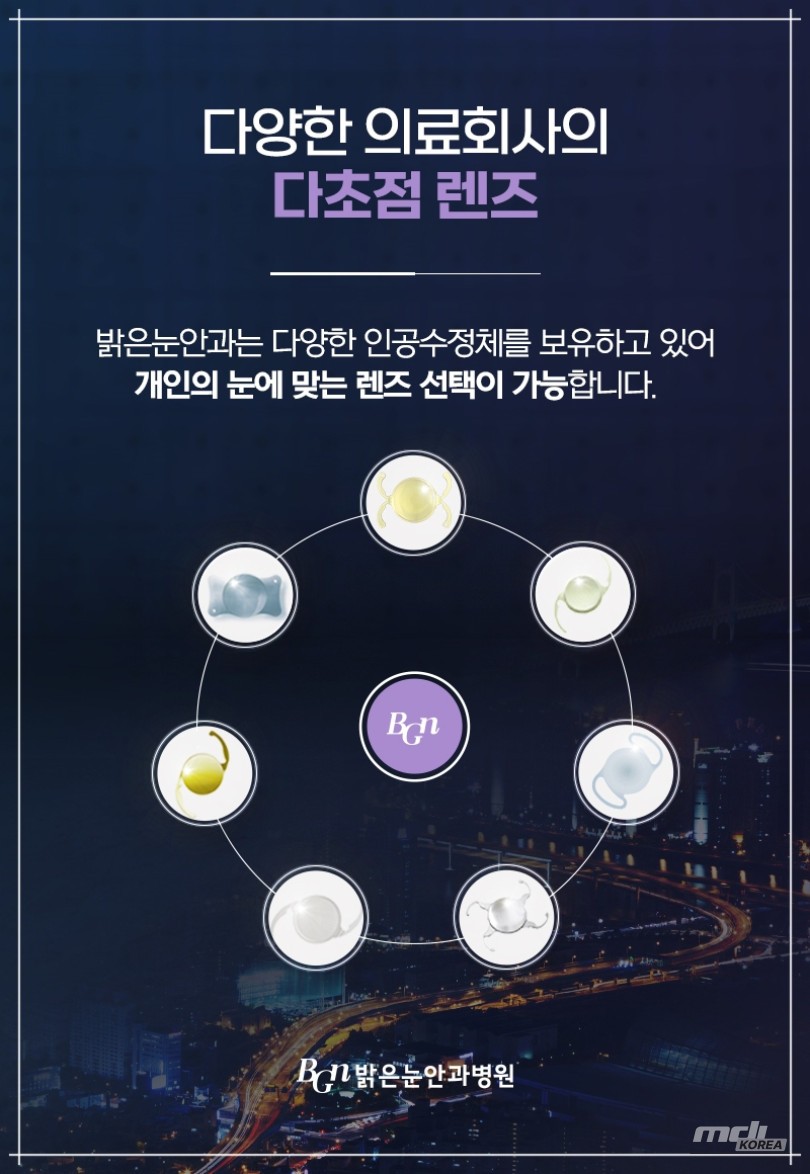
Surgery involves removing the clouded lens and replacing it with an artificial lens. Depending on the type of artificial lens, you can choose between lenses that focus primarily on one distance or lenses that divide focus across multiple distances. The best clinics in Busan often consider your occupation, hobbies, and pre-existing astigmatism when determining the type of artificial lens and target vision.
Delaying cataract surgery for too long can make the lens too hard, increasing the difficulty of the surgery and the risk of falls in daily life. Conversely, it is not recommended to rush into surgery based solely on vague anxiety without significant inconvenience in your daily life.
If you have conditions like diabetes or high blood pressure, managing your blood sugar and blood pressure is essential for smoother recovery before and after surgery. During consultations at top cataract surgery clinics in Busan, the timing of surgery is often determined by considering not only the surgery itself but also the current level of discomfort, the vision required for your occupation, and whether you drive.
After surgery, it's important to follow basic precautions, such as avoiding rubbing your eyes and lifting heavy objects for a certain period. You may experience glare or blurred vision initially, but the brain usually needs time to adapt to the new vision. Regular follow-up appointments to monitor intraocular pressure, corneal condition, and artificial lens position can help address unexpected problems early on.
Presbyopia and cataracts are unavoidable changes, but accurately understanding your eye condition and carefully comparing information from top cataract surgery clinics in Busan can help you prepare for your future vision. Reviewing your daily life patterns can also be helpful in preparing for cataract treatment.
This is because the desired vision varies slightly depending on whether you read a lot, spend a lot of time outdoors, or drive frequently at night. During consultations, it can be helpful to specifically describe the situations that bother you and to organize your wishes in advance, such as whether you want to remove your glasses or reduce glare, to facilitate communication with your healthcare provider.
Considering your eye condition and living environment together allows you to make more realistic decisions about the timing of surgery and the choice of artificial lens, and it can also reduce emotional distress during the subsequent return to daily life. Another important point is not to delay regular eye exams too long.
After a certain age, it's a good idea to check the condition of your lens through simple vision tests and fundus examinations, even if you don't have any specific symptoms. This allows you to know in advance how far presbyopia and cataracts have progressed and reduces the likelihood of rushing to the hospital only after your vision suddenly blurs.




Source :https://blog.naver.com/koikoro/224079704032
No comments yet.