Choosing SMILE Lasik Lenses Comfortably



To choose SMILE Lasik lenses comfortably, consider the following:
Q. Is ophthalmology treatment covered by national health insurance?
Treatment for diseases is covered, but vision correction surgery is not covered as it is non-insured.
Q. How do I choose a SMILE Lasik clinic?
The key is to check the equipment, accuracy of the examination, surgical method, and aftercare.
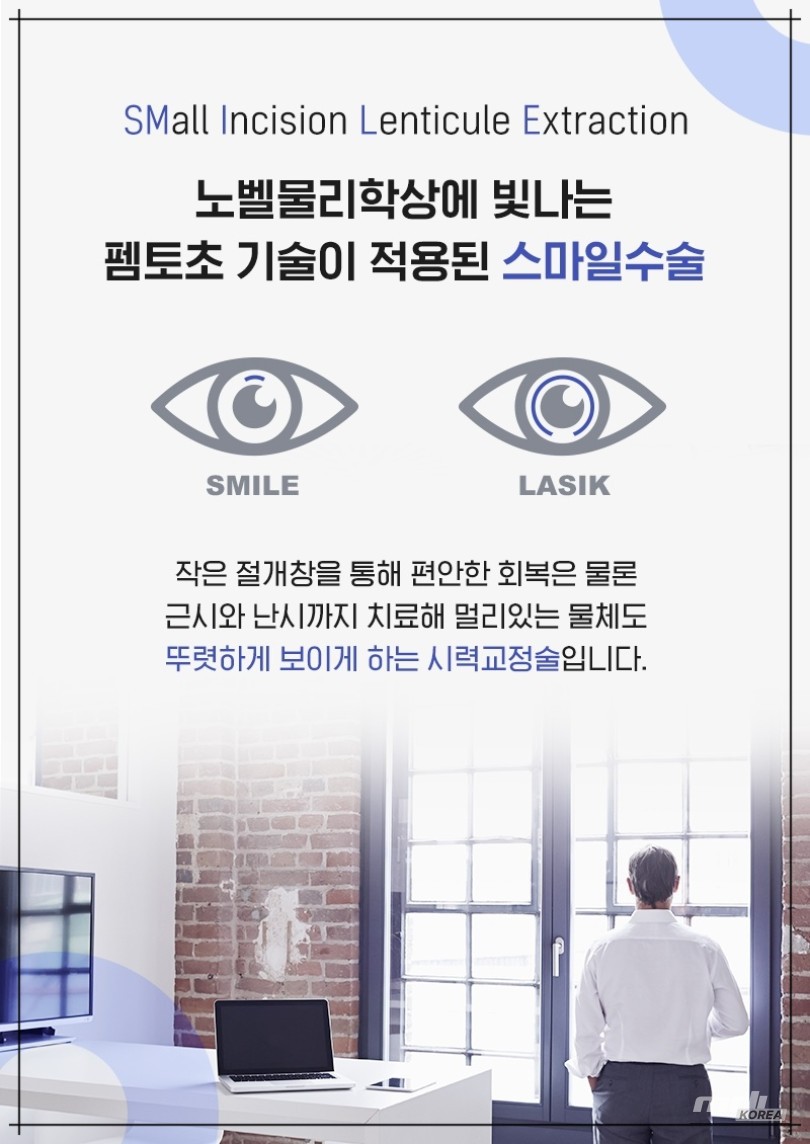
When considering vision correction surgery, the key is whether it is suitable for your eyes. SMILE surgery involves creating a thin piece inside the cornea without making a large incision on the corneal surface, and then removing it through a small passage. It is designed to minimize surface damage, which helps reduce dryness and allows for a quick return to daily life. Although the goal is the same as LASIK and LASEK, the method is different, so suitability is determined based on individual corneal thickness and shape.
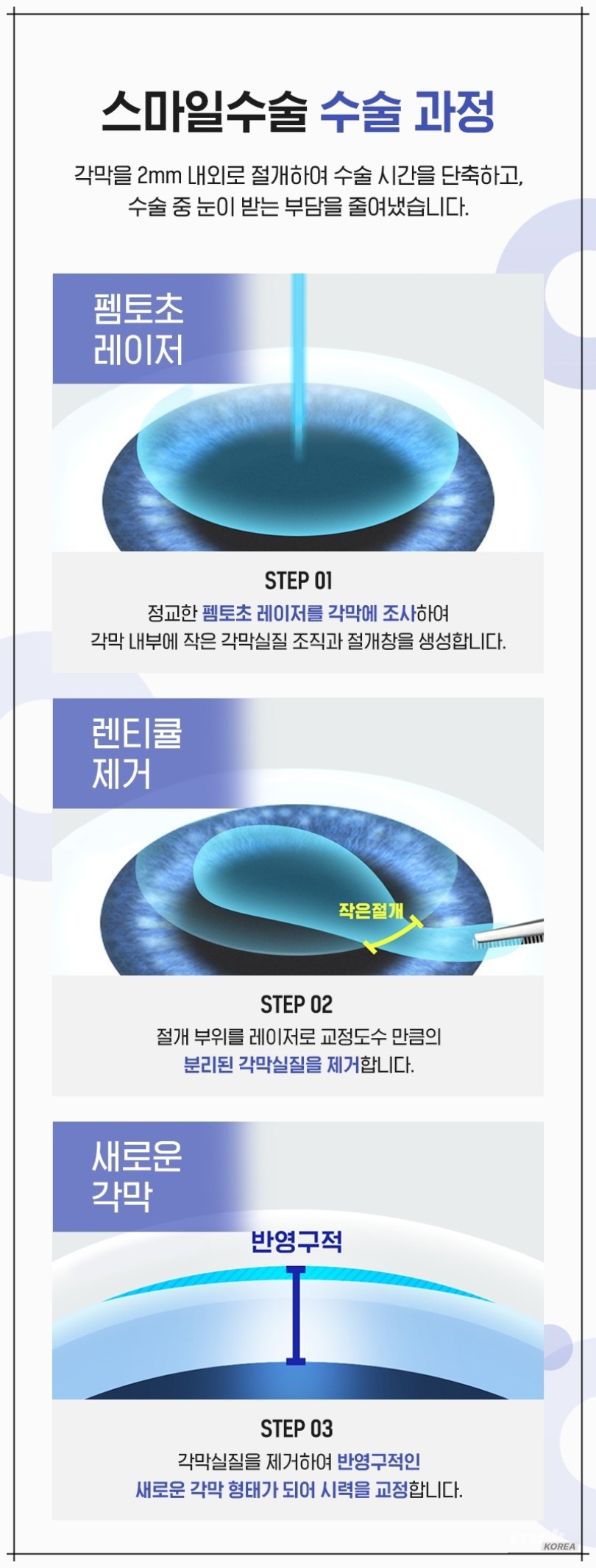
If you are considering SMILE Lasik lenses, first check the possible range with a thorough examination. The principle is simple: a femtosecond laser creates a thin lenticule in a specific layer of the cornea and removes it through a short passage of about 2-3mm. Because the surface is not significantly peeled off, the wound area is small and the stability of the deep structure can be maintained high.
A plan was established by comprehensively considering corneal curvature and thickness, pupil size, myopia, and astigmatism. If the term 'SMILE Lasik lens' is unfamiliar, it is easier to understand if you remember the two principles: small incision and removal of the corneal internal fragment. The perceived change was revealed in everyday scenes. It could be considered as an option for those who want to take off their glasses or contacts, or those who are sensitive to dust and sweat due to frequent exercise.
However, initially there may be light scattering or unfamiliarity with contrast, and dryness may be noticeable depending on the individual. If pre-existing dry eye was severe, a more detailed management plan had to be established. In the SMILE Lasik lens guide, it was important to specifically define what distance requires comfort.
Suitability assessment was essential. Vision and corneal topography were precisely measured to check for irregular astigmatism and calculate safety margins using a corneal thickness map. Risk signals such as corneal ectasia predisposition, severe dry eye, and large pupils were screened. The plan had to be tailored to reality by discussing lifestyle patterns and nighttime vision requirements together. It was best to check the feasible range and listen to objective comparative explanations with LASIK and LASEK.
The reason for checking the retina and optic nerve through dilation was to safely secure the expected visual quality after surgery. Checking the tear film condition and eyelid margin inflammation together could reduce the worsening of dryness in advance.
The surgery ended relatively quickly. After instillation anesthesia, a planned fragment was created inside the cornea with a laser and separated and removed with fine forceps. In many cases, sutures were not required because the incision was short, and vision tended to improve enough to see the outline even on the same day. However, it may take several days to reach final clarity, and initial dryness and glare may be accompanied.
Recovery could be smooth if basic rules such as wearing protective glasses, not rubbing the eyes, and stopping water activities and strenuous exercise were followed. If your occupation requires a lot of night driving or precise screen work, detailed adjustments were needed based on the target power and pupil size. SMILE Lasik lenses were sufficient to be understood as a tool that expands the range of choices by reflecting these needs.
Surgery may be limited if the cornea is thin or irregular astigmatism is evident. If the corneal thickness to be left in high myopia is insufficient, other methods may be recommended to prioritize long-term stability. If there was a family history of corneal ectasia or a severe habit of rubbing the eyes, it was evaluated more conservatively. Rarely, the field of vision may be awkward due to curvature changes or residual fragments at the incision site, so it was necessary to guide the progress observation and the possibility of additional correction.
SMILE surgery had to be selected by distinguishing between possibility and appropriateness. Many people expected to replace contacts. If you had frequent redness and fatigue due to wearing them for a long time, you may feel comfortable after surgery because surface friction is reduced. If you do a lot of near work, it was important to manage dryness, and adjusting the intervals between artificial tears and rest can be helpful.
Occupations with a lot of outdoor exposure made it easier to experience the advantages of small incisions. If you organize your needs based on your daily routine at the consultation stage, the scope and goals of the surgery can become clearer. Recovery proceeds in stages. On the first day, there may be blurry vision, glare, or a foreign body sensation, but in many cases, sharpness stabilizes rapidly from the next day.
It was important to use prescribed eye drops and check according to schedule. Dryness may continue for a certain period of time, so adjusting screen usage time and humidity gradually reduced it. It was best to avoid situations where you rub your eyes hard or contaminated water comes into direct contact. Usually, checks were performed several times at the initially scheduled time, and the interval between visits had to be widened once the wound stabilized. Using protective glasses for a while could help reduce the risk of collision.
The comparison with LASIK and LASEK can also be summarized simply. LASIK creates a corneal flap to implement the correction amount, and LASEK removes the surface epithelium and then shaves it with a laser. SMILE surgery had the advantage of being advantageous for surface preservation by taking out internal fragments without flaps. On the other hand, other methods may be more suitable for high myopia or complex astigmatism.
Since the purpose is the same, it was reasonable to choose a method based on safety margins and lifestyle patterns. The pain and recovery experience differed depending on the method: LASEK may have a long initial irritation, and LASIK tended to recover quickly. SMILE surgery was positioned as an option that prioritizes surface preservation in between.
The selection criteria were: first, whether the corneal thickness and shape meet safety standards; second, what is the sensitivity to nighttime vision and dryness; and third, what is the distance and quality of vision required by the job and hobby. Once these three things became clear, the method was naturally determined.
SMILE surgery can be seen as an attempt to simplify the recovery experience through the characteristic of small incisions. Even if SMILE Lasik lenses are unfamiliar, it can be easier to judge whether it is right for you by checking according to the above criteria.





Source :https://blog.naver.com/koikoro/224070944643
No comments yet.