Cataract Treatment for Clear Vision


Cataract Treatment for Clear Vision
Q. Can I receive insurance compensation for multifocal lens implantation, a cataract treatment for this eye disease?
A. Coverage for multifocal lens implantation for cataracts may be limited under health insurance if it's not deemed functionally necessary. Coverage varies depending on the specific insurance policy, so verification is essential.
Q. How often should I get a regular eye exam if I'm in my late 40s?
A. Regular eye exams are recommended about once a year from your late 40s, as age-related vision changes like presbyopia and cataracts can start to appear.
Presbyopia and cataracts often begin around the same time but are different. Presbyopia is the loss of elasticity in the eye's lens, making it difficult to focus on close objects. Cataracts are the clouding of the lens, reducing light transmission, decreasing contrast sensitivity, and causing noticeable glare, especially at night. When both conditions occur together, the combined near vision discomfort and overall blurriness make it crucial to distinguish the primary cause of vision decline.
This distinction is necessary to determine the appropriate direction for cataract treatment. The causes are relatively clear. Cataracts primarily result from age-related changes in the protein structure of the lens, accelerated by factors like UV exposure, smoking, trauma, diabetes, or systemic medications like steroids. The location of the clouding (nuclear, cortical, or posterior subcapsular) affects the perceived pattern of blurriness.
Presbyopia is mainly due to decreased elasticity in the lens and ciliary muscle, resulting in slow focus adjustment at close distances. When these two processes overlap, sharpness is limited even with glasses, so it is important to assess the relative contribution of each condition during the initial evaluation. Symptoms are evident in everyday activities.
Discomfort is less pronounced in bright daylight, but glare and light scattering are more noticeable in backlight and during night driving. Focus becomes unstable and contrast decreases with prolonged reading, causing blurred outlines. Colors may appear yellowish, reducing the clarity of objects, and there may be a point where lens prescription adjustments no longer significantly improve sharpness. When these symptoms persist, the need for cataract treatment should be seriously considered.
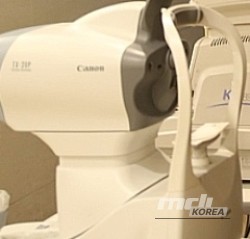
The diagnostic process involves clear steps. Visual acuity and refractive status are measured to assess the current focus range, and a slit-lamp microscope is used to observe the location and extent of clouding. After pupil dilation, the retina and optic nerve are examined to rule out other contributing factors. If surgery is needed, precise measurements of corneal curvature, astigmatism, axial length, pupil response, and tear film status are taken.
This data informs the determination of the intraocular lens power and target distance, which helps explain the scope and expectations of cataract treatment. Contrast sensitivity is also assessed to quantify how much text blurs in low light, and glare sensitivity is measured to objectively assess discomfort during night driving. These results guide the selection of lens type and the allocation of target distances.
The primary treatment involves removing the clouded lens and implanting an artificial lens. A small incision is made, the clouded lens is broken up using ultrasound, and the fragments are aspirated before a clear artificial lens is inserted to restore light transmission. The type of implanted lens is determined by lifestyle, presence of astigmatism, and frequency of nighttime activities.
Options include monofocal lenses for clear distance vision, multifocal lenses for multiple distances, and lenses that correct astigmatism. Each has its own advantages and disadvantages.
When presbyopia and cataracts coexist, the key is how to allocate the target distances. Therefore, it's important to inform the cataract treatment plan with specific details about your work environment, reading distance, and driving habits. Surgery is generally performed under topical anesthesia, and preparation and recovery vary depending on the individual's eye condition and comorbidities.
When using toric lenses for astigmatism correction, it's crucial to precisely align the axis and amount of correction. Multifocal lenses provide vision at multiple distances but may involve some light scattering, while monofocal lenses focus sharply at one distance but may require aids for other distances. If you do a lot of intermediate-distance work, focusing on the intermediate distance is also an option.
The balance between choice and timing is important to consider. Monofocal lenses generally provide stable distance vision but may require near vision aids, while multifocal lenses offer broad coverage across multiple distances but may result in light scattering and reduced contrast.
If astigmatism is significant, not correcting it may result in residual vision loss. If there are coexisting conditions like diabetic retinopathy, macular degeneration, or glaucoma that damage the retina and optic nerve, the expected postoperative vision may be different.
Significant dryness or instability of the corneal surface can cause fluctuations in measurements, so stabilizing the condition beforehand is necessary. Rarely, postoperative complications such as inflammation, swelling, residual refractive error, or secondary cataracts may occur, and you should seek medical attention immediately if any abnormal signs appear. It is not safe to assume that you will be able to function without glasses at all distances, and it is important to understand in advance that some distances may still require assistance.
Also, for eyes with severe dryness, a procedure to stabilize the surface condition is recommended because the measured values can fluctuate. If residual refractive error remains after surgery, fine adjustments can be made with light glasses, and if a secondary cataract develops over time, the option of restoring transparency with a simple laser may be discussed.
The timing of surgery is not determined solely by the absolute degree of clouding. If sharpness is limited even with glasses, nighttime activities are difficult due to glare, or work-related mistakes are frequent, the timing should be advanced. Conversely, if there is little practical discomfort even with clouding, observation may be chosen. Specifying the subjective impairment through numerical values and photographs at the diagnostic stage can make the judgment clearer.
Presbyopia and cataracts start for different reasons but often overlap in the same eye. If sharpness is not restored by adjusting glasses and nighttime glare affects your life, cataract treatment based on individual measurements to realistically determine the target distance is necessary. Planning based on examination data and living environment, and having a transparent understanding of the advantages and disadvantages of various options, can be closer to safety.


















Source :https://blog.naver.com/koikoro/224021460089
No comments yet.