Cataract Surgery: Cost, Procedure, and Lens Options



As you reach the age of 40 and older, your body may undergo various changes. You might experience decreasing physical strength, deepening wrinkles, or more gray hair. Additionally, you may notice a gradual blurring of your vision. This is a natural part of aging and often overlooked. However, age-related changes in the eyes can lead to more than just declining eyesight; they can also cause eye conditions like presbyopia and cataracts, making it crucial to pay close attention to your eye health.
Presbyopia occurs when the lens of the eye loses elasticity due to aging, reducing its ability to focus on nearby objects. People with presbyopia often find it difficult to see clearly at a distance of 30cm or less, which can be inconvenient when reading newspapers, books, or using smartphones. Vision may worsen in dim lighting or when fatigued, and the ability to quickly refocus diminishes, signaling the progression of presbyopia. Corrective tools like reading glasses can improve vision in these cases. However, individuals who don't typically wear glasses may find them difficult to adjust to, and they can be particularly cumbersome for those who enjoy sports like golf or hiking. If glasses are not a viable option, presbyopia surgery can offer a solution. This surgery involves using an excimer laser to reshape the cornea, similar to LASIK or LASEK procedures. This can reduce the perceived burden of surgery. However, if cataracts are also present, it's important to consider cataract surgery as a more appropriate plan.
What are cataracts? Cataracts are a condition in which the lens of the eye gradually becomes cloudy. A healthy lens is transparent, allowing light to pass through and focus on the retina. When the lens loses its transparency and becomes clouded, it cannot properly transmit light, leading to blurred vision, reduced eyesight, and a hazy visual field. Because the clouding of the lens progresses slowly, it can be difficult to notice in its early stages and is often mistaken for presbyopia. If left untreated, cataracts can lead to complications and, in rare cases, blindness. Therefore, it's important to seek a comprehensive eye exam if you experience any unusual symptoms.
Cataracts commonly occur in individuals in their late 60s due to aging, which can lead to overlooking the condition. However, cataracts can also be caused by other factors, so it's important for individuals over 40 to undergo regular eye exams at least once a year, even if they have no symptoms.
Cataracts can also be hereditary. Some babies are born with cataracts, and others develop them at a young age. If you have a family history of cataracts, it's important to get your eyes checked more frequently. Cataracts can also result from significant eye trauma, diabetes, long-term use of steroids, or prolonged exposure to ultraviolet (UV) rays. Certain occupations that involve extended sun exposure can also increase the risk.
Because cataracts develop slowly, it can be challenging to self-diagnose the symptoms. If you experience frequent double vision, improved vision at night, faded or yellowed colors, or distorted vision, it's important to see an eye doctor as soon as possible. A sudden onset of nearsightedness can also be a sign of cataracts, indicating clouding in the center of the lens rather than improved vision.
If these symptoms interfere with your daily life, you should explore cataract surgery options. The procedure involves removing the clouded lens and replacing it with an artificial intraocular lens (IOL) to restore vision. There are many different types of cataract surgery lenses available, so it's important to choose carefully. Focusing solely on cataract surgery costs or promotional offers may lead to dissatisfaction with the results.
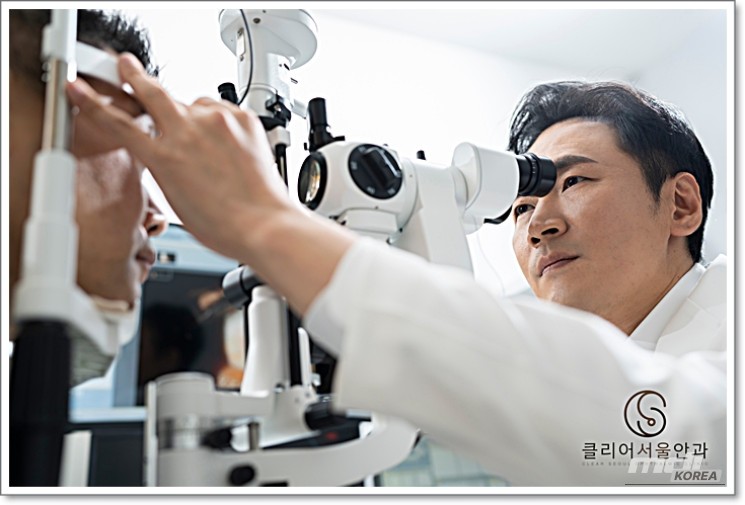
Cataract surgery typically takes about 20 minutes for both eyes. The incision size is very small, around 2-3mm, which allows for quick healing. In most cases, an overnight hospital stay is not required, and patients can return home the same day. However, proper post-operative care is essential for a smooth recovery and to prevent complications.
Cataract surgery lenses are divided into monofocal and multifocal options. Multifocal lenses are recommended for individuals with both presbyopia and cataracts, as they allow for clear vision at near, intermediate, and far distances, and can correct astigmatism at the same time. The most important factor is to choose a lens that is suitable for the patient's eye condition and lifestyle to ensure the best possible vision quality.
The cost of cataract surgery varies depending on the type of lens chosen. Multifocal lenses typically range from approximately 1,000,000 to 5,000,000 KRW. However, the price may be higher, so it's best to consult with your doctor for a detailed cost estimate.
Aging is a natural process, but age-related changes in the eyes can cause discomfort and lead to eye diseases. It's important to take care of your eyes, as vision loss is often irreversible. If you haven't been paying attention to your eye health, start today and take steps to improve it.



























Source :https://blog.naver.com/whgus4231/224089768312
No comments yet.