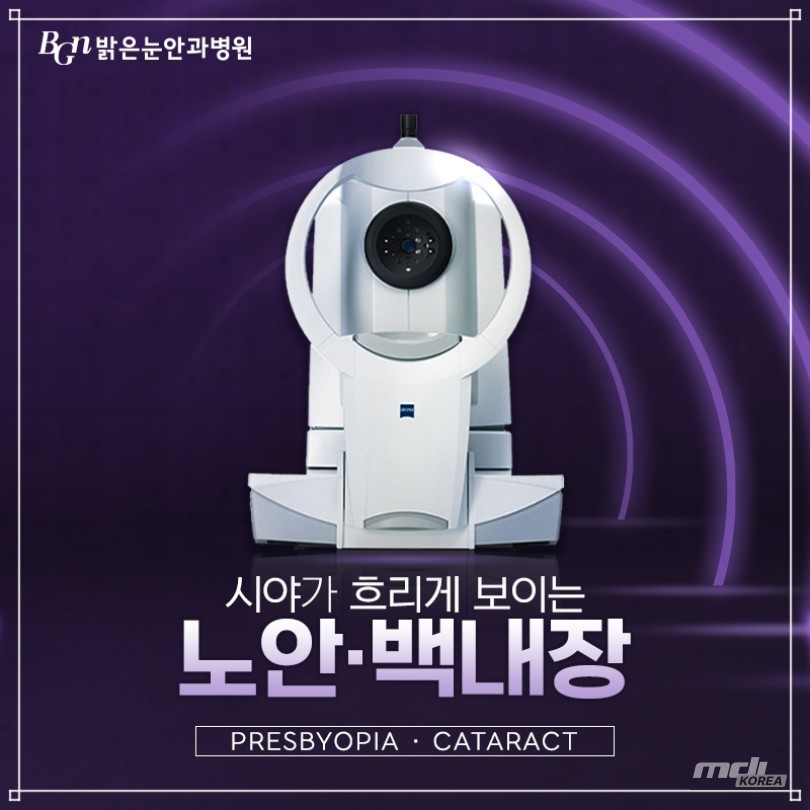
Blurred Vision with Presbyopia and Cataracts: Understanding the Combined Condition



If you experience recurring blurred vision due to presbyopia and cataracts:
Q. What is the recommended frequency of eye exams for cataract prevention?
It's generally recommended to have a regular eye exam about once a year after the age of 40. If you notice changes in your vision, eye fatigue, or blurriness, it's best to get checked early, regardless of age.
Q. What eye condition causes the lens to become cloudy, resulting in blurry vision?
When the lens becomes cloudy and blurs vision, it's typically a sign of cataracts. This can be accompanied by light scattering (glare), decreased vision, and faded colors.
Presbyopia is the age-related loss of ability to see near objects clearly, while cataracts involve the gradual clouding of the lens, leading to blurred vision. When both conditions occur simultaneously in the same eye, the combined discomfort can significantly impact daily life. You might find yourself holding reading material closer but still struggling to see clearly, or experiencing delayed focus when moving between bright and dark environments.
This combination is sometimes referred to as presbyopia-cataracts. The primary cause is age-related physiological changes. As we age, the lens hardens, thickens, and accumulates light-scattering substances. This reduces the ability to focus and causes cloudiness that blurs vision.
Factors like UV exposure, smoking, long-term steroid use, and metabolic disorders can accelerate this process. If you have a family history of cataracts, more frequent monitoring is recommended to detect changes early. Symptoms can include blurry vision when reading books or using smartphones, increased sensitivity to light even during the day, reduced contrast, and difficulty driving at night due to severe glare.
Some people describe seeing ghost images or perceive colors as yellowish, making objects appear less vibrant. In the early stages, adjusting corrective lenses may provide some satisfaction, but as the clouding progresses, glasses become insufficient. At this point, a thorough evaluation is needed to determine the presence of both presbyopia and cataracts to plan the next steps.
The diagnostic process typically begins with a medical history review, visual acuity tests, slit-lamp microscopy, and fundus examination. If necessary, the pupils are dilated to examine the location and extent of lens clouding, along with corneal topography and pupil size. Large nighttime pupils can exacerbate glare, so changes in pupil size under different lighting conditions are recorded, and contrast sensitivity testing is performed to correlate with subjective experiences.
If diagnosed with presbyopia and cataracts, the most bothersome aspects of your current lifestyle are identified to set treatment goals. Treatment options are selected step by step. Initially, changes in lens prescription and adjustments to the lighting environment can alleviate discomfort. However, if the clouding interferes with daily functions, surgery may be considered.
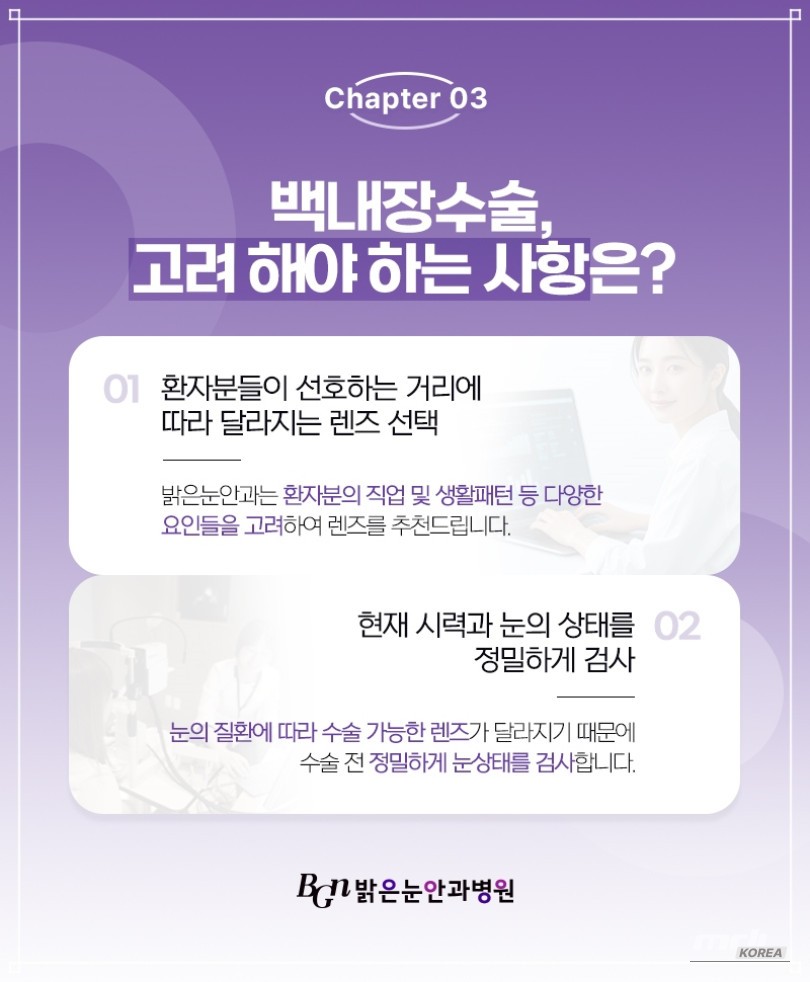
Surgery involves removing the clouded lens and replacing it with a clear artificial lens. Depending on the type of lens implanted, the focal distribution can be designed for distance, intermediate, or near vision. The target distance is determined based on your occupation, hobbies, and frequency of nighttime activities, and your tolerance for glare is also discussed during the selection process.
Managing presbyopia and cataracts doesn't rely on a one-size-fits-all solution; a personalized plan is essential. It's important to have realistic expectations. Some glare or halos may persist after surgery, and glasses may still be needed for certain tasks. If the tear film is dry, vision clarity can fluctuate, so surface management is crucial.
Before and after surgery, follow the recommended schedule for follow-up visits to monitor changes in vision and discomfort. It's safer to set goals based on your individual lifestyle, and develop a step-by-step plan based on examination results and risk factors. Presbyopia can be addressed by focusing on focus adjustment issues, while cataracts can be approached by addressing cloudiness issues.
When both conditions overlap, it's important to consider which distances are most problematic in daily life, whether you're active at night, and what your lighting environment is like. In the context of presbyopia and cataracts, the degree and rate of change, as well as the priorities of your current lifestyle, are crucial. Establishing these criteria through check-ups makes the treatment sequence and options clearer. Because results vary from person to person, it's advisable to fully understand the advantages and limitations before making a decision.
Additionally, it's important to note that artificial lenses used in surgery differ in how they distribute light and whether they have astigmatism correction capabilities. If you have significant astigmatism, consider a dedicated option to improve the consistency of your vision. If your job involves a lot of close work, prioritize comfort at intermediate and near distances. If you drive frequently at night, consider a design that minimizes glare.
Pupil size and tear film stability are directly linked to your post-operative experience, so it's helpful to review these measurements and explanations during your examination. During the recovery phase, return to your routine according to the provided timeline. You may experience glare and dryness initially, but these discomforts can be alleviated by following the prescribed eye drop regimen.
Avoid rubbing your eyes and use protective eyewear in dusty or windy environments. Even if the recovery rate differs between the two eyes, you can expect the balance to improve over time. Even people of similar ages may have different experiences depending on their occupation, hobbies, and vision usage patterns.
This is because the priorities of people who read and use computers a lot, people who spend a lot of time outdoors, and people who do detailed work are different. Therefore, even if the examination is the same, the goal setting should be personalized. The term presbyopia-cataracts is just a way of grouping the situation; it doesn't mean there's only one solution. It's important to clarify the order of decision-making.
Narrow down your choices by identifying what bothers you the most, which distance you want to prioritize, and how you want to handle residual astigmatism. This process can help you determine the timing of surgery, the type of lens, and the frequency of follow-up visits.







Source :https://blog.naver.com/koikoro/224057536979
No comments yet.