Before Deciding Based on LASIK Age


Q. Should I see an ophthalmologist if I have eye pain and headaches?
A. It could be temporary fatigue, but it's best to get checked out as it could also be a problem with eye pressure or the optic nerve.
Q. How is a vision test performed at a local ophthalmology clinic?
A. After an automated test, vision is checked with a vision chart. If necessary, eye pressure and eye condition are also examined.
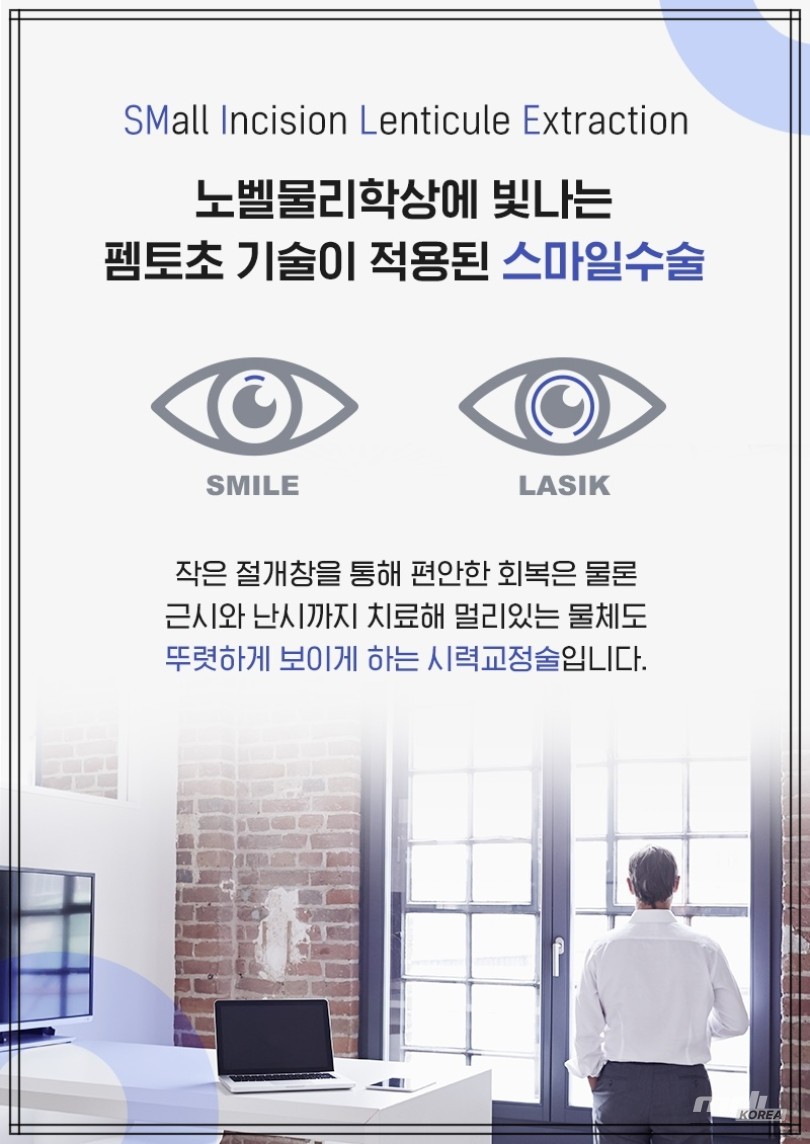
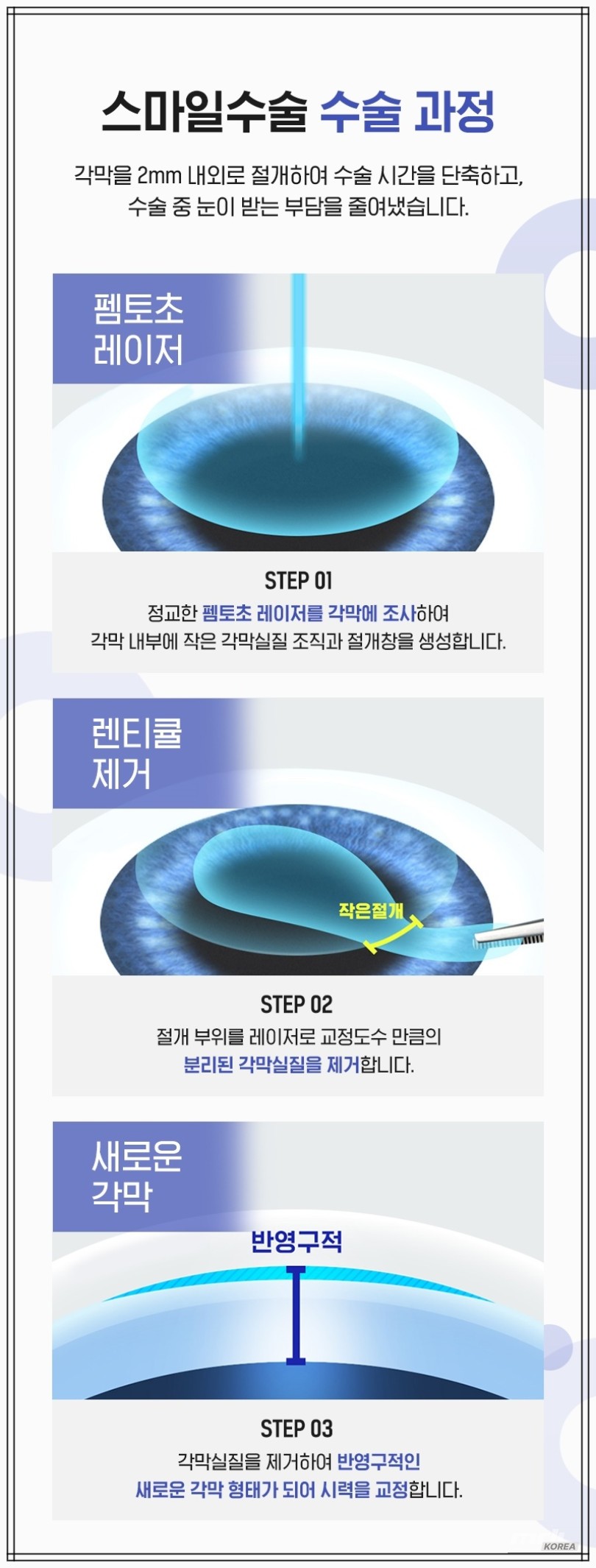
SMILE surgery corrects vision without making a large incision in the cornea. A small lenticule is created and then removed through a small passage to correct refractive errors. Because it reduces structural damage, recovery to daily life is relatively quick. However, suitability depends on the individual's eye condition, so the process of checking the safety range through examination comes first.
Sometimes people focus only on age because of expressions like "LASIK age," but the actual decision should be based on several factors, including corneal thickness, shape, dryness, pupil size, and occupational vision requirements. The principle of SMILE surgery is simple: a thin lenticule layer is formed inside the cornea with a laser, and a passage of about 2-4mm is created to separate and remove it.
The key is to design the procedure to preserve the upper support layer as much as possible. The small incision reduces the area exposed to external stimuli and becomes an option for people who frequently engage in sports or activities. However, other methods should be discussed if the cornea is thin or irregular. Rather than making a mechanical decision based on age, it is more reasonable to check the current safety margin of the eye first.
In terms of symptoms, myopia and astigmatism often occur together. If you experience severe fatigue when wearing glasses or lenses, and blurring is noticeable at night, you may consider a vision correction method. It is important to check for dryness, tear film stability, and allergies, as these can affect the recovery speed and comfort after surgery.
In addition, it is important to consider whether your occupation requires you to look at a screen for a long time or whether you are exposed to dust or wind. The expression "LASIK age" is common, but in reality, the examination results and living environment play a greater role in the decision. The diagnostic process proceeds in stages, checking automated refraction, corneal topography, corneal thickness measurement, pupil size and night reaction, dryness index, and retinal condition.
Even if the numbers look similar, the choice may change depending on the hardness or asymmetry of the cornea. In particular, if there is a suspected risk of corneal ectasia, it is necessary to change the method or observe carefully. If you have been wearing lenses for a long time, it is recommended to take a break from wearing them for a certain period of time and then re-examine the numbers. It is desirable to make decisions based on data and safety limits, rather than being bound by LASIK age.
The key to treatment is personalization. SMILE surgery is the basis, but it is also necessary to consider setting the astigmatism axis, adjusting the passage position, and pre-managing dryness. The surgery time itself is not long, but it is best to listen to the pre- and post-operative instructions and avoid rubbing your eyes artificially for the first 1-2 weeks.
Blurring may occur initially, but it tends to subside with time. If you drive frequently at night, you should mention this in advance so that the settings can be adjusted. If you need fine contrast for your job, you should check the subjective elements through test lenses or simulations.
The important thing to note is to avoid excessive expectations and adjust the pace while watching for recovery signals. If dryness is noticeable, use artificial tears sufficiently and reduce the irritation of direct spraying into the eyes when showering.
Lack of sleep can prolong blurriness and fatigue, so it is important to maintain a stable rhythm for the first few days. Exercise should start with light activities, and sports with high exposure to sweat and dust should be gradually increased in consultation with a healthcare professional. Adjusting indoor lighting and screen brightness appropriately can reduce glare. It is safer to schedule based on the current examination results and lifestyle patterns, rather than rushing based on the common notion of LASIK age.
SMILE surgery can be a good alternative for people with high activity levels due to its structure that emphasizes corneal preservation. However, rather than expecting the same results for everyone, you should consider your corneal condition, lifestyle, and habits that you can maintain during recovery.
If you talk specifically about uncomfortable times of day, frequency of night driving, intensity of dryness, and desired vision range during the consultation stage, the plan can be refined. Choosing based on safety margin and lifestyle suitability, rather than focusing only on the word "LASIK age," can increase long-term satisfaction. The decision not to have surgery is also meaningful.
If corneal reserve is insufficient or dryness is severe, it is better to temporarily postpone the procedure, manage the condition, and then re-evaluate. Conversely, if the conditions are sufficient and the expectations are realistic, you can proceed calmly while following the step-by-step instructions. It is important to constantly check whether small changes are accumulating to reduce discomfort in daily life.
Before surgery, it may be helpful to take a break from wearing lenses to stabilize the corneal condition and establish a dryness management plan through tear film examination. It is easier to manage the initial stages if you schedule the surgery at a time that does not conflict with your work or school schedule. During periods of high outdoor activity, exposure to wind and ultraviolet rays can increase, so preparing protective glasses can reduce the burden.
During the recovery period, it is necessary to administer eye drops as directed and avoid hastily judging the blurring, which varies from person to person. LASIK age is just an expression of the starting point, and the actual decision should be made in a balanced way, taking into account both the safety limits of the eye and the goals of life.
Night glare or temporary contrast reduction varies from person to person. If dryness is severe in the early stages, blurring may be more noticeable during near work, so it is more comfortable to take regular breaks. Do not skip follow-up appointments, and if changes are outside the expected range, consult immediately to adjust the instillation method or interval. Prioritizing what to give up and what to gain can make decision-making clearer.





Source :https://blog.naver.com/koikoro/224055109884
No comments yet.