A Dark Spot on the White of Your Eye: Is It Serious?



"I have a black spot on the white of my eye. Could it be a serious illness? Is this something to worry about?"
A small spot in the eye that you might first notice while looking in the mirror or when someone points it out.
You might not have noticed it before, but once you do, anxiety can set in.
You might worry about potential vision problems or if it's a sign of a serious underlying condition.
A small spot in the eye can be alarming, but in most cases, it's likely a benign condition called a 'conjunctival nevus.'
It might sound unfamiliar, but today, we'll explain conjunctival nevus in an easy and accurate way.
What is a Conjunctival Nevus?
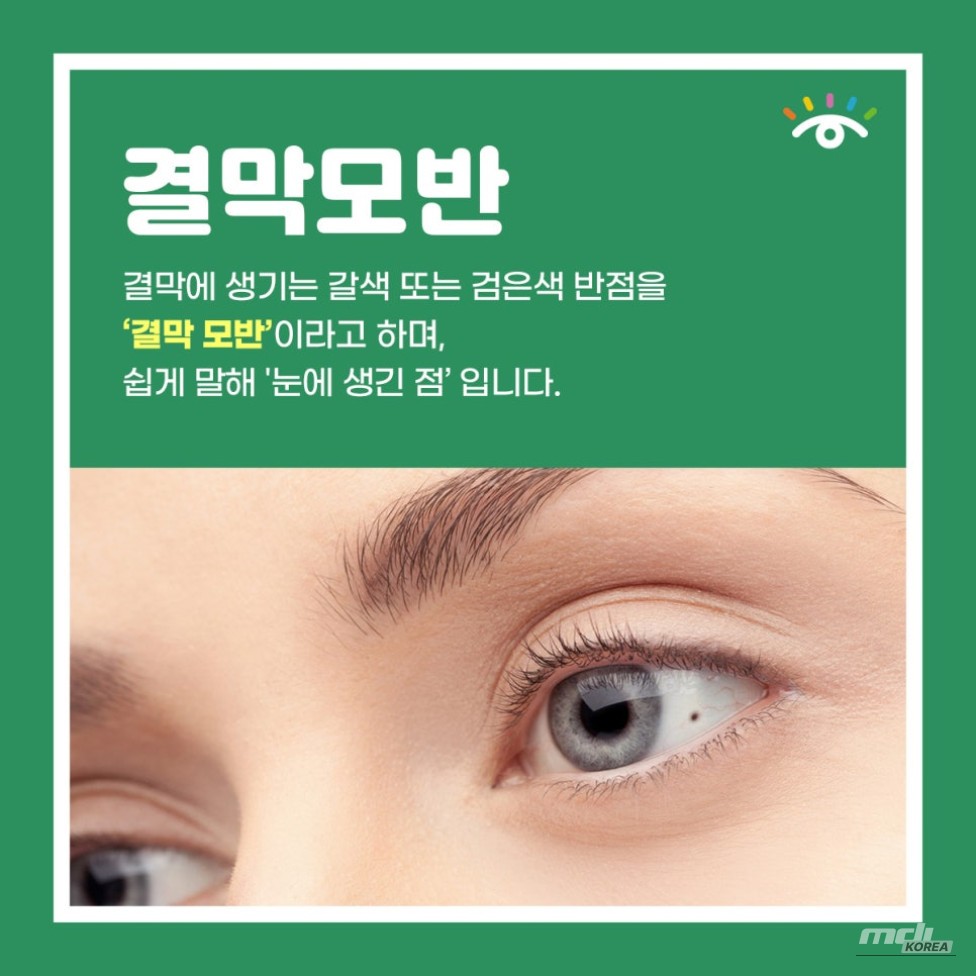
The conjunctiva is a thin, transparent mucous membrane that covers the white part of our eye. A conjunctival nevus is a brown or black spot that appears on this area. Simply put, it's like a 'mole on the eye.'
Conjunctival nevi can be congenital, meaning present at birth. However, most develop during childhood or adolescence, and rarely, they can appear in adulthood.
The color is usually brown, dark gray, or almost black. They can appear flat or slightly raised.
Often, they are well-defined and painless, quietly residing on the eye.
Therefore, unless there are cosmetic concerns, many people simply monitor them for life.
Where Do They Appear?
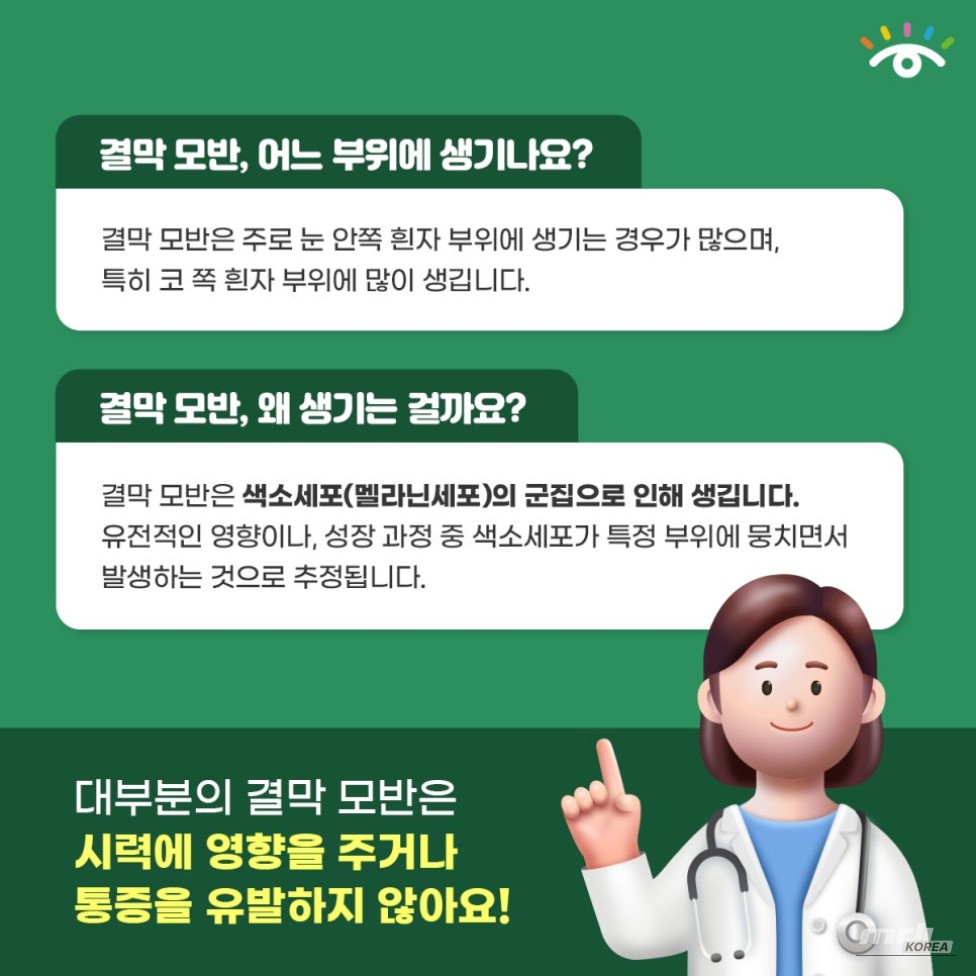
Conjunctival nevi often appear on the white part of the eye, especially near the inner corner by the nose.
Looking in the mirror and seeing a brown spot on the white of your eye can be startling.
They can also occur on the lower conjunctiva or, occasionally, on the inner lining of the eyelid.
When they appear in unexpected locations, they might go unnoticed until discovered during a routine eye exam.
Why Do They Occur?
Conjunctival nevi are caused by clusters of pigment cells (melanocytes).
The exact cause isn't fully understood, but it's believed that genetic factors or the clumping of pigment cells in a specific area during growth may contribute to their development.
Importantly, most conjunctival nevi do not affect vision or cause pain.
However, if the size or shape changes, or if unusual symptoms occur, an examination is necessary to rule out the possibility of malignant transformation.
Are They Dangerous?
Fortunately, most conjunctival nevi are benign.
However, in rare cases, they can potentially develop into malignant melanoma, so periodic observation is important.
Because changes in the eye are easily noticeable compared to other organs, early detection is possible with just a little attention.
Changes to Watch For
Conjunctival nevi usually only require observation without specific treatment. However, be mindful of the following changes:
▶ Sudden increase in the size of the spot
▶ Darkening of the color or a mottled appearance
▶ Irregular borders or a blurred, spreading edge
▶ Unusual symptoms such as bleeding, inflammation, or pain
▶ Abnormal dilation of blood vessels around the nevus
These changes could indicate a rare possibility of developing into a malignant tumor called conjunctival melanoma.
Regular eye exams are recommended to monitor the condition.
Treatment Options
Conjunctival nevi usually do not require treatment.
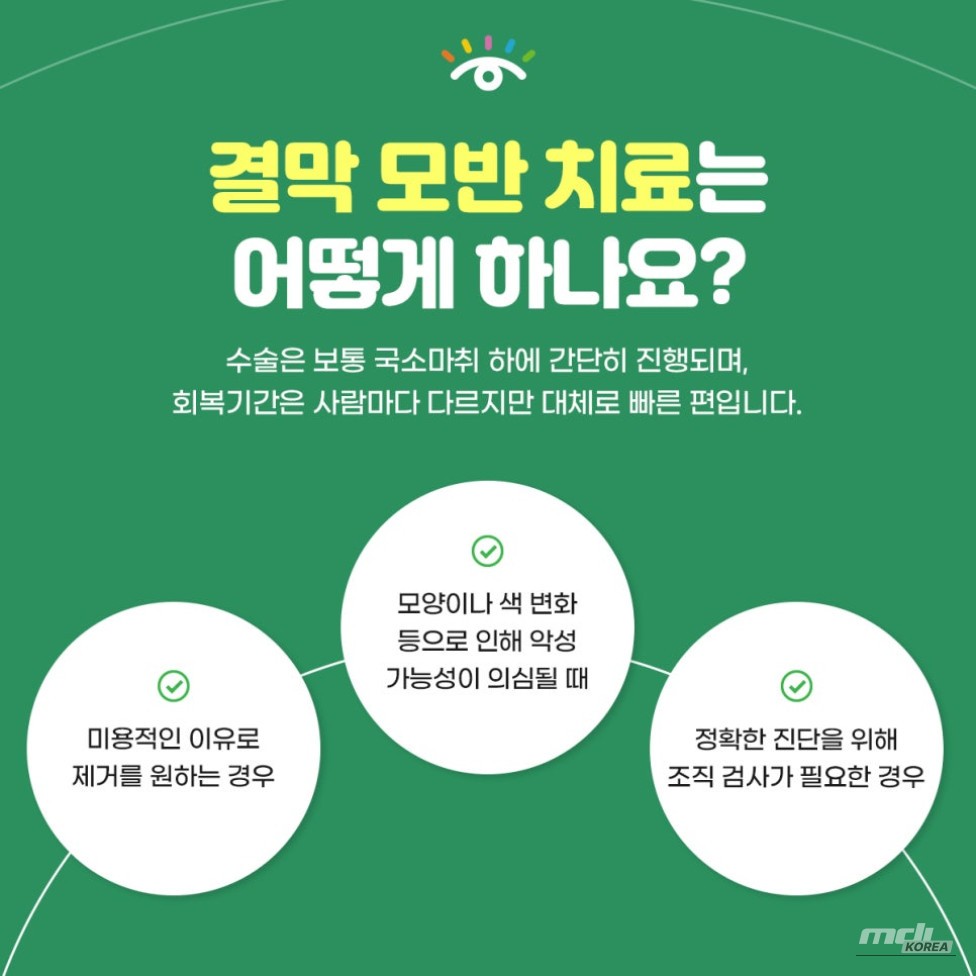
However, surgical removal may be considered in the following situations:
▶ Suspicion of malignancy due to changes in shape or color
▶ Desire for removal due to cosmetic reasons
▶ Need for a biopsy for accurate diagnosis
Surgery is usually performed simply under local anesthesia. The recovery period varies, but it is generally quick and not burdensome.
Scarring is minimal, and functional problems are rare.
In Conclusion
Conjunctival nevi are unfamiliar but surprisingly common.
Even a small spot in the eye can be a health signal, so it's important not to ignore it and to pay attention to it.
If you feel uneasy or notice any changes, get an accurate diagnosis from an eye doctor.
Accurate examination and consultation are the beginning of peace of mind and health.
If you're worried about a small spot in your eye, don't try to diagnose it yourself. Visit an eye doctor for a professional evaluation.
Small attention and quick response can be the first step in protecting healthy eyes.
Do you have a spot in your eye? If you're concerned, don't hesitate to seek expert advice. Feel free to leave any questions in the comments.











Source :https://blog.naver.com/oklasik3/223846043814
No comments yet.