3 Essential Questions to Ask When Choosing a Cataract Lens



For the one and only cataract lens selection in your life,
Here are three questions you must ask at the doctor's office.
As an ophthalmologist with 18 years of experience,
I have performed over 20,000 cataract surgeries.
I have even performed multifocal cataract lens implantation on 51 patients in a single day.
Even with so many surgeries under my belt,
I still have in-depth conversations with my patients every time I choose a lens,
and carefully consider their needs together.
Because this is a crucial moment where they will be seeing the world through this lens for the rest of their lives,
There are three questions I always ask first.
Other hospitals may not ask these questions first,
so please be sure to bring them up.
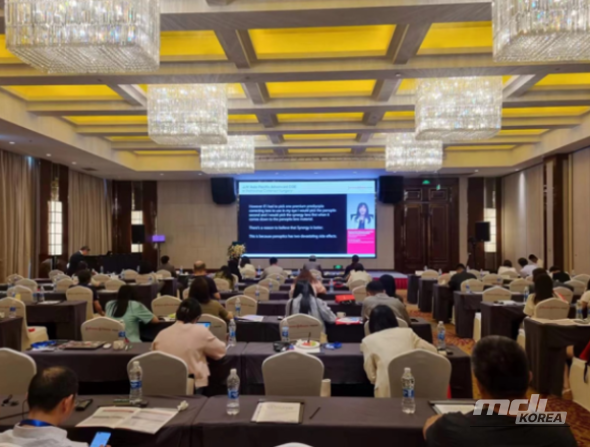
I have experience lecturing on lens selection to over 100 doctors, the largest scale in China.^^
The first thing to consider is your 'occupation'.
Sales, agriculture, driving, office work, sales, etc.
There are many different types of jobs.
But the most important thing here is that
you must have a thorough discussion with your doctor about your 'working distance'.
For example,
many doctors come to our hospital,
and the working distance must be measured differently depending on their specialty.
For specialties such as plastic surgery, obstetrics and gynecology, and dermatology,
near vision is important,
while general internal medicine, neurology, and pediatrics require a moderate near distance.
In addition, radiology, gastroenterology, and cardiology
must be able to handle not only near distance but also
intermediate distance.
Departments such as neurosurgery, pathology, and diagnostic laboratory medicine
often use microscopes,
so instead of simply judging by job title,
you must tell your doctor 'your working distance in your profession'.
If you choose a cost-effective lens without such consultation,
or blindly insert an expensive lens,
you may experience discomfort for the next 40 to 50 years of your life.
Recently, a top instructor from Daechi-dong who visited Healing Eye Clinic
needed to be able to read books at a close distance (40-50cm),
see the blackboard well (70-80cm),
and see the children far away (1.5m~).
That teacher visited three hospitals,
and was recommended a monofocal myopic lens at the first hospital,
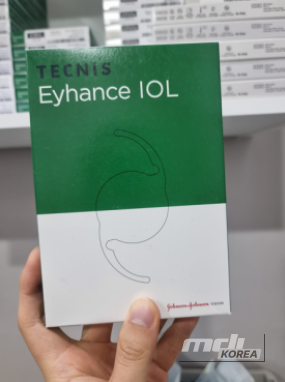
and an Eyehance at the second hospital.
At the third hospital, they were recommended PureSee.
However, if you choose Eyehance or
PureSee lenses in both eyes,
it can be very difficult to read books or teach students.
You need to be able to move your eyes freely while looking at books and the blackboard,
and if the lens is not clear,
you may not be able to read books at a close distance.
If this happens, even after the surgery,
you will have to continue to take your glasses on and off while teaching.
The most suitable combination for this person
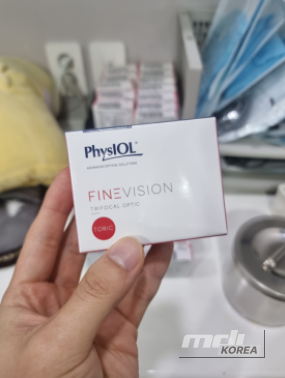
is 'PureSee lens and diffractive lens
(Synergy, PanOptix, Ziemetric, etc.)'.
After strongly adjusting the intermediate distance with the PureSee lens,
near vision should be made clear by using a diffractive lens.
(This is because if you use only diffractive lenses in both eyes,
the intermediate distance will not be seen well.)
After adjusting the lens in this way,
they are very satisfied because there is no disruption to their classes.
If you also
accurately inform your doctor of your occupation
and get your lenses fitted,
you will be able to get satisfactory results.^^
The second thing you should tell them is
'what kind of hobbies you enjoy'.
(It's similar to your job.)
I always ask my patients who come in for cataract surgery:
'What are your hobbies?'
Most elderly patients in their 70s or older
say,
'Hobbies... I don't really have any.
My eyesight is bad,
so I'm just resting at home.'
In fact, a hobby
is an activity that you enjoyed when your eyesight was good in the past,
or an activity that you want to do again after your eyesight has recovered.
For example,
activities such as billiards,
reading,
golf,
and fishing
are things that bring joy to people's lives,
so many people start doing them again after their vision recovers.
However, if you don't fully consider these points when choosing a lens,
you may regret it, saying,
'Hmm... I can't see the golf ball clearly...' (Golf)
'I had surgery, but I still need a magnifying glass when I read...'
Religious activities are also an important consideration.
Churches and churches are dimly lit,
so the Bible is small,
and in temples, you must be able to clearly distinguish Chinese characters
to properly read the Heart Sutra.
There are many things to consider,
so think in advance about
'What activities will I do if my eyesight improves?'
If you think about this in advance and go to an eye clinic,
it will be of great help.
The third most important thing is that
you must ask 'Can you completely correct astigmatism?'
Looking back on my surgical experience,
about 8 out of 10 patients
had astigmatism.
If astigmatism remains,
objects may appear doubled or tripled even after surgery,
so it is very important to correct it properly.
To accurately correct astigmatism,
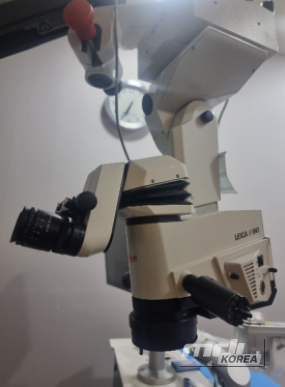
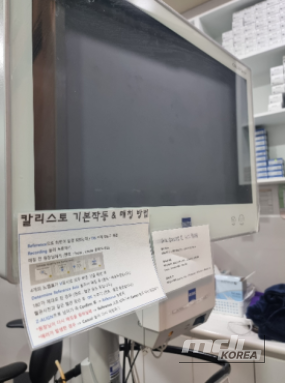
you need 'Callisto Eye', an expensive piece of equipment worth about 250 million won.
This is the Callisto Eye equipment in our hospital.
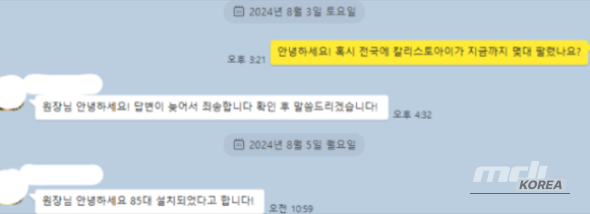
Only about 85 units are installed in Korea.
Among the thousands of ophthalmology clinics in Korea,
there are only 85 of these devices,
and in fact, many hospitals do not correct astigmatism,
and even doctors
do not often cover related content on blogs or YouTube,
so patients often miss the importance of astigmatism because they don't know about it.
Even if your vision improves with cataract surgery,
if objects appear doubled or tripled,
you will inevitably experience considerable inconvenience and frustration
in your daily life.
Therefore, when you visit an eye clinic,
be sure to check
"Do you also correct astigmatism?"
Today, I told you about three questions you must ask in the examination room
for the one and only lens selection in your life.
1. Occupation
(Please explain the details such as working distance in the examination room.)
2. Hobbies
(Please include activities that you would like to do in the future, even if you are not doing them now.)
3. Whether or not astigmatism is corrected
(Appears in 8 out of 10 people!)
If you read this article and
would like to receive a consultation from me,
I recommend that you read two or three more articles on the blog
before contacting me.
Just as the sound of applause comes from two hands touching,
if you trust me more
and come to me,
I will also do my best
to provide you with detailed consultation.^^
The article below is written by me,
so please read it and make a reservation. ^_^
<Must Read Before Visiting Healing Eye Clinic>
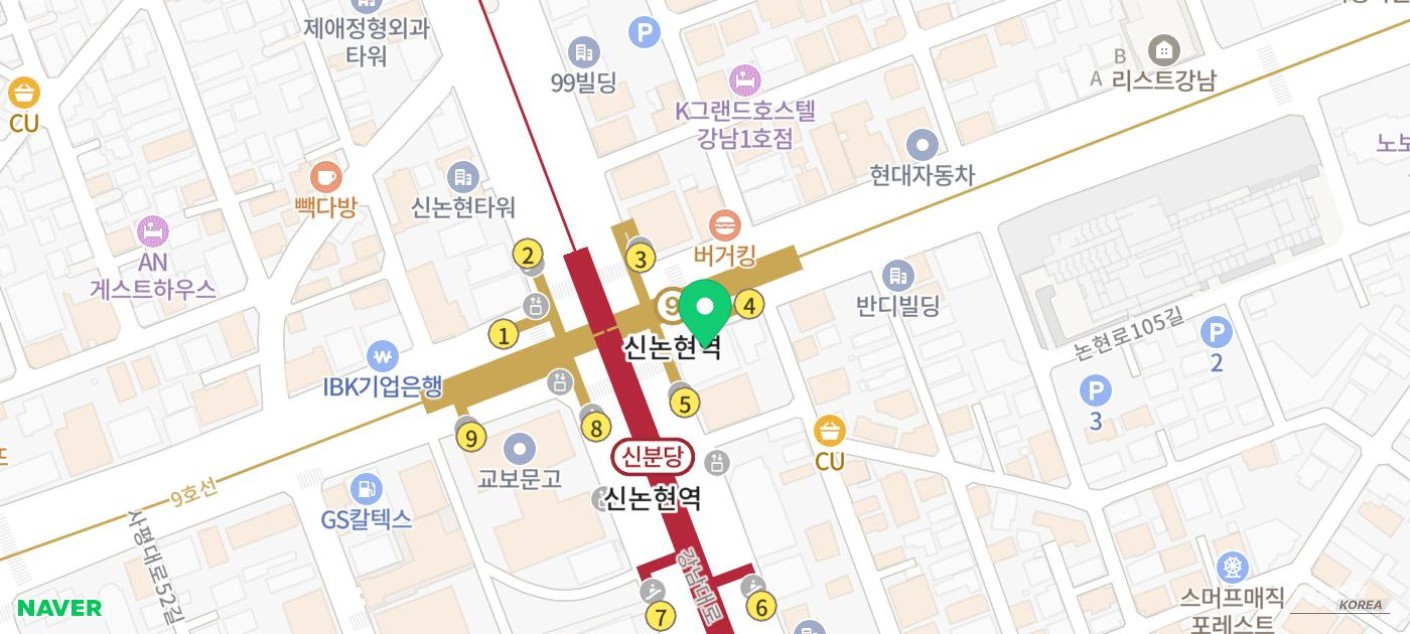
<Reservation & Directions>
This posting is written in compliance with Article 56, Paragraph 1 of the Medical Law
for the purpose of providing medical information.






Source :https://blog.naver.com/wpsjtltmals7/224047362099
No comments yet.